


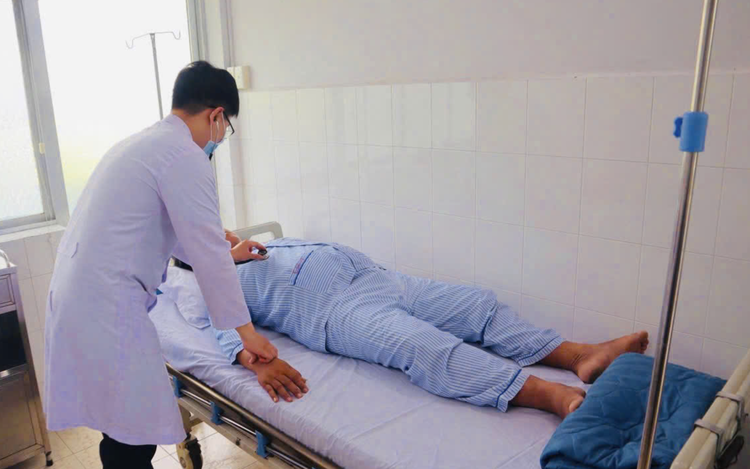
A worker receives treatment for lead poisoning at the Ho Chi Minh City Hospital For Rehabilitation - Professional Diseases. Photo: Supplied
The workers reportedly experienced persistent symptoms, including abdominal pain, numbness in their hands and feet, and prolonged fatigue.
The hospital announced on Monday that it had admitted and treated the affected workers since June 8.
The company had previously arranged medical examinations and treatment for groups of workers, averaging around 23 employees per batch, in an effort to avoid disruptions to production activities.
Medical assessments revealed that most of the affected workers had been employed in high-risk tasks such as casting battery grids, applying lead paste to electrodes, and welding battery plates.
These processes generate significant amounts of lead dust and lead oxide fumes due to high operating temperatures.
Many of the workers had been employed in these roles for between five and more than 10 years before symptoms began to emerge.
Screening results showed that workers with blood lead levels exceeding 40 micrograms per deciliter (µg/dL) were diagnosed with chronic occupational lead poisoning.
Several of the patients currently undergoing treatment recorded blood lead concentrations above 100 µg/dL, far exceeding recommended safety thresholds.
Common symptoms reported upon admission included recurring abdominal cramps, chronic fatigue, poor appetite, headaches, dizziness, and pale skin.
Hospital specialists also documented cases of peripheral nerve damage, with patients experiencing numbness in their extremities, reduced sensation, muscle weakness, and impaired fine motor skills.
However, no cases of severe brain damage have been identified.
Treatment involves the administration of chelation medications to remove lead from the body, combined with rehabilitation therapy, physical therapy, and nutritional supplements including calcium, iron, zinc, and vitamin C to support recovery.
Treatment courses typically last between two and four weeks, depending on the patient's response and the reduction of lead levels in the bloodstream.
Doctors said that early detection significantly improves the chances of recovery.

However, prolonged lead poisoning can result in lasting health consequences, including chronic kidney disease, cognitive impairment, osteoporosis caused by lead accumulation in bones, and reduced fertility in men.
The hospital described the incident as one of the largest recent clusters of occupational lead poisoning cases originating from a single manufacturing facility.
The hospital is collaborating with the Ho Chi Minh City Center for Disease Control to analyze epidemiological data related to the cases, as well as support evaluations of workplace conditions, and offer recommendations to improve ventilation systems and modify production processes to reduce workers’ exposure to lead.
Health experts are urging workers in battery manufacturing and recycling, metallurgy, paint production, printing, and other industries involving lead exposure to strictly follow safety procedures.
Recommended measures include wearing appropriate protective equipment, avoiding eating or drinking in production areas, maintaining personal hygiene before leaving the workplace, and undergoing occupational health examinations at least once a year.
Workers experiencing unexplained recurring abdominal pain, numbness in the hands or feet, weight loss, pale skin, or dark discoloration along the gum line are advised to seek medical evaluation and screening for potential lead poisoning.








Max: 1500 characters
There are no comments yet. Be the first to comment.