


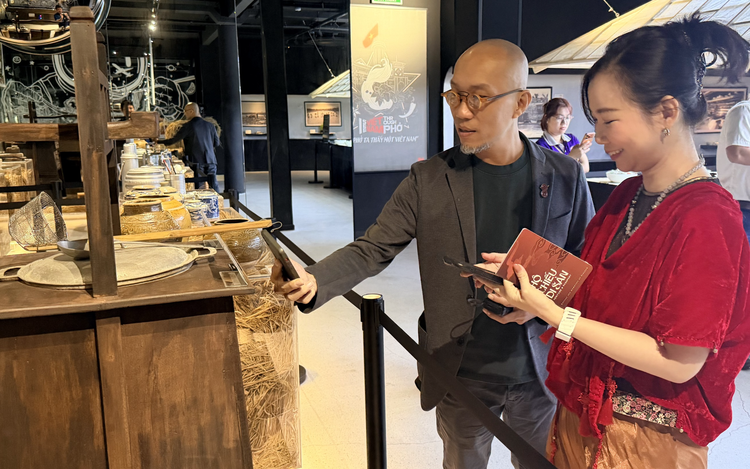
Visitors use NFC technology to learn about artifacts at the Pho Museum in Ho Chi Minh City. Photo: Hoai Phuong / Tuoi Tre
Passport holders can visit all three museums, enjoy a bowl of pho and receive a gift as part of the experience.
The Pho Museum, the Museum of Ho Chi Minh City and the War Remnants Museum launched the heritage passport project on Thursday morning, presenting it as a new approach to discovering museums, artifacts and stories of history and culture.
The project is aimed not only at international tourists but also at attracting young Vietnamese people to history and culture through a more youthful and modern approach.
One passport, three museums
The heritage passport has been designed as an experiential product that brings the three museums together into a single itinerary.
Each destination represents a different chapter in the exploration of the city’s cultural, historical and culinary heritage.
The journey comprises three chapters, said Le Nhat Thanh, director of the Pho Museum, a culinary space celebrating Vietnam's most iconic dish.
Each chapter is centered on an iconic story: resilience through the history of struggle at the War Remnants Museum, the transformation of the place over more than three centuries at the Museum of Ho Chi Minh City, and the familiar cultural identity of Vietnamese cuisine at the Pho Museum.
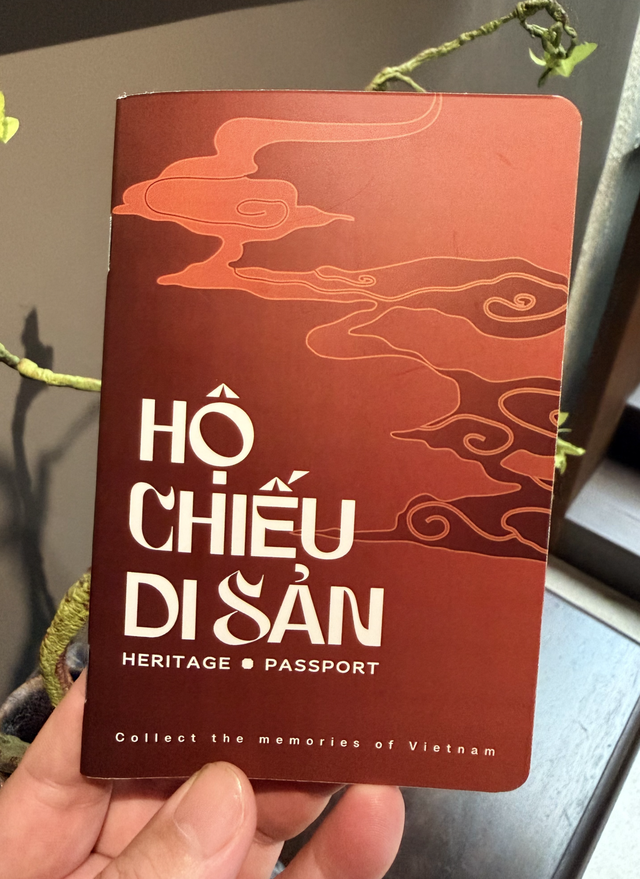
A single heritage passport allows visitors to visit three museums in Ho Chi Minh City. Photo: Hoai Phuong / Tuoi Tre
The three destinations offer different perspectives on Ho Chi Minh City and the values that have shaped Vietnamese people and culture.
Through direct experiences at the museums, visitors can explore, appreciate and preserve personal memories of the city’s heritage.
A key feature of the project is the physical passport’s integration of near-field communication (NFC) technology.
Visitors can simply tap a smartphone against an NFC-enabled point to activate a digital version of the heritage passport on their personal device.
At each stop, visitors can use NFC touchpoints to access information, images and historical stories, while also saving photographs and personal memories from their journey.
They can share their impressions and experiences on digital platforms, extending the museum visit beyond the physical space.
According to the organizers, holders of the physical heritage passport are entitled to one visit at each of the three museums, one bowl of pho and a gift.
Pho, a type of Vietnamese soup, usually served with rice noodles, slices of beef or chicken, and herbs, has gained global fame for its rich flavor and healthy balance.
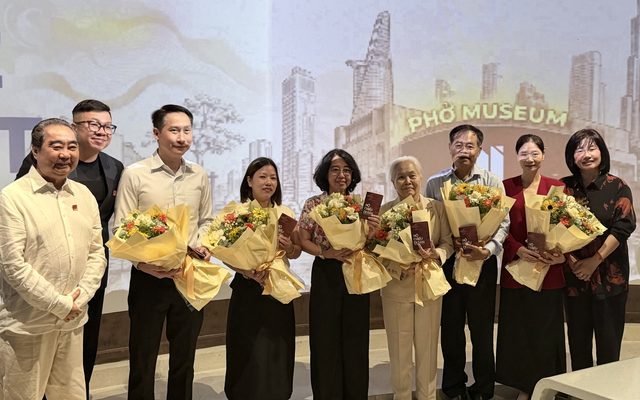
Representatives launch the heritage passport that allows visitors to visit three museums in Ho Chi Minh City, August 13, 2026. Photo: Hoai Phuong / Tuoi Tre
Thanh said technology had been incorporated into the project to ensure that experiences that might otherwise end when a museum visit ends can be revisited, preserved and personalized by individual visitors.
“We hope the heritage passport will become a bridge between destinations, between the past and the present, and between Vietnamese people and international friends,” Thanh told Tuoi Tre (Youth) online newspaper.
“When visitors complete the journey, we hope they will take away not only a passport, but also a piece of memory about Vietnam.”
The organizers plan to expand the NFC-enabled heritage passport model by connecting more museums and historical and cultural sites.
The network is also expected to include destinations for food, art and entertainment in Ho Chi Minh City, creating a wider range of locally distinctive itineraries.
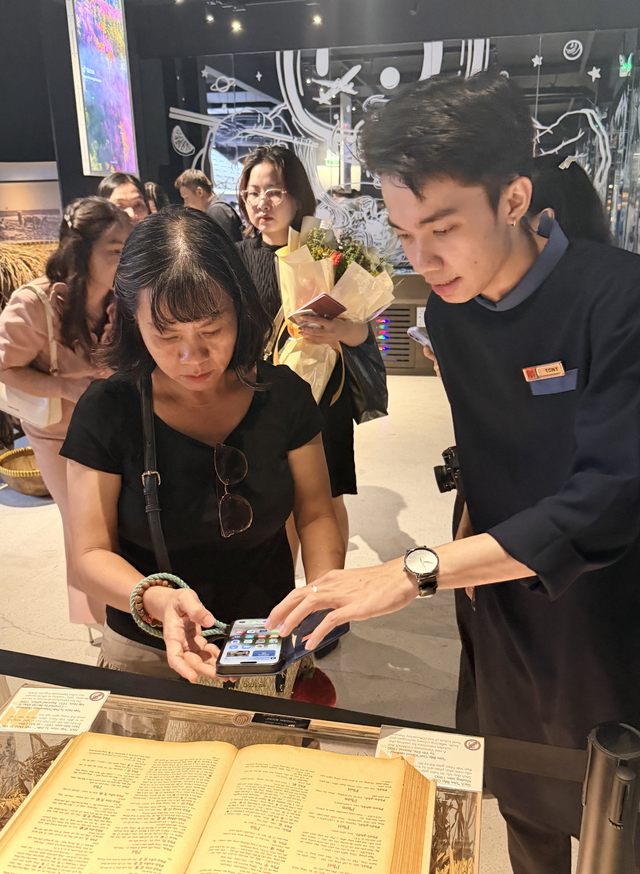
A museum employee guides a visitor as she explores a museum in Ho Chi Minh City. Photo: Hoai Phuong / Tuoi Tre
Using technology to tell heritage stories
One of the project’s notable aspects was its encouragement of participation by non-public museums, said Truong Kim Quan, deputy head of the cultural heritage division under the municipal Department of Culture and Sports.
This marks the first time a private museum, the Pho Museum, has taken the initiative to work with public museums in Ho Chi Minh City.
The application of digital technology to the heritage passport is expected to provide residents and international visitors with a new interactive experience when exploring the city.
He underscored that combining cultural heritage, cuisine and technology can raise public awareness of heritage preservation while also laying the groundwork for a broader network of cooperation among museums across the city.
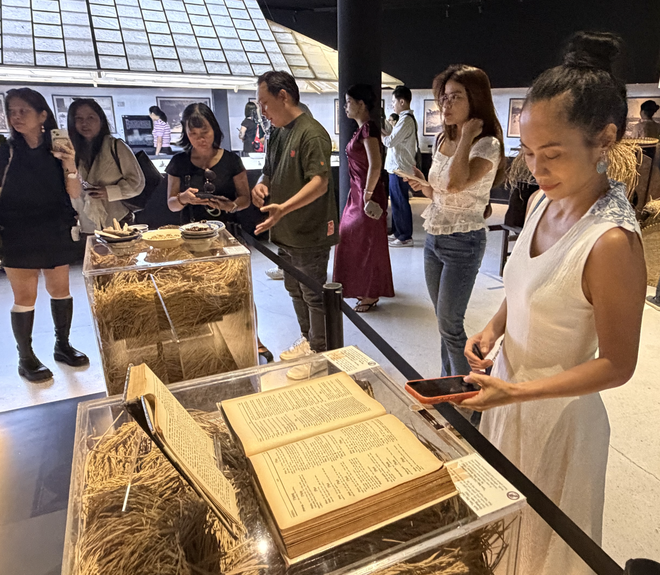
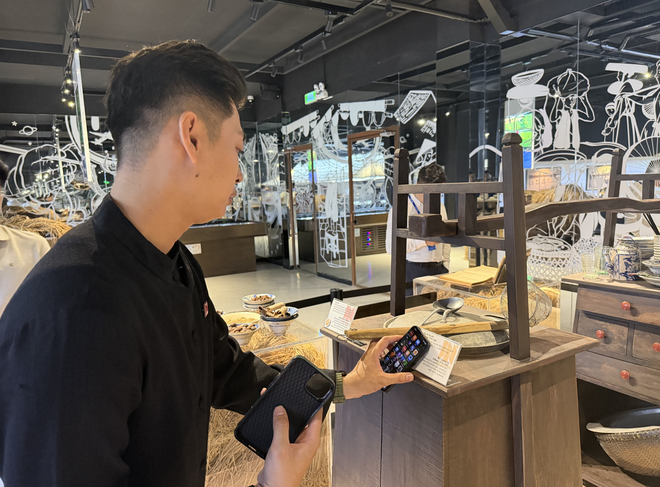
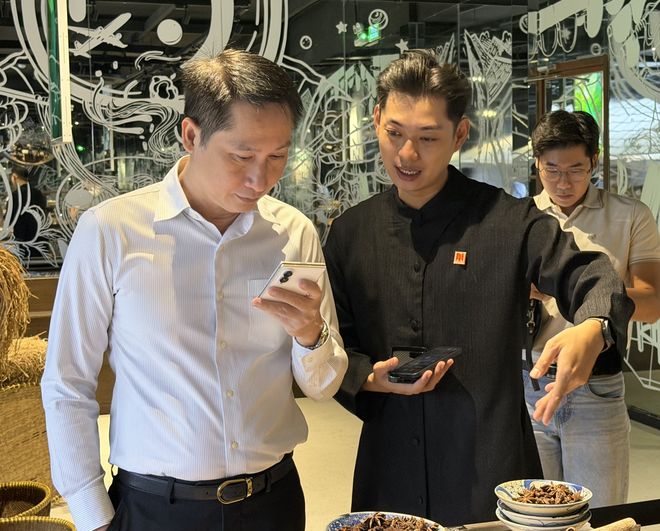
One tap to learn more about artifacts. Photo: Hoai Phuong / Tuoi Tre
The heritage passport is expected to become a new way of telling heritage stories, with technology serving as a connecting tool while museums, artifacts and historical narratives remain at the heart of the experience.
Mai Thi Hong Hoa, chairwoman of Ben Thanh Ward, described the initiative as an effective approach to helping museums maximize the cultural and heritage values they preserve.
“Such an initiative not only creates engaging experiences for visitors but also enables cultural destinations to fully showcase their core values,” Hoa said.
“These are places of pride where residents and visitors can broaden their horizons and deepen their knowledge of the nation’s heritage.”
Information regarding registration, pricing, and availability will be announced by the relevant organizers at a later date.










Max: 1500 characters
There are no comments yet. Be the first to comment.