


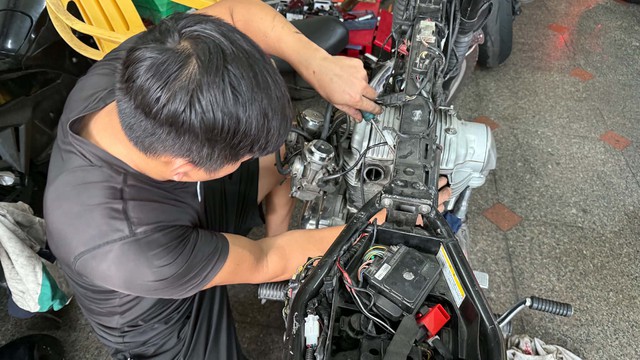
From watches and headphones to motorcycles and household appliances, repairing broken items remains a common practice in Vietnam, where people often look for ways to fix things before replacing them. Photo: Baz Mattaz
Editor’s note: This piece is written by Baz Mattaz, a British national who has been living in central Vietnam. In this personal account, he reflects on his experiences having everyday items repaired in Vietnam, and considers what the country’s repair culture can teach the West about consumption and waste.
It has been edited by Tuoi Tre News for clarity, context, and readability.
One of the things I’ve come to like about Vietnam is that people here seem to have missed the memo about throwing things away. Something breaks, so you fix it. It sounds obvious, but somewhere in the West we seem to have turned it into a revolutionary concept.
We sort our rubbish into different colored bins, worry about our carbon footprints and congratulate ourselves on buying things made from recycled materials. But when the washing machine, phone, headphones or whatever else stops working, the usual calculation is fairly simple: how much will it cost to repair, and how much is a new one?
Quite often, buying a new one wins.
Part of the reason is obvious. Labor is expensive. Parts can be expensive. There may be a diagnostic fee before anyone has even touched the thing. And increasingly, the products themselves aren’t designed with repair in mind.
Vietnam has a rather different attitude. Here, there are people everywhere who make a living from fixing things. Not replacing them. Fixing them.
And I’ve made surprisingly good use of them.
My watch is a good example. When it needed a service, I enquired with an authorised dealer in Ho Chi Minh City. The quote was VND19 million, about US$730, and I was told it would take three months, probably being shipped to the West for the work to be done.
Fair enough. That’s what an official service costs. But I thought I’d see what a good independent watchmaker could do.
I found Gia Cat Watch in Da Nang. Their price for the service was VND3.5 million ($134). During the service, the repairer discovered that the escape spring was broken.
The official dealer quoted VND4.5 million ($173) for the replacement part and a long wait for it to arrive.
The watchmaker in Da Nang, The Anh, simply made one. At his bench. He charged me a million dong for doing it.
Now, I’m sure the watch brand would have preferred me to buy an original factory part, and there are perfectly legitimate reasons for using the manufacturer’s authorised service network.
But I couldn’t help thinking that there was something wonderful about a bloke sitting at a bench in Da Nang making a tiny mechanical part because the alternative was to wait months for one to arrive from somewhere else.
I got the watch back after just a few days, fully serviced, waterproofed, with the scratches polished out, keeping excellent time and with the power reserve restored.
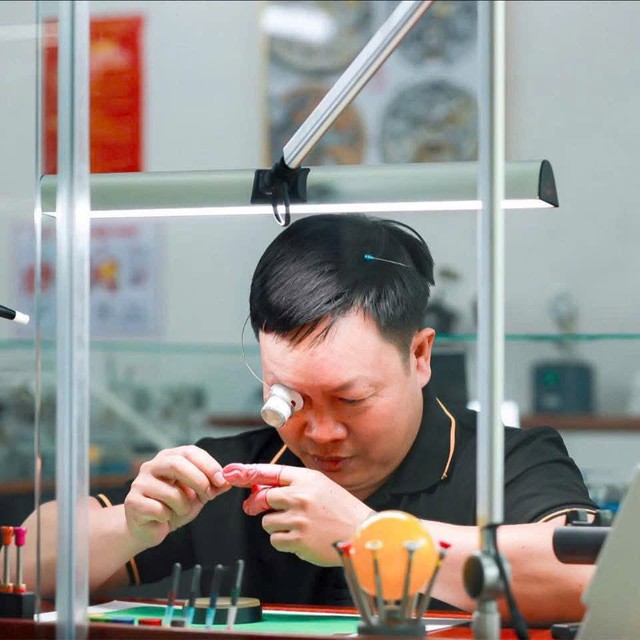
Watch repairer The Anh working on a timepiece at his workshop in Da Nang City, central Vietnam. Photo: Supplied
It’s happened repeatedly with much less expensive things.
My headphones stopped working, so I took them to Phi Long in Da Nang. They found the problem, resolved the internal connections and gave them back to me working. No new headphones.
A beard trimmer stopped working. The battery was sealed inside it and wasn’t really intended to be replaced. A local repairer replaced it anyway.
I’ve also had a heavy treadmill motor rebuilt rather than replacing the entire thing.
None of these repairs is particularly remarkable in Vietnam. That’s probably the remarkable bit.
This is where the environmental argument gets interesting. We have become very good in the West at dealing with things after we’ve finished with them. We collect them, sort them, transport them, process them and recycle whatever can be recycled. All useful stuff.
But there’s a rather obvious step that comes before recycling: don’t throw the bloody thing away in the first place. If a pair of headphones needs a solder joint repaired, the environmentally preferable outcome is surely for the headphones to carry on being headphones.
If a battery can be replaced, replace the battery. If a motor can be rebuilt, rebuild the motor.
You don’t need a complicated recycling scheme to achieve that. You need somebody who knows what they’re doing and a customer who thinks something is worth repairing.
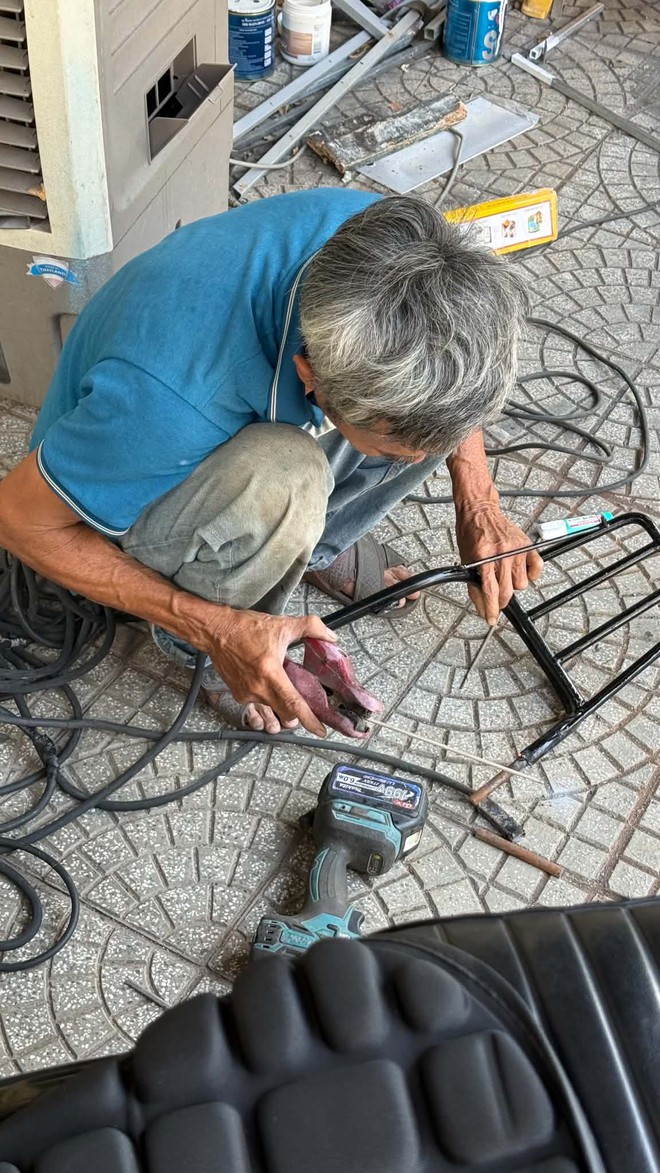
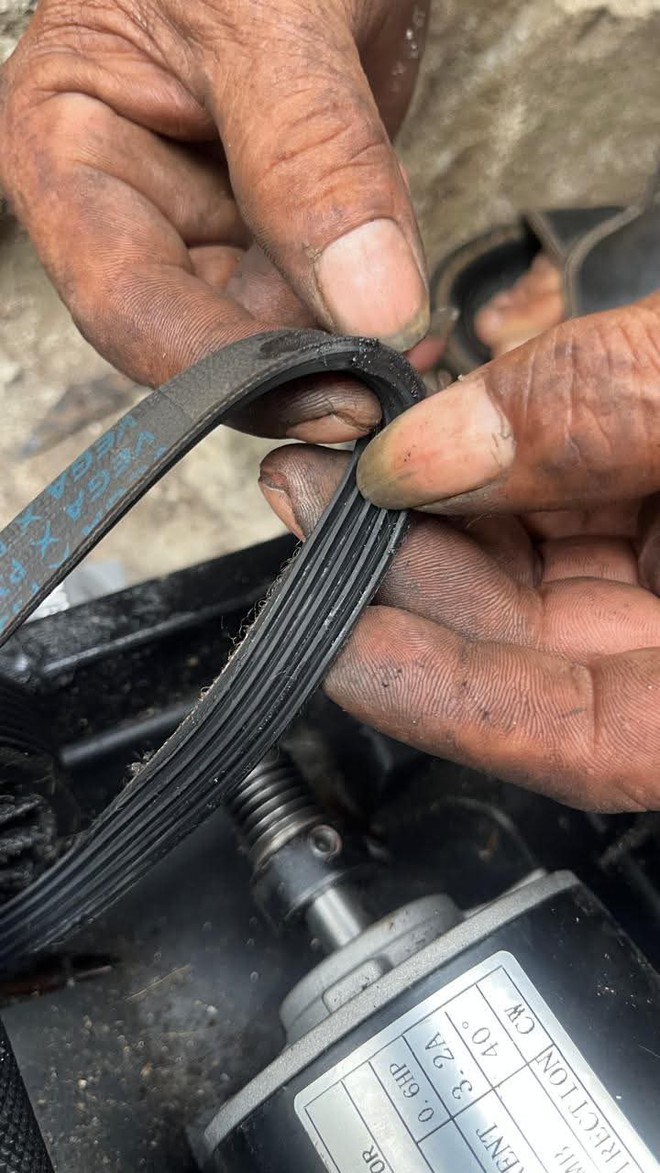
From watches and headphones to motorcycles and household appliances, repairing broken items remains a common practice in Vietnam, where people often look for ways to fix things before replacing them. Photo: Baz Mattaz
Of course, this isn’t a fairy tale.
I’ve got a larger motorcycle, for example, rather than one of the millions of small scooters on Vietnamese roads. Finding someone who really knows their way around a less common, larger-capacity bike can take a bit more effort, and parts aren’t sitting on a shelf waiting for you.
But off the guy went, returned with a part intended for a car, five minutes of work with a grinder and he was fitting it successfully to the bike.
I don’t think Vietnam has somehow discovered the secret to saving the planet. There are plenty of things Vietnam could learn from the West, particularly when it comes to environmental regulation and waste management.
But perhaps the West could learn something from Vietnam too.
We’ve become very good at talking about the circular economy. We’ve created entire industries around sustainability. But consumers are encouraged to buy the latest product because it’s “greener” even though the greenest product is the one that already exists.
Meanwhile, a bloke in a little workshop is quietly keeping an old washing machine, motorbike, fan, phone or pair of headphones going for another few years. There’s no sustainability certification on his workshop door. He doesn’t need one. He’s simply repairing something instead of throwing it away.
Recycling is better than putting something in the landfill. But keeping something working is better than recycling it.
Vietnam hasn’t convinced me that everything should be repaired forever. Sometimes things genuinely have reached the end of their useful lives. But after living here, I’ve started looking at broken things differently.
Before I buy another one, I ask a much simpler question:
Can someone fix it?
More often than I expected, the answer is yes.










Max: 1500 characters
There are no comments yet. Be the first to comment.