


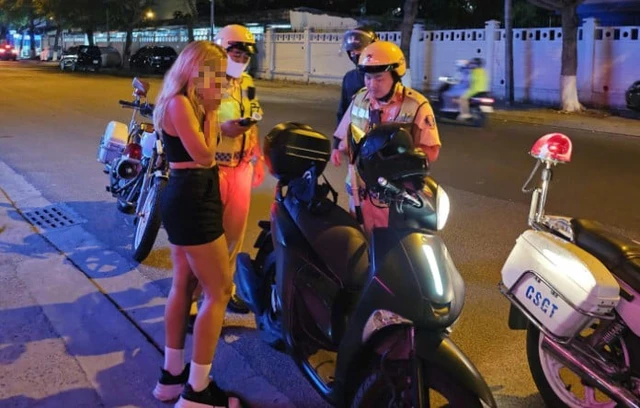
Traffic police stop and inspect a Russian tourist who was later found to have violated alcohol regulations and driven without a license in Khanh Hoa Province Province, south-central Vietnam, May 8, 2026. Photo: V.T.
Editor's note: The following commentary was submitted by Darren Chua, a Singaporean who has lived and worked in Ho Chi Minh City for more than a decade. It is written in response to recent public discussion about inappropriate behavior by some foreigners in Vietnam. The piece reflects on cultural respect, personal responsibility, and the role of guests in a foreign country.
A recent Tuoi Tre News article by Ray Kuschert on foreigners’ misconduct in Vietnam resonated deeply with me.
Having called Ho Chi Minh City home for more than a decade, I watched the city redefine itself.
I spent six of those years teaching English to thousands of eager, bright, and polite Vietnamese students. Navigating the southern city’s chaotic charm taught me that Vietnam’s legendary hospitality is an act of profound generosity, not an invitation for entitlement.
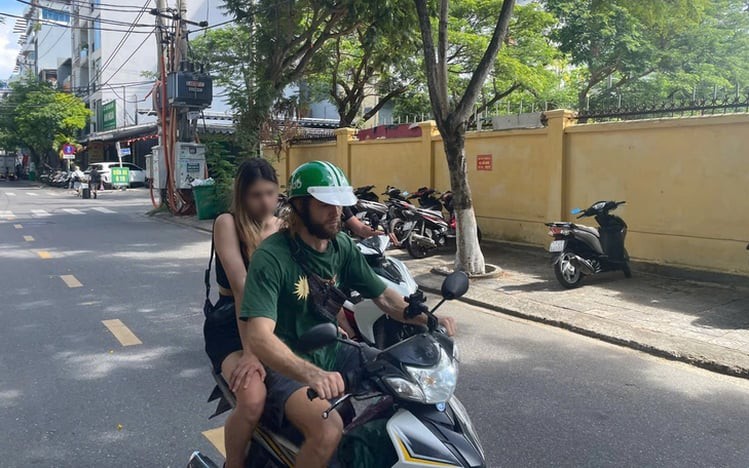
The core issue isn't just about minor rule-breaking; it is about an underlying attitude. As someone whose friends in Vietnam include expats from the West, I know first-hand that many foreigners who love, respect, and contribute deeply to the country feel embarrassed and disgusted by this behavior.
However, a small subset of Western travelers and expats still carry an outdated mindset into rapidly modernizing nations, acting as though local laws, social norms, and cultural expectations are merely optional suggestions.
Western culture relies on the old adage: "When in Rome, do as the Romans do." It reminds us that the guest adapts to the host, never the other way around.
Vietnam has its own beautifully precise, witty equivalent: "Nhập gia tùy tục, nhập giang tùy khúc" (When you enter a house, follow its customs; when you enter a river, follow its bends).
This proverb captures the reality of being a global citizen. When we move across borders, we enter a different "river." If we refuse to bend with its curves, we do not change the river; we simply crash against the rocks.
When we choose to live or travel in a different social circle, our baseline must be to add value, not to take it away or disrespect the incumbent culture. We are temporary stewards of the space we are granted.
The late chef and storyteller Anthony Bourdain, who treated Vietnam and its people with unparalleled reverence, summed up this ethos perfectly: "As you move through this life and this world you change things slightly, you leave marks behind, however small. And in return, life—and travel—leaves marks on you."
What kind of mark are we leaving behind? Is it shared growth, education, and mutual respect? Or the ugly stain of privilege and disrupted peace?
During my 11 years in Ho Chi Minh City, I've witnessed a nation working tirelessly to build its future. Local communities patiently guided me through my own cultural learning curves. These communities, and the thousands of students in my classrooms, deserved the best version of us.
True partnership requires mutual respect. To my fellow travelers, and to those of us who choose to call this country home: remember that we are guests in a home that took generations to rebuild. Let us follow the bends of the river, respect the customs of the house, and ensure our presence always adds to the beauty of Vietnam.
If this reflection reads like a love letter to Vietnam and its people, that is because it is.









Max: 1500 characters
There are no comments yet. Be the first to comment.