



Xuan Son (left) in Vietnam’s match against the Philippines in the FIFA ASEAN Cup 2026. Photo: Anh Khoa / Tuoi Tre
Vietnam will face Malaysia in the third-place playoff of the FIFA ASEAN Cup 2026 at Gelora Bung Karno Stadium in Indonesia at 4:00 pm on Monday, after Indonesia take on Thailand in the final.
Without naturalized striker Nguyen Xuan Son, who has been sidelined by injury, Vietnam have struggled at the tournament. Their 2-0 loss to Thailand in the second round of Group B cost them a place in the final.
The two other Brazilian-born players, Do Hoang Hen and Nguyen Tai Loc, have also failed to make a strong impression, prompting further debate over the quality of Vietnam’s naturalized players.
Many fans argued that Vietnam’s naturalized players are not as good as Indonesia’s and that the national team should give more opportunities to homegrown players rather than continue relying on naturalized players.
Vietnam’s squad value far behind Indonesia
Indonesia have consistently pursued a naturalization policy as part of their ambition to raise the national team’s level, inviting players with Indonesian roots to represent their ancestral country.
The policy has produced a squad featuring 18 naturalized players with Indonesian roots at the FIFA ASEAN Cup 2026, the second-highest number in the tournament after the Philippines.
The figure would have been higher had captain Jay Idzes not missed the tournament through injury.
Indonesia’s squad is valued at €22.84 million (US$25.54 million) by Transfermarkt, the highest in the tournament and nearly four times Vietnam’s €6.28 million ($7.03 million).
The gap is even more striking when comparing Vietnam’s naturalized and Vietnamese-origin players with Indonesia’s naturalized players.
Vietnam’s eight naturalized and Vietnamese-origin players have a combined transfer value of €2.375 million ($2.655 million), less than half the €5 million ($5.6 million) valuation of Indonesia’s naturalized Dutch-born center-back Kevin Diks.
Diks is only temporarily Indonesia’s most valuable naturalized player, with captain Jay Idzes sidelined. Idzes, who plays for Italian club Sassuolo, is valued at €14 million ($15.7 million).
Indonesia also have two highly valued naturalized goalkeepers. Maarten Paes, who plays for Ajax in the Netherlands, is valued at €2 million ($2.2 million), while Emil Audero of Spain’s Rayo Vallecano is valued at €2.8 million ($3.1 million).
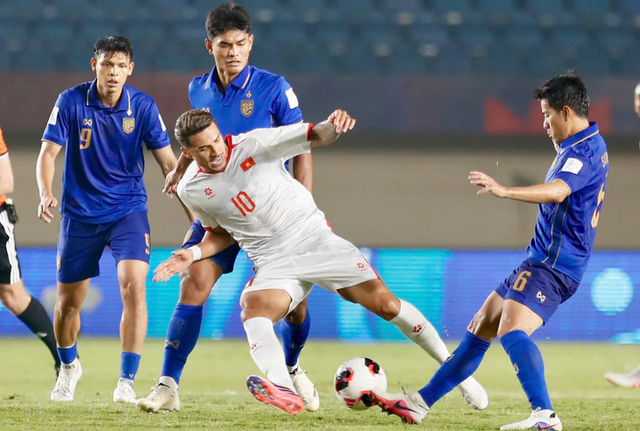
Hoang Hen in Vietnam’s match against Thailand in the FIFA ASEAN Cup 2026. Photo: Anh Khoa / Tuoi Tre
A harsh reality
Transfer value is one indicator of a player’s professional level.
Unlike Indonesia’s naturalized players, none of Vietnam’s naturalized players currently play for prominent European clubs.
Hoang Hen came through Barcelona’s renowned La Masia academy, but his subsequent professional career has not been particularly notable. He is currently valued at €300,000 ($335,580).
Tai Loc has spent most of his career with smaller clubs in Brazil and is now valued at €275,000 ($307,670).
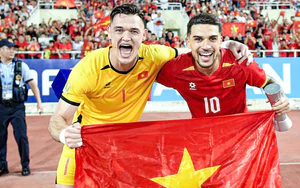
Xuan Son is Vietnam’s standout naturalized player and the most valuable at €550,000 ($615,230). However, he also spent his career mainly with Brazilian clubs, with his highest-profile stint coming at Danish second-tier club Naestved BK in 2019.
A serious injury ended Xuan Son’s hopes of pursuing a career in Europe, and he moved to Vietnam in early 2020. He has since become a key player for the national team.
Even Nigerian-born striker Olaha Manh Duc, who recently obtained Vietnamese citizenship and could be called up to the national team in the future, has a relatively modest résumé and is already 29.
Age is another concern for Vietnam’s naturalized players. Xuan Son is 29 and has suffered a series of injuries, while Hoang Hen and Tai Loc are both over 30 and may find it increasingly difficult to maintain their best form.
Indonesia have been able to find higher-quality naturalized players because they have a large pool of players with Indonesian roots who have developed in stronger football systems, particularly in the Netherlands.


Several of them have represented the Netherlands at youth levels from U17 to U21 and are playing for prominent European clubs.
Kevin Diks, for example, has captained German club Borussia Monchengladbach.
Vietnam, meanwhile, may struggle to find younger or higher-quality foreign players willing to move to the country at the age of 21 or 22 and then wait five consecutive years to become eligible to play for the national team under FIFA rules.
Ultimately, Vietnamese football still has to rely on its own strength.
Fans question naturalization policy
After Vietnam’s 2-0 loss to Thailand in the second round and their failure to reach the final, many readers of Tuoi Tre (Youth) online newspaper criticized Hoang Hen and Tai Loc for their performances at the FIFA ASEAN Cup 2026 and said head coach Kim Sang Sik should limit or stop using the two naturalized players.
“Of all Vietnam’s current naturalized players, only Xuan Son has played well,” reader Do Quang Tran wrote.
Another reader said Vietnamese-origin players were younger and could be further developed, while Tai Loc and Hoang Hen had performed poorly and lacked the composure of their Vietnamese teammates.
Some fans urged Kim Sang Sik to be more careful in selecting players, saying a naturalized player should not be favored simply because he is slightly taller than a homegrown player.
Some were anxious that excessive naturalization could deprive the next generation of opportunities to gain experience and gradually weaken Vietnamese football.
Many fans would find the national team less appealing if they relied heavily on naturalized players.
Criticism has also appeared among Southeast Asian fans. Some have accused teams of overusing naturalized players at the expense of youth development.
Others have used nicknames such as “Netherlands B” for Indonesia and “Vietzil” — a combination of Vietnam and Brazil — for Vietnam.
At the same time, some fans support naturalization, viewing it as a global trend and arguing that Southeast Asian teams cannot afford to stay outside it.
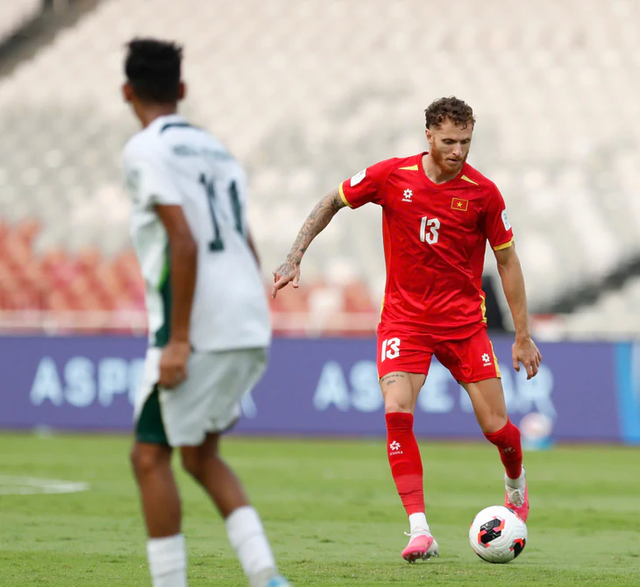
Tai Loc in Vietnam’s match against Pakistan in the FIFA ASEAN Cup 2026. Photo: Anh Khoa / Tuoi Tre
Experts call for longer-term approach
Naturalized players have given Vietnam more options in two crucial areas — defense and attack — with players offering superior physical attributes and proven experience in the V-League, according to Thanh Nien (Young People) newspaper.
However, the growing influx of foreign-born naturalized players has also raised concerns among experts and fans that it could limit opportunities for young domestic talent.
Slovenian football agent Jernej Kamensek suggested that Vietnam should stop naturalizing players and focus more on youth development and improving the V-League, Dan Tri (People's Intellectual) newspaper reported.
He added that the problem was Vietnam’s short-term approach to football development. A new coach, a group of overseas Vietnamese players or a few changes to the national team cannot quickly transform the country’s football.
In his view, the long-term solution is not simply to naturalize players or recruit more Vietnamese-origin talent, but to develop quality players domestically, improve youth development, coaching, facilities and professional football structures.
Vietnamese-origin players can certainly improve the team and create competition for places, Kamensek said, but they should not automatically be favored over players developed by the domestic system. Player selection should ultimately be based on form, quality and the team’s needs.
He said he was not opposed to naturalized players, but argued that some of the naturalized players currently being given opportunities might not be better than domestic players.
Vietnam Football Federation vice-president for professional affairs Tran Anh Tu said the federation had never set a target for the number of naturalized players in the national team.
Calling players up to the national team is the head coach’s decision, Tu affirmed.
Vietnam has many naturalized players, Tu said, but only those who fit the team should be selected.
Vietnamese football cannot pursue mass naturalization at the expense of its identity, football expert Doan Minh Xuong said, adding that naturalized players could help deliver short-term results but youth development remained the foundation of the national team.








Max: 1500 characters
There are no comments yet. Be the first to comment.