


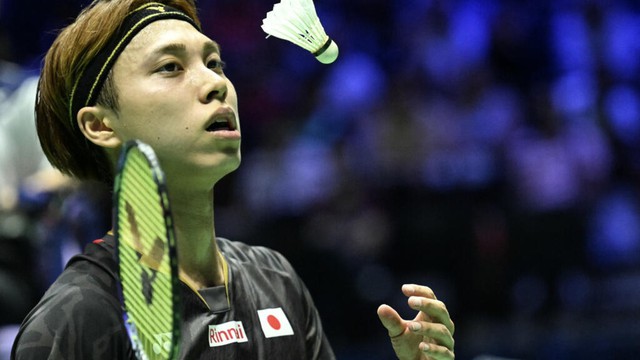
Japan's Kodai Naraoka looks at the shuttlecock as he plays against Singapore's Loh Kean Yew during their men's single match at the Badminton BWF World Championships at the Adidas Arena in Paris, on August 28, 2025 © Bertrand GUAY / AFP
Skyrocketing raw material costs in China caused shuttlecock prices to more than double last year, with the Badminton World Federation (BWF) saying previously it was an issue but the shortage was not "at a crisis level yet".
The BWF said it would use synthetic shuttlecocks at selected events including junior international tournaments.
"This initiative forms part of BWF's long‑term approach to evaluating synthetic feather shuttlecocks for potential use at the elite level," it said in a statement.
"The trial will include the collection of manufacturer performance data, alongside feedback from players, technical officials, and event organisers.
"This information will support BWF's ongoing assessment and inform future decisions regarding the potential use of synthetic shuttlecocks at top‑tier tournaments."
The shortage in shuttlecocks can, in part, be attributed to changing consumer habits in China.
The production of shuttlecocks relies heavily on the supply of duck and goose feathers.
One high-quality shuttlecock requires 16 carefully selected feathers, typically sourced from the wings of ducks or geese.
Duck and goose output in China, the global leader in shuttlecock production, has declined sharply in recent years.
There is also growing demand for shuttlecocks because of the popularity of badminton in China, manufacturers told AFP.









Max: 1500 characters
There are no comments yet. Be the first to comment.