


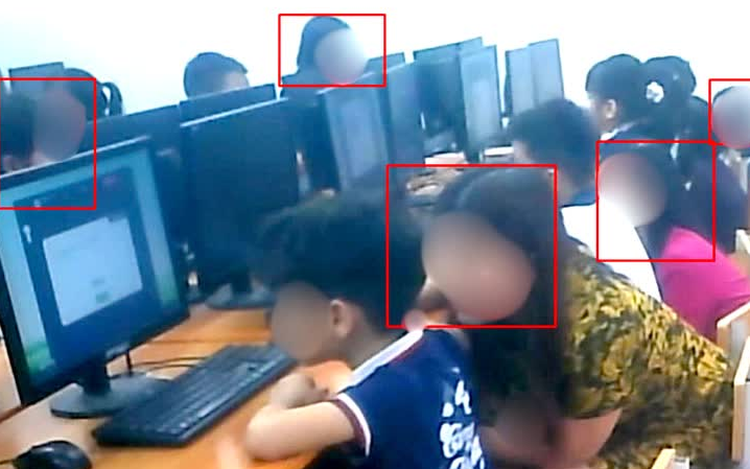
A screenshot shows teachers exploiting camera blind spots to help students during an VioEdu exam in a room in Hanoi, March 18, 2026. Photo: VioEdu
In response, the organizer of the competition annulled the results of some exam sites in Hanoi after uncovering widespread cheating.
Proctors deliberately adjusted cameras and moved from student to student, feeding them answers.
The incident has reignited concerns over a persistent ‘achievement disease’ in education and the corrosive effects of dishonesty that accompany it.
It also forces a difficult but necessary question: are we truly teaching children the value of honesty?
Honesty is a foundational virtue that must be nurtured from early childhood, at home and from the first days of school.
More importantly, it must be reinforced consistently throughout a child’s journey of learning and personal development.
Yet the current educational landscape is saturated with competitions, campaigns, and accolades.
Students are celebrated, awards are handed out, and achievements are showcased with pride.
However, behind the glittering surface, uncomfortable questions linger such as ‘How many of these accomplishments genuinely reflect a child’s own effort?’, ‘How often are projects guided, if not outright produced, by teachers?’, and ‘How many parents quietly purchase ready-made research projects to secure recognition for their children?’.
Whispers of perfect scores achieved with teacher assistance are not uncommon.
Nor are stories of educators exploiting technical loopholes in online exams to help their students succeed.
In such an environment, teaching children about honesty becomes an uphill battle when adults themselves are complicit in deception.
However, responsibility cannot rest solely on schools.
Parents must also reflect on their role in shaping their children’s values.
Children are turned into symbols of parental success – trophies displayed through report cards, certificates, and medals, especially on social media.
Each school year’s end brings a flood of posts celebrating academic achievements.
This fuels unethical practices such as grade inflation, manipulation of academic records, and relentless competition for prestige.
Dishonesty, in any environment, fractures trust.
In education, its impact is even more profound.
True talent is cultivated through genuine learning and honest evaluation, serving as the building blocks for a strong and sustainable society.
Conversely, when success is built on inflated grades and fabricated achievements, it creates hollow foundations that blur the line between competence and incompetence, and ultimately hinder national progress.
* This article was originally written in Vietnamese by teacher Thanh Nguyen and translated by Tuoi Tre News.








Max: 1500 characters
There are no comments yet. Be the first to comment.