


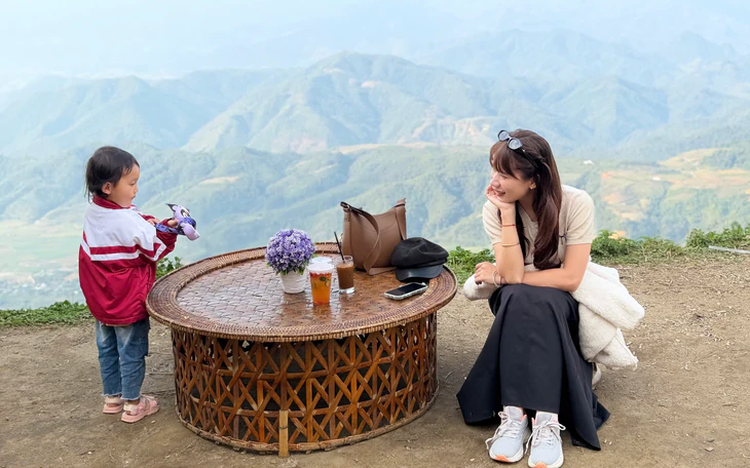
Nguyen Thi Huyen Trang, a visitor from Ho Chi Minh City, poses for photos at a site in Si Thau Chai Community Tourism Village in Lai Chau Province. Photo: H.T.
Sharing meals with locals
An avid traveler, Nguyen Thi Huyen Trang from Ho Chi Minh City has visited many destinations across Vietnam. In recent years, however, she has become more interested in community-based tourism.
Early this year, she visited Si Thau Chai Community Tourism Village in Lai Chau Province, northern Vietnam, where local Dao ethnic people run tourism businesses themselves.
“The whole village is made up of local people who use their own homes as guest rooms, with shared spaces and private rooms.
The food is also prepared by local residents, using vegetables and other produce that they grow themselves. The vegetables are prepared according to the seasons, so you get to eat whatever is locally available at that time,” Trang said.
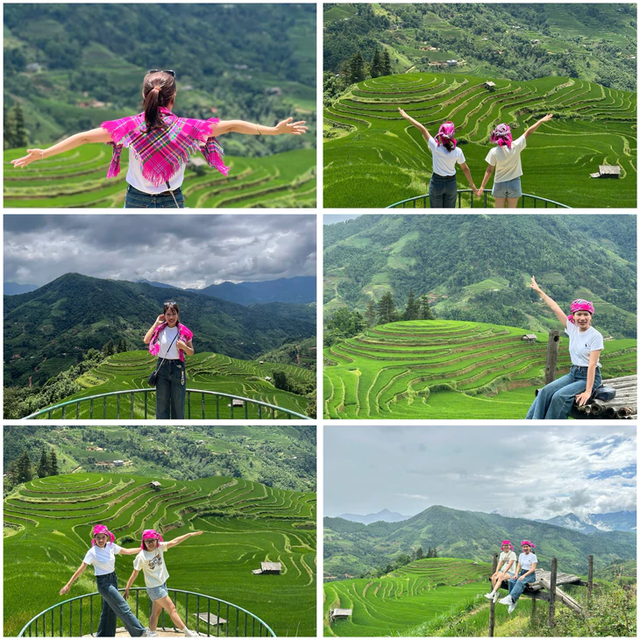
A view of terraced rice fields shared by Trang. Photo: H.T.
She said she enjoyed this type of travel because it gave her more opportunities to talk with local people.
Trang also found community-based tourism different from conventional trips. The village was clean and free of litter, while flowers, plants and fences were carefully maintained by residents. Visitors can also take part in various activities organized by local people.
Trang said she typically spends VND10-12 million (US$380-456) on a trip, including a round-trip flight between Ho Chi Minh City and Hanoi, transportation, a local driver and other activities.
Apart from airfare, services in Si Thau Chai are relatively affordable. A sleeper bus with 22 berths from Hanoi to Lai Chau costs VND450,000 ($17.3). Breakfast costs VND35,000 ($1.3) each, while a regular meal costs VND100,000-150,000 ($3.8-5.7)
A hot pot meal costs around VND200,000 ($7.6), while a room for two people costs about VND300,000 ($11.40).
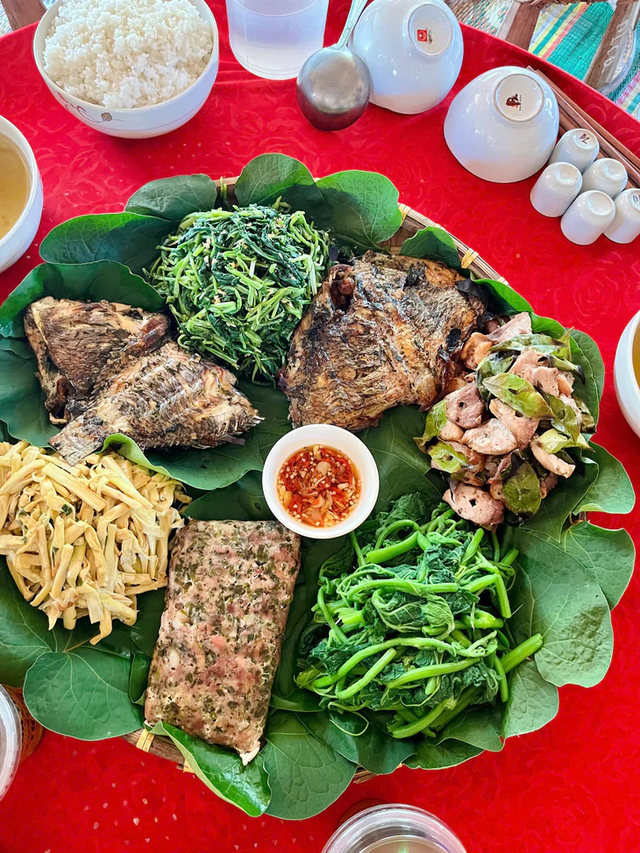
A lunch prepared by local residents. Photo: H.T.
Having enjoyed this type of tourism, Trang has also visited other community tourism villages, including Nam Nghiep, a high-altitude village in Son La Province, and Na Su in Dien Bien Province, as well as several cultural villages in other provinces.
Hong Ngan, a Hanoi resident, has also experienced the combination of spectacular nature and local culture in Lien Village in Lao Cai Province.
Ngan said she enjoyed having meals while chatting with local residents about their culture.
During her stay in Lien Village, she picked vegetables in the morning and cooked instant noodles. She also took part in releasing carp fingerlings into rice fields, while visitors can catch fish in the fields when the rice is nearing harvest.
The village also offers traditional Tay ethnic clothing for rent, allowing visitors to dress up and take photos.
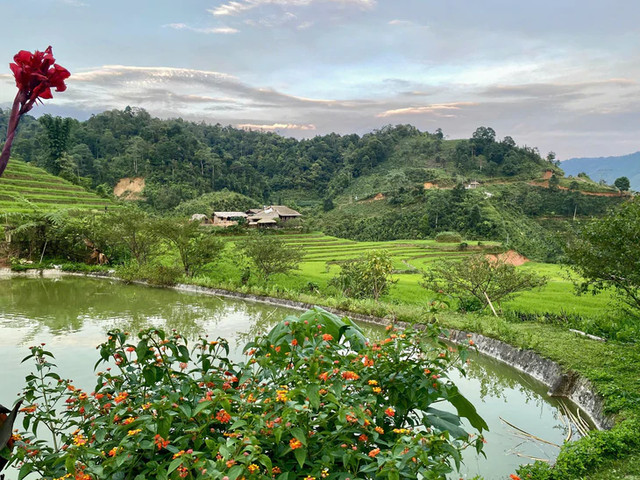
A simple scene in Lien Village in Lao Cai Province. Photo: H.N.
Lien Village is relatively small, with only a limited number of households providing tourism services. If one homestay is fully booked or cannot accommodate all guests, visitors are referred to a neighboring household. Families also help one another prepare meals when visitor numbers surge during holidays and Tet.
Depending on the season, visitors can pick tea leaves, explore forests, release fish into rice fields, or take part in plowing and farming.
Unlike Trang, who travels from Ho Chi Minh City, Ngan starts her trips from Hanoi, making her travel costs lower. A self-guided three-day, two-night trip typically costs VND4-5 million ($152-190) per person.
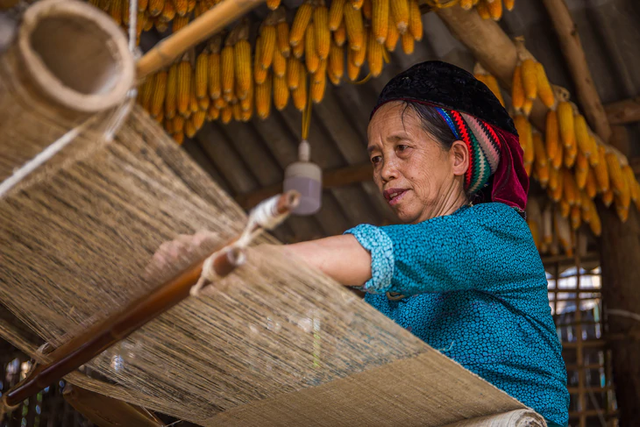
Lung Tam Village in Tuyen Quang Province. Photo: My My
A sleeper or cabin bus from Hanoi to Bac Ha costs around VND300,000-450,000 ($11.4-17) each way. From Bac Ha to Lien Village, about 22 kilometers away, visitors can rent a motorbike for around VND150,000 ($5.7) a day or take a local motorbike taxi.
The most common accommodation in Lien Village is traditional Tay stilt-house homestays, which cost VND100,000-300,000 ($3.80-11.4) per person per night. Food is also relatively inexpensive.
“But on each trip, I also visit several other destinations, rather than staying only in Lien Village, so the total cost goes up quite a bit. If visitors stay in Lien Village for three days, however, they would spend only around VND2.5 million ($95) per person,” Ngan said.
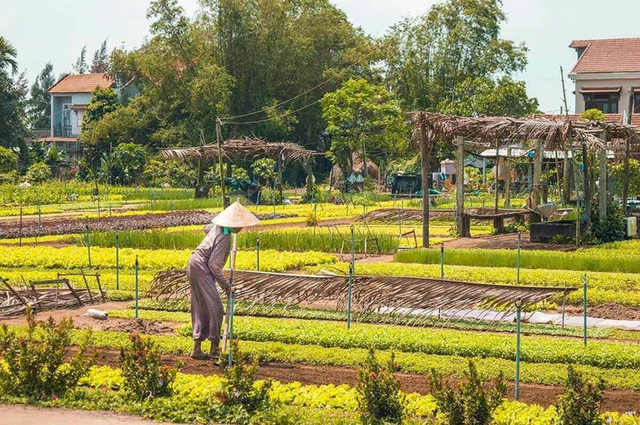
Tra Que vegetable village in Da Nang. Photo: My My
Supporting local livelihoods
According to Booking.com’s latest Sustainable Travel Report, 78 percent of Vietnamese travelers want the money they spend while traveling to stay within local communities. Meanwhile, 85 percent seek authentic experiences that reflect the culture of their destinations.
Experiences rooted in local knowledge, traditions and ways of life not only give travelers a deeper understanding of a destination but also provide a direct source of income for local communities.
The survey identified several destinations in Vietnam where visitors can connect with traditional values while supporting the people who preserve them.
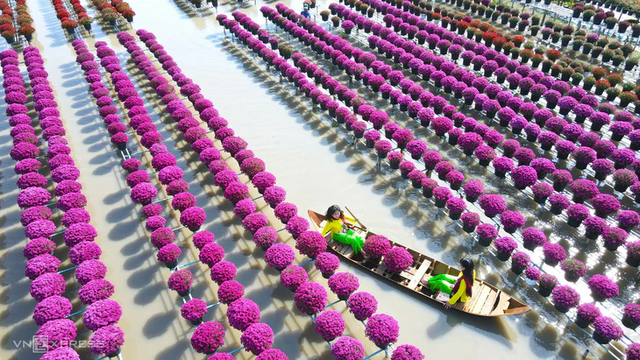
Sa Dec Flower Village in Dong Thap Province. Photo: My My
Lung Tam Village in Tuyen Quang Province, northern Vietnam, is known for preserving the traditional linen weaving craft of the H’Mong ethnic community, which has been practiced for hundreds of years.
Linen is closely tied to H’Mong cultural identity and spiritual life. Each product goes through 41 painstaking steps, from weaving and indigo dyeing to creating symbolic patterns with beeswax.
Tra Que vegetable village in Da Nang, central Vietnam, dates back to the 16th century and remains a thriving farming community built on fertile soil between the Co Co River and Tra Que Lagoon.
Covering 18 hectares, the village is home to more than 300 farmers from 200 households who grow around 20 types of organic vegetables and herbs.
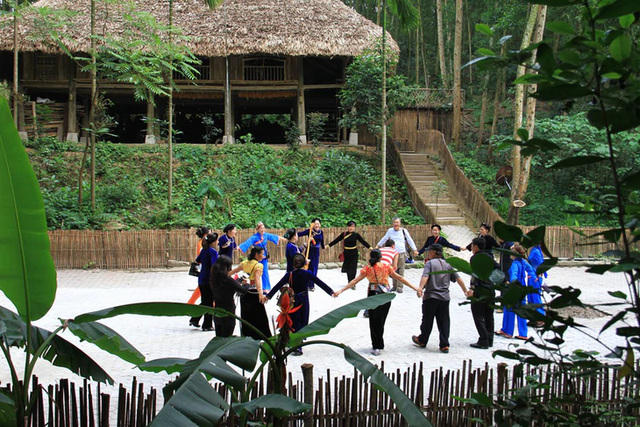
Thai Hai Ecological Village in Thai Nguyen Province. Photo: My My
Sa Dec flower village in Dong Thap Province, southern Vietnam, has been shaped by flower growing for more than a century, making it a major source of livelihoods in Tan Quy Dong Ward, widely known as Sa Dec Flower Village.
Nourished by rich alluvial soil from the Tien River, the 85-hectare area is home to more than 2,000 varieties of flowers and ornamental plants.
Tram Chim National Park and Gao Giong cajuput forest also offer seasonal experiences in Dong Thap. Tram Chim changes dramatically during the annual flood season, when vegetation flourishes across the wetlands, while Gao Giong provides a habitat for diverse bird species, including large flocks of white egrets.
Thai Hai Ecological Village in Thai Nguyen Province, northern Vietnam, was named one of the Best Tourism Villages by UN Tourism in 2022.
The ecological reserve features more than 30 traditional Tay stilt houses and is home to more than four generations of Tay families who live together as a community.
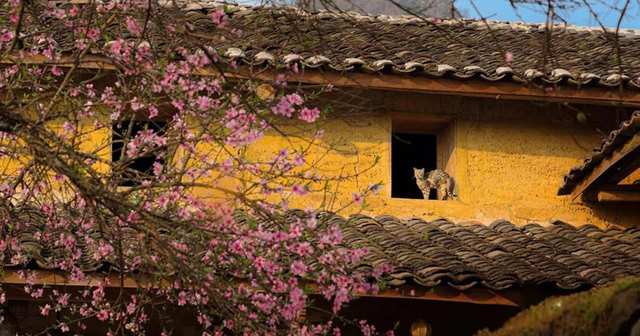
Lo Lo Chai Village in Tuyen Quang Province. Photo: My My
Lo Lo Chai Village in Lung Cu, Tuyen Quang Province, also in the north, lies near Vietnam’s northernmost point. It was named one of the Best Tourism Villages by UN Tourism in 2025, selected from more than 270 nominations worldwide.
The recognition highlights the village’s community-based tourism model, which has helped improve local livelihoods while preserving Lo Lo ethnic culture and centuries-old rammed-earth houses.



Max: 1500 characters
There are no comments yet. Be the first to comment.