



Many SMEs have established markets, stable customer bases, and consistent cash flows, yet still struggle to secure financing because lending decisions remain heavily dependent on collateral. Photo: Quang Dinh / Tuoi Tre
Announced at the Government's regular press conference on August 3, the State Bank of Vietnam (SBV) said that it is finalizing guidelines for a VND220-trillion ($8.4 billion) preferential lending program aimed at small and medium-sized enterprises (SMEs) and businesses operating in priority sectors.
Funded by state-owned commercial banks, the package aims to lower borrowing costs, expand production, and support economic growth.
A timely injection
The initiative is timely. Vietnam’s economy expanded by an impressive 8.18 percent year on year in the first half of 2026, with inflation remaining relatively contained, but growth still fell short of official ambitions. Global headwinds - from geopolitical tensions to supply-chain volatility - continue to weigh on the outlook.
The political stakes are equally high. Under Resolution 68, adopted by the Politburo in 2025, Hanoi has set a target of two million enterprises operating in the economy by 2030. Reaching that goal will require not only the creation of new businesses, but also an environment in which existing firms can survive, invest, and scale.
SMEs account for more than 98 percent of businesses in Vietnam. Yet despite their overwhelming presence, they receive only around one-fifth of outstanding bank credit, leaving many undercapitalized and vulnerable to external shocks. Limited access to finance constrains their ability to invest in productivity, technology, and green transitions.
The new lending facility could help close that gap. But its ultimate impact will depend less on the headline allocation than on whether viable firms can actually access the money.
Vietnamese SMEs face a structural mismatch between how they create value and how banks assess risk.
Many smaller firms have viable order books, established customer relationships, and recurring cash flows. Yet bank lending remains heavily dependent on conventional collateral, particularly land and property. For businesses whose most valuable assets are contracts, customer data, intellectual property or future cash flows, formal finance can remain difficult to obtain.
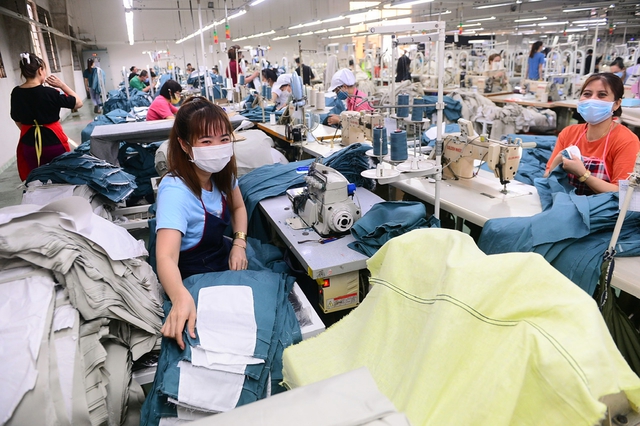
Beyond financial support, policymakers in Vietnam could invest more in leadership development, digital transformation, AI literacy, innovation management, export readiness, and ESG capabilities to help firms compete in increasingly demanding markets. Photo: Quang Dinh / Tuoi Tre
Recent World Bank data illustrate the broader allocation problem. Credit to real estate grew by 42 percent in 2025, more than twice the 19 percent system-wide average, while lending to manufacturing and agriculture expanded much more slowly. SME credit also remained modest.
The result is not simply a shortage of capital, but a potential misallocation of it, from productive firms and employment-generating activities toward assets that are easier for banks to collateralize.
That distinction matters. Vietnam does not merely need more credit; it needs a financial system capable of identifying and funding productive businesses.
Nguyen Tuan Anh, a finance lecturer at RMIT Vietnam, notes that the program could directly tackle two of the most pressing hurdles confronting small firms: immediate liquidity shortfalls and constrained investment capacity.
Lower borrowing costs, in his view, can incentivize essential spending on technology upgrades and cleaner production, turning a short-term lifeline into a long-term engine for productivity as operating costs climb.
Yet the initiative’s ultimate impact hinges less on the headline sum than on who actually gets the cash.
Dr. Majo George, dean of the Faculty of Economics, Ho Chi Minh City University of Economics and Finance (UEF), shared a similar view, arguing that many commercially viable SMEs remain excluded from formal credit channels because conventional lending models fail to fully capture their repayment capacity.
Rather than relaxing lending standards, banks should make greater use of cash flows, digital transactions, tax records and supply-chain data to build a more accurate picture of business performance.

From supporting businesses to enabling growth
Vietnam's recent experience offers a sobering precedent. Under Decree 31/2022, the government introduced a VND40 trillion ($1.53 billion) interest-subsidy program to support post-pandemic recovery. Yet only around VND1.2 trillion ($46 million) was ultimately disbursed before the program expired in late 2023 - roughly three percent of its allocation.
The lesson is clear: announcing subsidized credit is easier than delivering it. Eligibility requirements, administrative complexity, and concerns about subsequent scrutiny can discourage both banks and borrowers from participating.
To avoid repeating these problems, Vietnam should modernize its credit architecture rather than rely solely on cheaper loans. One option is to expand credit-guarantee mechanisms that allow the state to share part of the risk with commercial lenders.
Taiwan's SME Credit Guarantee Fund offers one relevant model: government-backed guarantees allow banks to lend to viable smaller firms without relying entirely on traditional collateral.
At the same time, Vietnamese banks should move further toward cash-flow-based underwriting. Digital payment records, e-invoices, tax receipts, and other forms of verified business data could help lenders assess firms that lack substantial fixed assets but have demonstrable revenues and repayment capacity.
This would make the VND220 trillion facility more than a temporary stimulus measure. It could become an opportunity to improve how Vietnam allocates capital more broadly.
Even a more efficient credit pipeline cannot compensate for deeper structural constraints.
Vietnam continues to experience significant business churn, with hundreds of thousands of firms entering, re-entering or exiting the market each year. The challenge is therefore not simply to help firms obtain loans, but to create conditions in which productive businesses can survive long enough to use that capital effectively.
Tax policy is one part of the equation. A more targeted corporate-tax regime for smaller firms, combined with enhanced deductions for research and development and workforce training, could encourage formalization, reinvestment, and productivity growth.
Any such reform, however, should be designed carefully to avoid creating new thresholds that discourage firms from growing beyond SME status.
Administrative compliance is another obstacle. Land access, construction permits, fire-safety requirements, and other regulatory procedures can impose disproportionate costs on smaller firms that lack dedicated compliance teams.
Full digitalization of administrative processes, combined with clearer and more predictable enforcement, would reduce these costs and make the business environment more accessible to smaller enterprises.
As Dr. Majo George noted, access to finance alone does not guarantee business success. "Credit creates capacity, but markets create cash flow." A company may secure financing, but without customers and orders, sustainable growth remains difficult.
Financial capital must also be paired with human and technological capabilities.
Vietnam has successfully built a globally competitive manufacturing and export ecosystem, but many domestic firms remain constrained by management capacity, technological adoption, and workforce skills.
Targeted support for executive education, artificial intelligence literacy, digitalization, and operational efficiency could help smaller companies move up the value chain instead of competing primarily on low costs.
This is particularly important as technology lowers the cost of adopting sophisticated tools once available only to large corporations.

The objective should not be to subsidize every firm's technology investment, but to ensure that viable SMEs have the skills and incentives to adopt technologies that raise productivity.
Vietnam has demonstrated an extraordinary capacity to plug itself into global trade networks. The next challenge is ensuring that its domestic private sector captures a far larger share of the value generated by that integration.
The VND220 trillion lending program can provide an important starting point. But its success should not be measured only by how much money is disbursed. The real test is whether more productive SMEs gain access to finance, expand into new markets, invest in technology, and create higher-value jobs.
If Vietnam can pair better financial access with deeper institutional reform, the objective should be more ambitious than helping small businesses survive. It should be to build a generation of Vietnamese companies capable of becoming regional champions.
From credit access to market access
Finance is ultimately useful only when businesses can turn it into sustainable revenue.
World Bank firm-level analysis has found that only about 17 percent of domestic private-sector firms directly engage in export markets.
While this figure comes from older enterprise data rather than a current 2026 measure, it highlights a persistent challenge: many Vietnamese domestic firms remain weakly integrated into global value chains.
According to Dr. Majo George, cheap credit can help a company buy machinery, hire workers or increase production capacity. It cannot, by itself, create foreign customers.
Policymakers therefore need to help domestic SMEs meet the quality, environmental, social and governance, and traceability requirements increasingly demanded by international buyers.
Export-readiness programs, supplier-development initiatives, and stronger links between domestic firms and multinational manufacturers could help turn Vietnam's trade openness into broader opportunities for local businesses.
Institutional reforms are equally important. Dr. Tuan Anh said reducing compliance costs should be a priority, particularly in areas such as land procedures, construction permits, and fire safety regulations.
Further digitalization and simplified administrative procedures could help lower operating costs and improve the business environment for smaller firms.








Max: 1500 characters
There are no comments yet. Be the first to comment.