


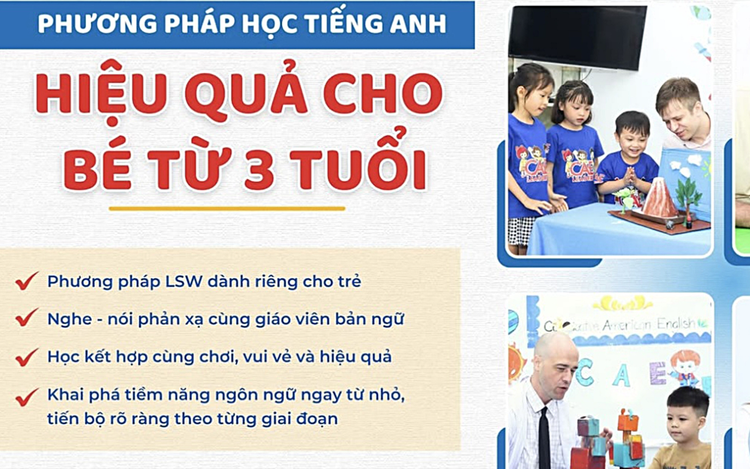
Advertisements for preschool English courses are easy to find online. Photo: Thao Thuong / Tuoi Tre
Public preschools in the city have rolled out programs that introduce young children to English, while parents’ expectations that their children master a foreign language as early as possible have inadvertently created fertile ground for private language centers.
As a result, English courses for preschoolers have mushroomed almost year-round.
According to the municipal Department of Education and Training, as of January, the city has been home to nearly 2,100 foreign language centers offering diverse training models, with many courses featuring local and foreign teachers.
How parents should choose a center and how children should be introduced to English in a way that suits their development has become a pressing concern.
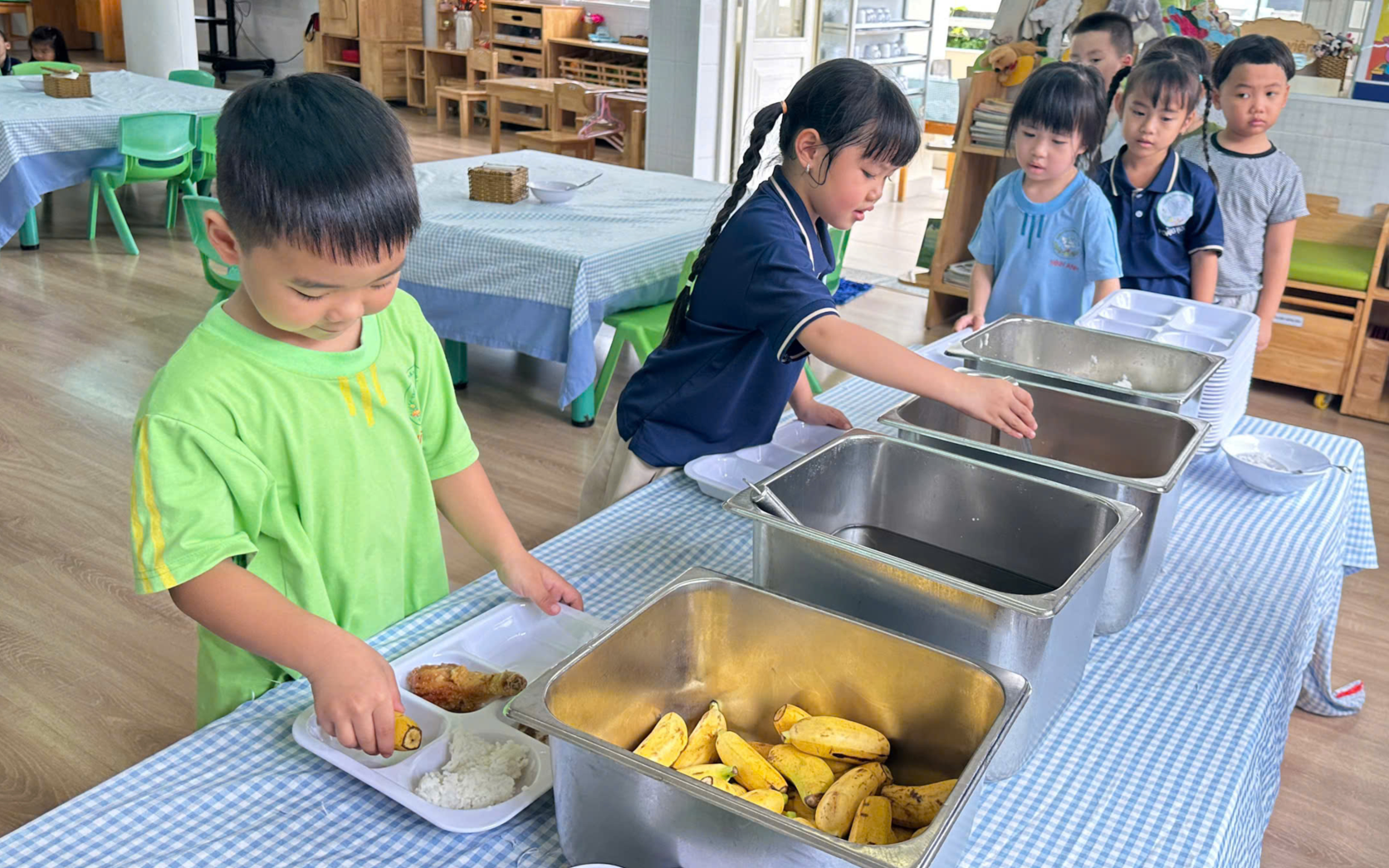
Enrolling babies right after first birthday
Recruitment for preschool English courses has been brisk since the first days of 2026.
“It is too late to let a baby learn English at the age of three,” said an employee at an English center in Xom Cui Ward.
“We accept children right after their first birthday and enroll continuously.
"Learn early, absorb early, speak early.
"If you don’t start early with English, your child will fall behind."
Tuition at the center ranges from VND1.5 million (US$57) to VND2.5 million ($95) per course, depending on whether the teacher is Vietnamese or foreign.
English is taught through games, object names, and animals – methods the center claims any child can follow.
At another language center in An Hoi Dong Ward, courses are advertised for children aged four to 16, promising both English proficiency and holistic development through a distinctive model.
“We personalize learning pathways. Each teacher works with only three to four children per session, each lasting nearly two hours,” a staff member explained.
“Children receive close guidance, immediate correction, and no one gets left behind.
"After just a few months, they’ll dare to speak English.”
The staff member said teachers specialize exclusively in teaching English to children, understand child psychology, and design age-appropriate lesson plans.
Although the center previously accepted only children aged six to 16, it has expanded enrollment to younger ages to keep pace with Vietnam expecting English to become a second language in schools by 2035 and partnerships between preschools and language centers.
Nguyen Van Hai, a representative of a language center chain with dozens of branches in the city, said centers used to enroll children from age five, but have recently opened classes for those aged three to four.
“We initially considered targeting the one-to-two age group, designing activities using songs, games, and short rhymes, but realized they were still too young,” he said.
“We also struggled to recruit Vietnamese teachers of English with early childhood pedagogy training."
Hai revealed that preschool English courses generate solid revenue.
Many centers now compete fiercely, enrolling students year-round and promoting glossy claims on social media such as one-on-one English with real teachers, 100-percent qualified instructors, guaranteed outcomes or money-back promises.
Some slogans include ‘Start English right after the first birthday – Don’t wait until after Tet,’ or ‘Ages one to six happen only once.’
Curricula vary widely.
Some centers claim to compile their own programs based on international standards, while others use materials said to be from Oxford, Cambridge or major global publishers.
Monthly tuition also spans a wide range: one-on-one classes for children aged one to three cost around VND1.5 million with Vietnamese teachers, over VND2 million ($76) with Filipino teachers, and from VND4 million ($152) with native speakers.
Age-appropriate methods matter
Demand for early English learning is real, but many parents feel overwhelmed by the sheer number of advertised courses.
Nguyen Thi Thao, an English teacher at a preschool in Ho Chi Minh City, said English learning at this age should focus on stimulating confidence, interest, and basic pronunciation.
“In preschools, children learn English through songs, rhymes, and short video dialogues to interact and familiarize themselves with the language,” she said.
“They absorb impressions naturally, and teachers reinforce them through interaction.
"Children aged three to five have the strongest capacity for language acquisition – even without textbooks, they can still speak.”
She added that preschoolers can be restless – sometimes rolling on the floor to play during class, so teachers must combine standard methods with flexible approaches to re-engage them.
Luong Thi Hong Diep, head of the early childhood education division at the municipal Department of Education and Training, stressed that teacher quality is paramount.
Parents should carefully examine a center’s curriculum, whether it has been vetted, how outcomes are assessed, and what a three- or four-year-old is expected to achieve upon completing a course.
“If the mother is Vietnamese and the father is foreign, a child may need English from age one to communicate at home,” she said.
“However, parents shouldn’t rush to enroll their child just because others do.
"They should consider the child’s environment, needs, and psychology.”
High-profit segment
Ngo Thi Thu Trang, who once worked as a teaching assistant at a language center on Tran Quang Khai Street, said preschool English courses have boomed largely because of their profitability.
“Tuition is very high at centers with some reputation," she said.
“Parents pay in full packages or by levels, and completing the program can mean going through dozens of levels.
“Compared to school fees, it’s a world apart – but centers still attract plenty of students, making this a highly lucrative segment."
Parents urged to think carefully
An official from the municipal department said that with so many language centers, choosing a truly high-quality program requires parents to weigh multiple factors carefully.
Only when all criteria are met should parents expect to build a solid English foundation for their children.
Regarding age, the official said the ‘golden’ starting point for effective English exposure in preschool programs is from age three.
Outside school, decisions vary by family, but introducing English too early – when a child’s speech is still unclear and no language is fully formed – should be carefully considered, said the official.
English education at the preschool level has its own characteristics, Diep said.
Teaching methods must be tailored to each age group, and teachers – whether native, foreign or local – must have early childhood pedagogy training.
Pronunciation standards are especially critical: incorrect foundations at this stage can have long-term consequences.








Max: 1500 characters
There are no comments yet. Be the first to comment.