


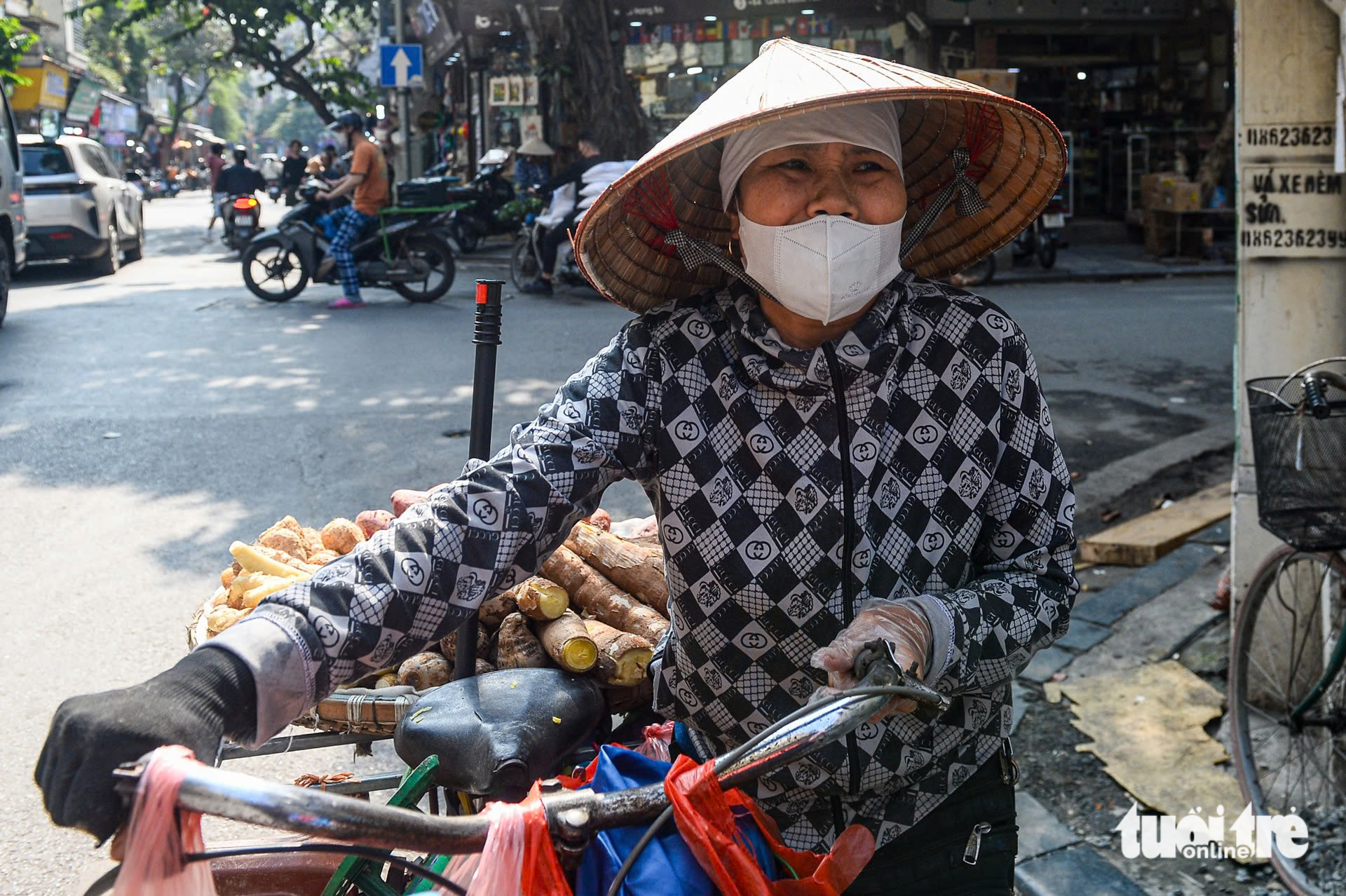
Do Thi Thanh pushes her bicycle loaded with cassava, arrowroot and sweet potatoes through the Old Quarter in Hanoi. Photo: Phuc Tai
On days when Hanoi's Air Quality Index sinks to the "unhealthy" range, street vendors, delivery drivers and ride-hail motorbike operators continue navigating roads thick with dust and exhaust.
Their livelihoods are tied to every sale, every ride, every bag of produce.
According to the IQAir monitoring app, Hanoi ranked as the world's seventh most polluted city on Monday morning, with an AQI reading of 191, a red-level rating considered unhealthy for the public.
Surviving the smog to make ends meet
At sunrise, 65-year-old Do Thi Thanh loads cassava, arrowroot and sweet potatoes onto her bicycle and begins her slow circuit through the Old Quarter.
She has been selling produce on these streets for more than three decades.
Thanh knows the air is dangerous. She can see the haze settling on her baskets.
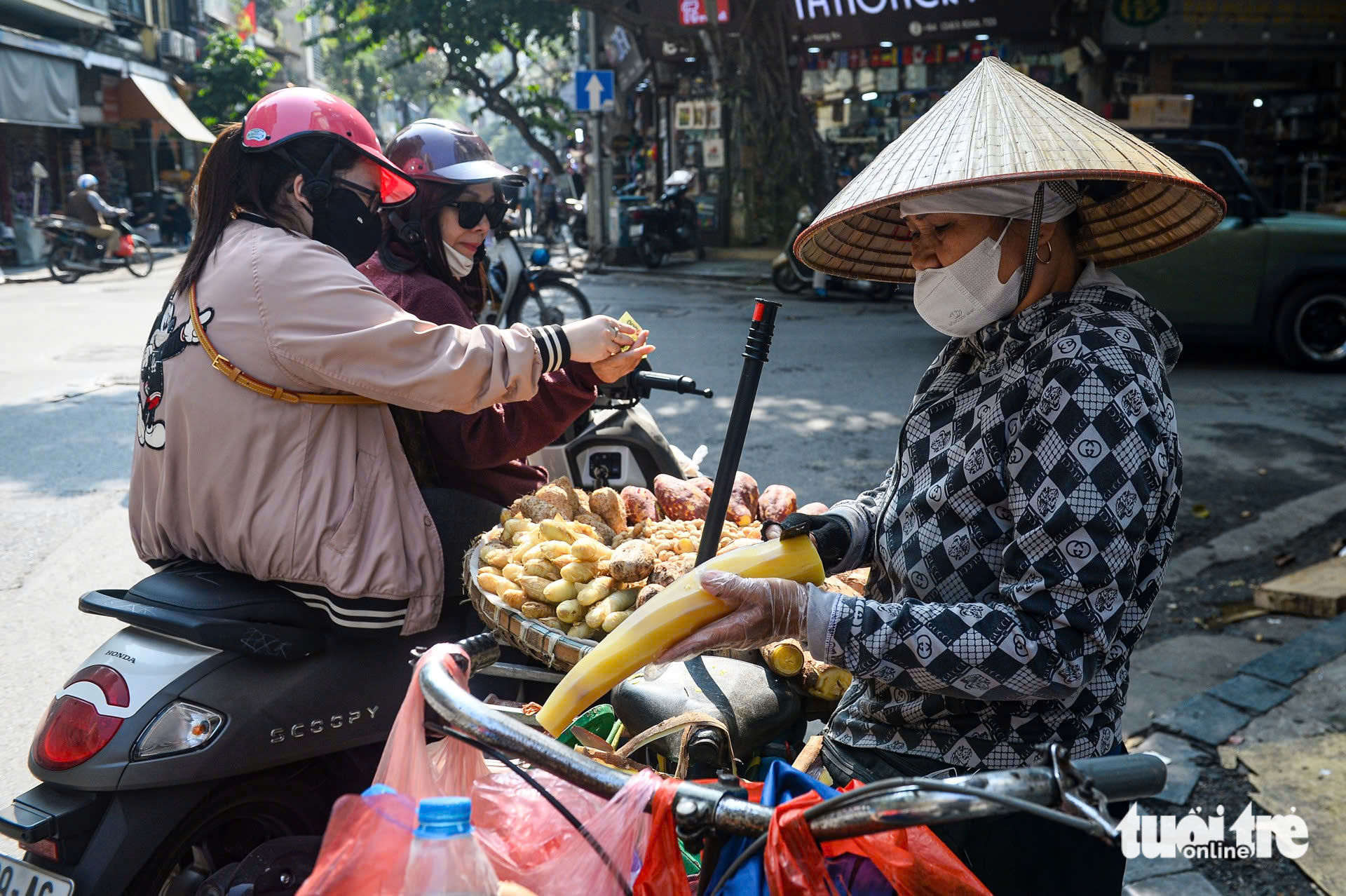
Do Thi Thanh sells arrowroot to customers on a street in Hanoi’s Old Quarter. Photo: Phuc Tai
But skipping a day's work means losing money she needs for her husband's medical treatment.
Her only shield is a thin disposable mask.
"I earn about VND5 million [US$190] a month," she says.
"If I miss a morning, I can't send enough home.
"I still have to pay VND20,000 [$0.76] a night for a place to sleep.
"I know this pollution harms my health, but I don't have another option."
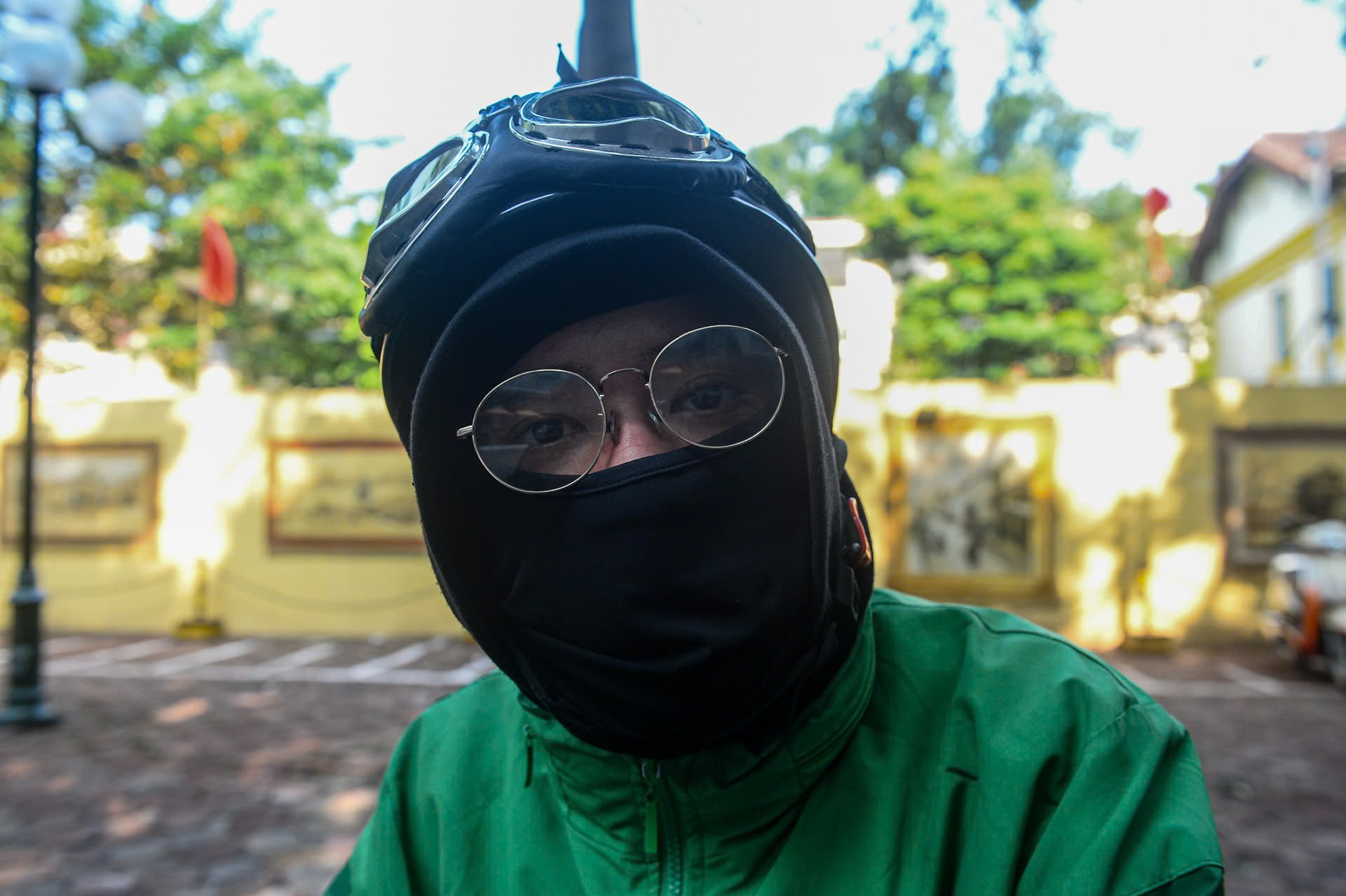
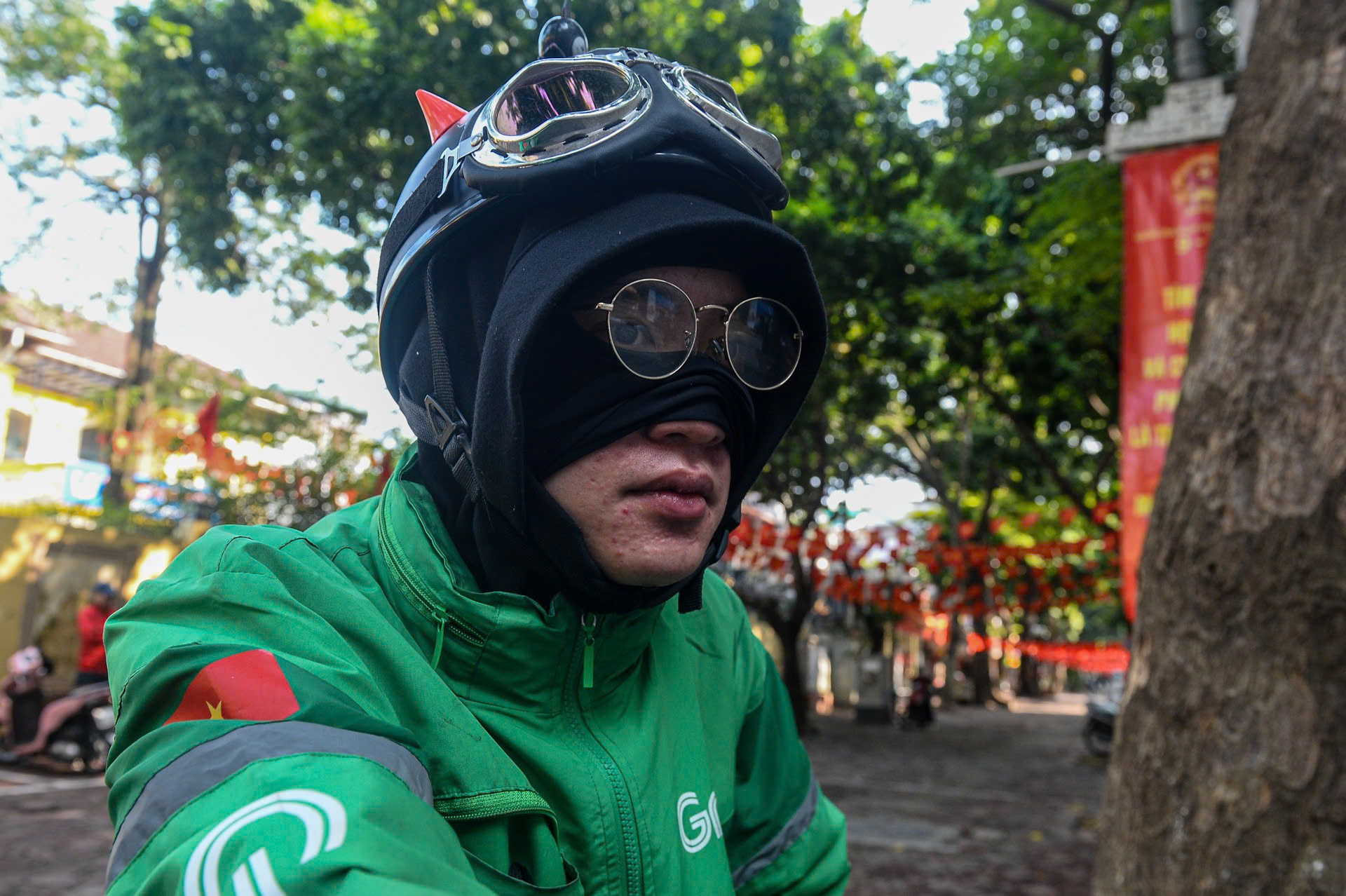
Ride-hailing driver Hoang Lam wraps himself in layers, including a mask, scarf and glasses. Photo: Phuc Tai
For 22-year-old ride-hail driver Hoang Lam, the day starts just as early.
Originally from north-central Nghe An Province and now renting a room in Cau Giay area, he spends eight to ten hours a day on his motorbike to cover rent and living costs, earning about VND15–20 million ($569–759) a month.
He wraps himself in layers of mask, scarf, and glasses. Yet his eyes still tear up after long stretches in traffic.
Lately, he has developed respiratory symptoms and resorts to medication between shifts.
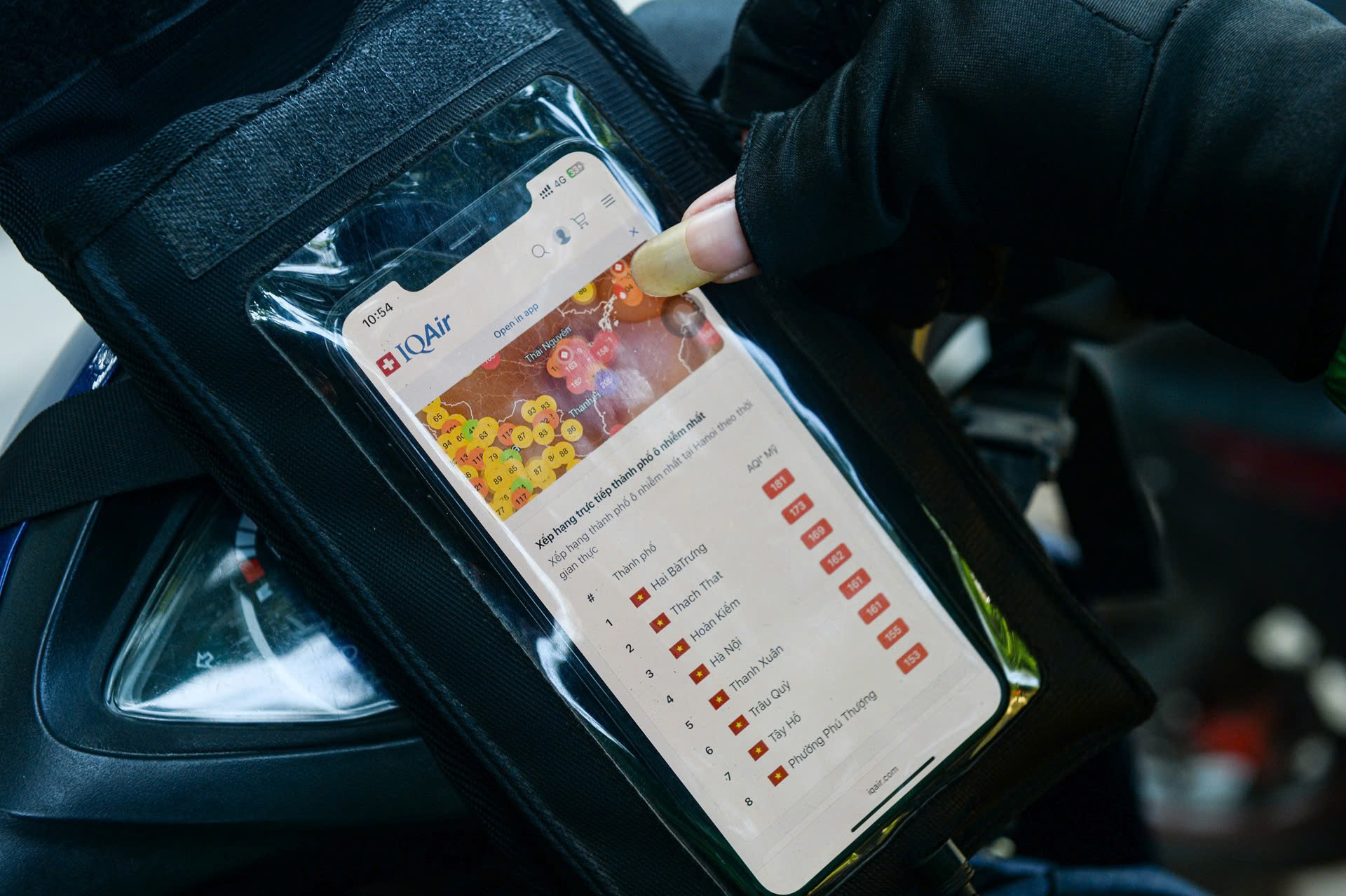
Ride-hailing driver Hoang Lam checks air-quality readings, a routine he relies on as Hanoi remains shrouded in fine dust. Photo: Phuc Tai
Lam has considered changing jobs, but, he says, "It's hard to switch now, and this still gives me steady income."
What he thinks about more is whether Hanoi can curb the smog, including a shift from gasoline to electric bikes.
"I don't mind switching," he says.
"But electric bikes are expensive, and finding a charging spot is a problem.
"My landlord won't allow one because of safety concerns.
"If there were subsidies and safe charging points, I'd switch."
A broader crisis
Thanh and Lam's stories reflect a daily reality for thousands working outdoors in Hanoi, people who inhale the city's microscopic dust as part of their job.
According to Hoang Duong Tung, chair of the Vietnam Clean Air Network, fine particulate pollution in Hanoi stems largely from emissions from personal vehicles and dust from construction.
Outdoor workers are among the most exposed, he notes, because ordinary masks filter only coarse dust, not dangerous PM2.5 particles.
He says Hanoi must tackle the problem at its source: enforce emissions control, tighten oversight of construction sites, and expand "green" public transit, from metro lines to electric buses and mini-bus routes.
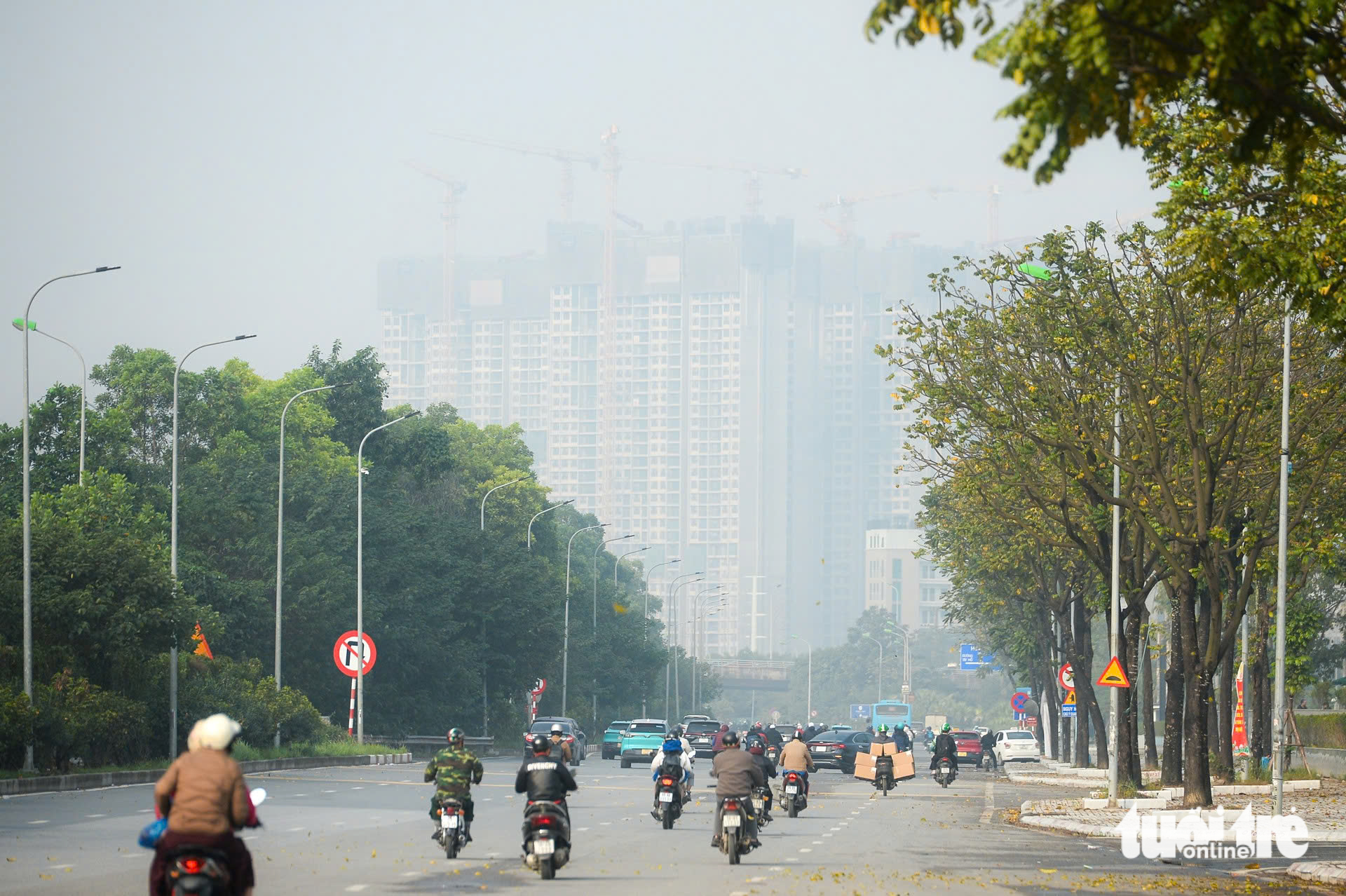
Haze blankets a street in Hanoi. Photo: Phuc Tai
For workers like Lam, he adds, schedules should be adjusted on heavily polluted days, and proper protective gear should be provided.
Maintaining vehicles to reduce emissions is another crucial step.
Transportation expert Phan Le Binh argues that the swelling number of private vehicles is a key driver of the capital's worsening air.
Cutting that reliance, he says, requires expanding high-quality bus and metro networks and ensuring affordable access to electric vehicles and a reliable charging infrastructure.
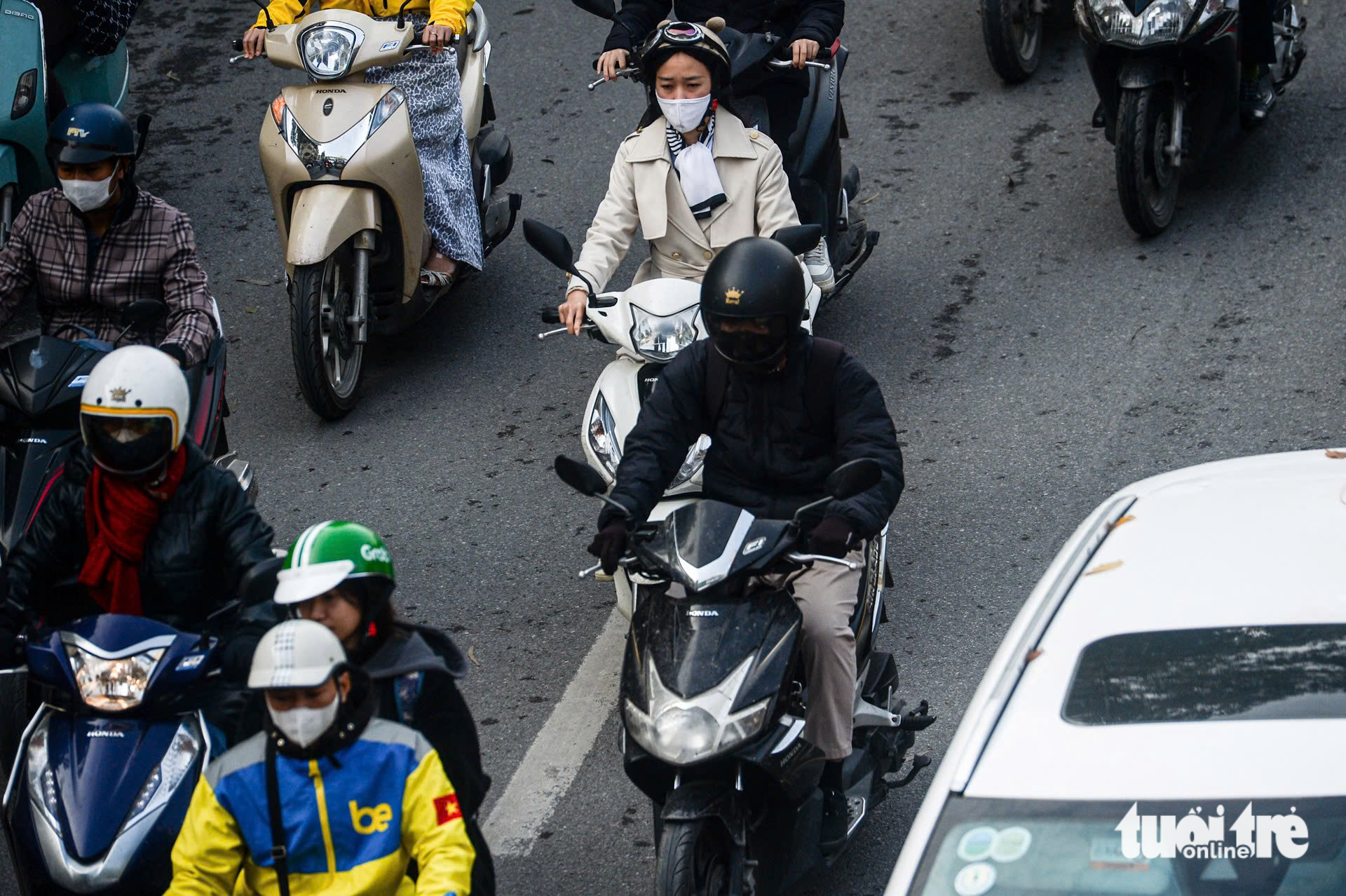
Commuters cover themselves while traveling in Hanoi. Photo: Phuc Tai
A daily trade-off
In Hanoi, air pollution isn't just a statistic on an AQI app. It's the dust caught in a street vendor's breath and the sting in a motorbike driver's eyes.
As long as people like Thanh and Lam must push through thick smog to earn a living, experts say efforts to reduce emissions and clean up the city must accelerate, so no one has to sacrifice their health for a day's work.

Dust coats trees, turning their leaves gray in Hanoi. Photo: Phuc Tai









Max: 1500 characters
There are no comments yet. Be the first to comment.