


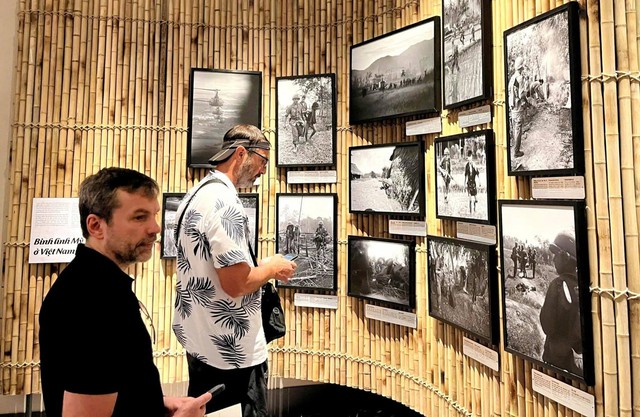
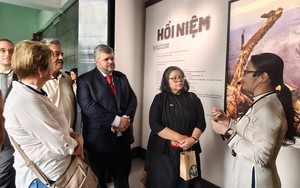
Visitors explore the War Remnants Museum in Ho Chi Minh City. Photo: War Remnants Museum
In recent years, Ho Chi Minh City has taken initial steps to digitize cultural heritage, applying digital tools to artifact documentation, museum displays, online exhibitions and virtual tours to improve heritage management and public access.
How local museums and cultural destinations are adapting to this digital shift -- and tackling the hurdles along the way -- took center stage on Thursday at the seminar 'Digitalization of Cultural Heritage and Cultural Data: Empowering Creative Spaces and Smart Experiences.'
The event was co-organized by the municipal Department of Culture and Sports, Department of Science and Technology, and the Ho Chi Minh City Computer Association.
Heritage goes digital across Ho Chi Minh City
At the seminar, Lam Ngo Hoang Anh, deputy director in charge of the War Remnants Museum, shared the museum's experience in adopting digital technology, including a shift from traditional displays toward more interactive spaces designed to offer visitors new ways to engage with its collections.
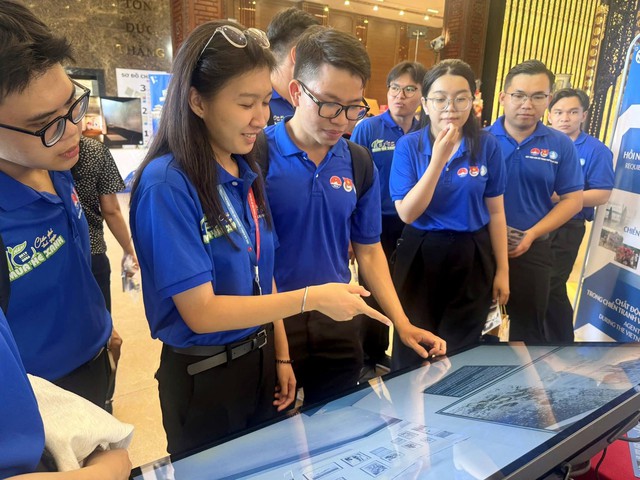
The War Remnants Museum applies digital technology to its exhibitions. Photo: War Remnants Museum
Hoang Anh also introduced plans for interactive digital spaces that encourage visitors to actively explore exhibits while preserving their authenticity and historical value.
The proposed model combines three levels of engagement, from access to information to immersive experiences using holograms, 3D-scanned artifacts and VR360 virtual exhibitions.
Digital services would support the entire visitor journey, from online ticketing and audio guides before arrival to interactive displays on-site and virtual exhibitions and feedback channels afterward.
Beyond the War Remnants Museum, other cultural institutions in Ho Chi Minh City have also experimented with digital approaches to heritage.
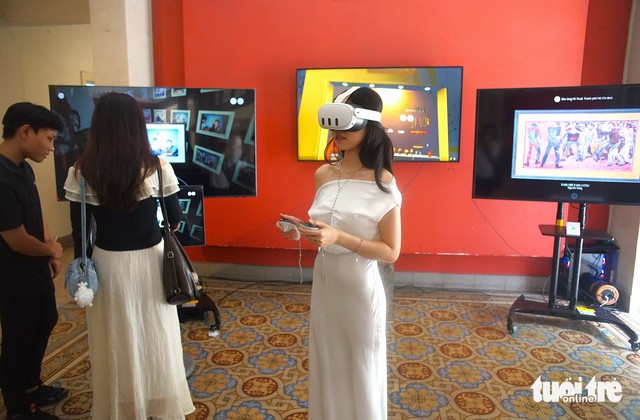
A young visitor experiences virtual reality technology at the Ho Chi Minh City Museum of Fine Arts. Photo: H.Vy / Tuoi Tre
In April and May 2025, the Ho Chi Minh City Museum of Fine Arts showcased digital recreations of two national treasures using virtual reality and AI-powered animation: 'Spring Garden of Northern, Central and Southern Vietnam' by Nguyen Gia Tri, a pioneer of modern Vietnamese lacquer painting, and 'The Youth Rampart of the Nation' by Nguyen Sang, a prominent modern Vietnamese painter.
At the Ton Duc Thang Museum, activities for International Museum Day in May 2026 included Kahoot quizzes and Wordwall matching games to help students learn about the life and revolutionary career of Ton Duc Thang, Vietnam's president from 1969 to 1980. The event showed how digital tools can make history education more interactive.
Addressing the challenges ahead
However, experts at the seminar said further work is needed to make digital heritage initiatives more effective, particularly in standardizing and connecting databases, improving technological infrastructure, securing funding and developing skilled personnel.
Pham Thi Khanh Ngan, an official of the Department of Cultural Heritage, proposed a shared database covering five areas: heritage sites, museums, artifacts, intangible cultural heritage and documentary heritage.
Such a system could support preservation and research while enabling online tours and digital heritage education.
Experts also stressed that technology must not compromise historical accuracy or the authenticity of heritage.
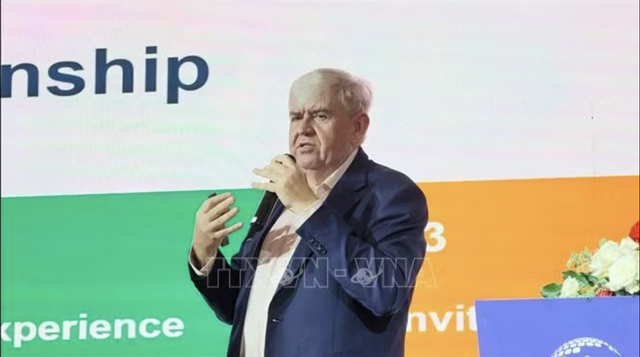
Christopher Bryson, director of Infinite Muse, highlighted how 3D data could expand digital heritage experiences. Photo: Vietnam News Agency
Christopher Bryson, director of Infinite Muse, warned that AI-generated reconstructions could be mistaken for documented historical evidence, underscoring the need to identify data sources, distinguish original records from interpretations, and verify content with specialists.
Minh Nhut, deputy director of the Ho Chi Minh City Department of Culture and Sports, stressed that technology should serve heritage, helping preserve its authenticity and bring its cultural and historical value to wider audiences without replacing the significance of the original artifacts.








Max: 1500 characters
There are no comments yet. Be the first to comment.