


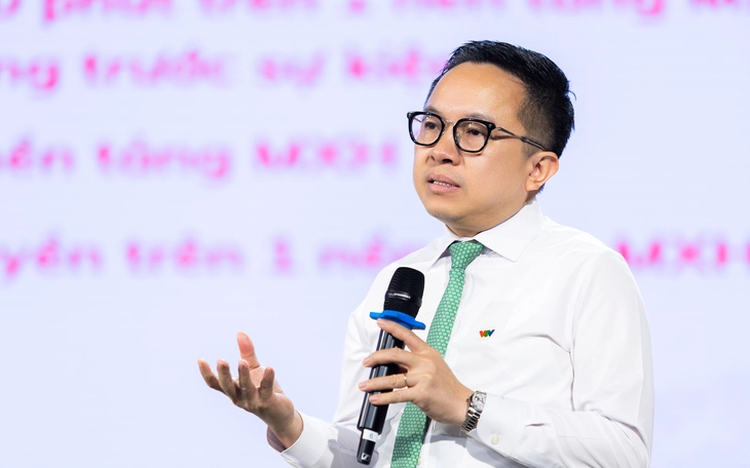
Tu Luong, director of the Vietnam Television Center in Southern Vietnam. Photo: H.L.
The topic was the focus of a seminar titled 'Turning World Cup Excitement into Revenue and Brand Value,' organized by the Vietnam Television Center in Southern Vietnam (VTV Southern Region).
The FIFA World Cup is not only the world's most-watched sporting event but also a major opportunity for media, consumer spending, and brand building.
Tu Luong, director of the Vietnam Television Center in Southern Vietnam, said the broadcaster's coverage of the 2026 FIFA World Cup would go beyond airing all 104 matches, creating a comprehensive content and audience-engagement ecosystem throughout the tournament.
“All 104 World Cup matches will be broadcast on VTV9, VTV10, and VTV Southern Region's digital platforms,” Luong said.
“When businesses partner with VTV Southern Region during the World Cup, they will not only appear on television but also gain access to VTV's entire World Cup content ecosystem.
"This provides opportunities to reach consumers across multiple touchpoints and enhance communication effectiveness.”
Expected to be the largest edition in the tournament's history, the 2026 FIFA World Cup runs in the United States, Canada, and Mexico from June 11 to July 19, featuring 48 teams and 104 matches.
Participants at the seminar agreed that the World Cup has evolved into much more than a football tournament, becoming a massive economic ecosystem.
With billions of viewers following matches through television, social media, and digital platforms, the event offers brands unprecedented opportunities to engage customers.
Each match can stimulate spending across sectors such as food and beverages, retail, tourism, entertainment, nighttime services, and e-commerce.

Tran Thi Thanh Mai, former CEO of Kantar Media Vietnam. Photo: H.L.
Tran Thi Thanh Mai, former CEO of Kantar Media Vietnam, said the World Cup's influence is enormous, but businesses need to choose participation models that match their budgets and objectives.
When there are flexible options available, opportunities are no longer limited to large corporations but they can also be accessed by small- and medium-sized enterprises, Mai said.
She added that with a population of more than 14 million and a rapidly developing service sector, Ho Chi Minh City is well positioned to capitalize on the economic benefits generated by the World Cup in a systematic and sustainable manner.
“A person watching football at 2:00 am may order food, buy beer, share content on social media, or invite friends to gather at a coffee shop to watch together,” Mai said.
“These behaviors create a real boost for retail, nighttime services, and domestic tourism. Rather than being a disadvantage, the 2:00 am to 5:00 am time slot can become a golden period for the nighttime economy if there is coordination among broadcasters, local authorities, and brands.”








Max: 1500 characters
There are no comments yet. Be the first to comment.