


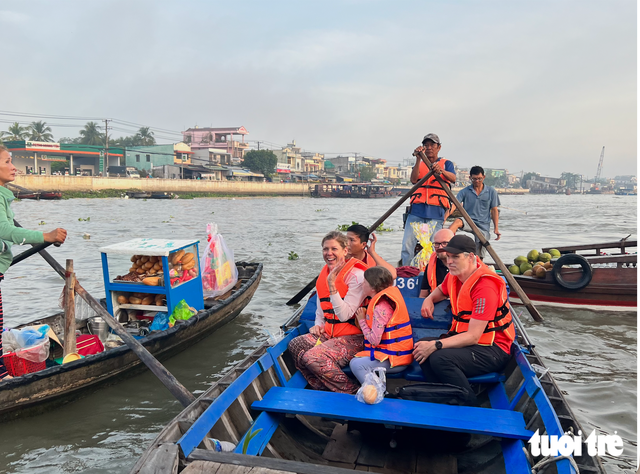
Tourists visit Cai Rang Floating Market. Photo: Ca Linh / Tuoi Tre
Cai Rang Floating Market has drawn mixed reactions from visitors, with some praising its distinctive river culture while others calling for a more convenient tourist experience.
Speaking to Tuoi Tre (Youth) online newspaper, cultural researcher Nham Hung has offered suggestions on how the market can adapt to changing visitor needs without losing its traditional character.
Don't wait for trouble to strike
According to cultural researcher Nham Hung, developing Cai Rang Floating Market sustainably requires tackling three issues at the same time: management, preservation of its cultural values and the development of tourism products.
Hung said the first step is to take a closer look at how the floating market is managed.
Visitor complaints about aggressive solicitation, unclear service prices and a lack of engaging experiences point to gaps in the current management system.
“Current measures are largely reactive. Authorities tend to inspect and make adjustments only after problems occur, rather than putting in place effective, long-term solutions," researcher Nham Hung said.
“This affects the confidence of both visitors and investors,” he said.
Dealing with problems only after they arise makes it difficult to create a stable tourism environment.
Cai Rang Floating Market needs a unified management framework with clear responsibilities and a long-term approach.
Beyond management, the bigger challenge is preserving the character of the floating market as tourism develops.
The cultural practices of Cai Rang Floating Market have been recognized as a national intangible cultural heritage.
However, Hung said many of the elements that once made the market attractive are gradually fading.
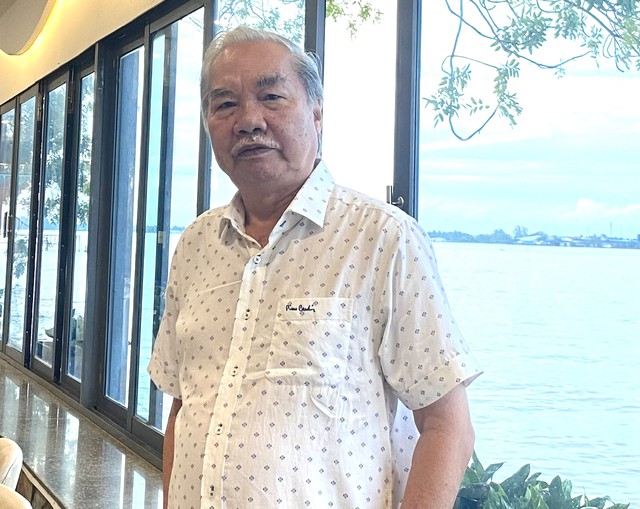
Cultural researcher Nham Hung. Photo: Supplied
These include the market’s trading culture, the 'boats below, market above' setting, the way boat traders traditionally managed and supported one another, as well as the calls and chants that once defined its distinctive cultural atmosphere.
“Boat traders once managed and supported one another as a community, creating the floating market’s distinctive character. The calls and cries of vendors also helped shape its unique cultural atmosphere,” cultural researcher Nham Hung said.
As a result, cultural and artistic activities at the floating market need to be carefully planned.
Simply bringing performances in for tourists without connecting them to the lives of the boat-trading community could turn the floating market into a tourist stage rather than a living cultural space.
Keeping tradition afloat as tourism grows
Another issue highlighted by cultural researcher Nham Hung is the need for stronger tourism products.
He said Cai Rang Floating Market still lacks distinctive Can Tho products that visitors can take home as souvenirs.
Tourists may spend hours exploring the market, yet often struggle to find a memorable local product to bring home as a reminder of their experience.
The challenge, therefore, is not simply to bring visitors to the floating market, but also to give them something to experience, shop for and remember.
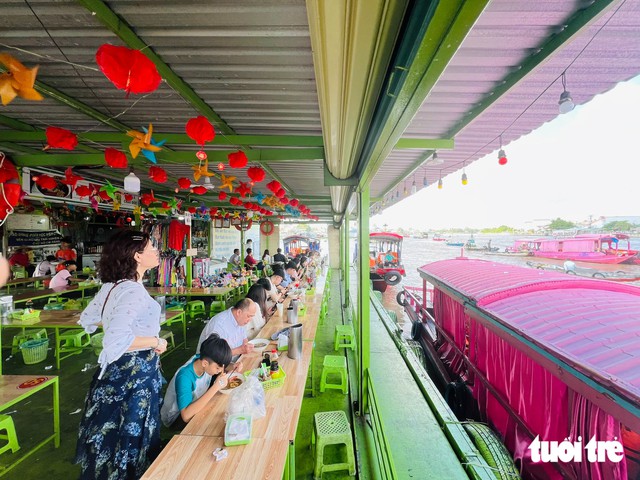
Tourists enjoy food on a floating raft at Cai Rang Floating Market. Photo: Ca Linh / Tuoi Tre
“The floating market was not created for tourism. If we want to turn it into a tourism destination, we need fundamental solutions to transform its commercial activities into tourism products," researcher Nham Hung stressed.
"The boats operated by the trading community must also become part of the market’s cultural and tourism offerings,” he said.
In other words, the boats must serve simultaneously as places of trade, cultural experiences and tourism products.
Tourism offerings should be built on the floating market’s existing cultural foundation.
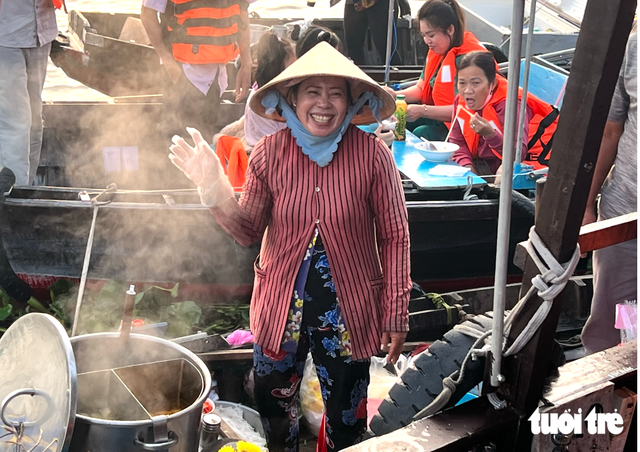
Many visitors to the floating market are eager to try local food. Photo: Ca Linh / Tuoi Tre
From this perspective, efforts to revitalize the floating market should not begin by adding more activities for tourists, but by building on the market’s existing cultural values.
Researcher Nham Hung also called for a refresh of the floating market’s food offerings.
While boat traders once ate mainly to meet their daily needs, food can become part of the visitor experience as the market welcomes more tourists.
The dishes should be tasty and convenient for visitors while reflecting local flavors.
In that way, a meal on a boat can become more than simply a way to satisfy hunger, but evolve into a distinctive tourism product.
He stressed that achieving these goals requires the involvement of people with deep knowledge of the floating market’s culture, history, and tourism.
Their expertise would provide a foundation for long-term solutions rather than simply addressing problems as they arise.
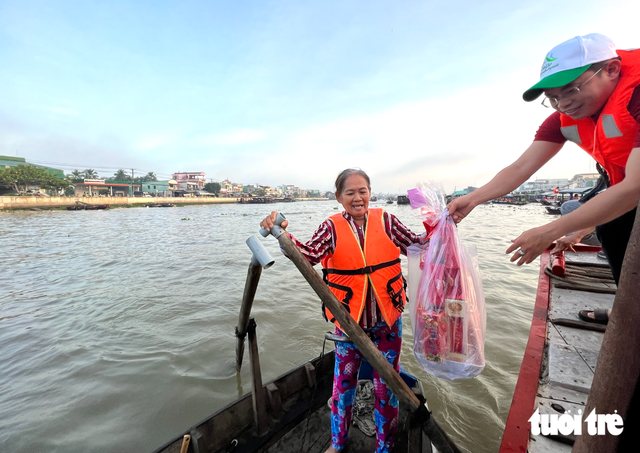
Around Tet holiday, authorities in Can Tho organize visits and give gifts to residents living and working at the floating market. Photo: Ca Linh / Tuoi Tre
'Revitalizing' the floating market must go hand in hand with preservation.
This requires a unified and professional management approach, while creating conditions for businesses to make long-term investments.
“The ultimate goal is not to turn the floating market into a tourist attraction built solely for visitors, but to preserve its trading activities and boat-trading culture, and build tourism products on that foundation,” cultural researcher Nham Hung said.








Max: 1500 characters
There are no comments yet. Be the first to comment.