


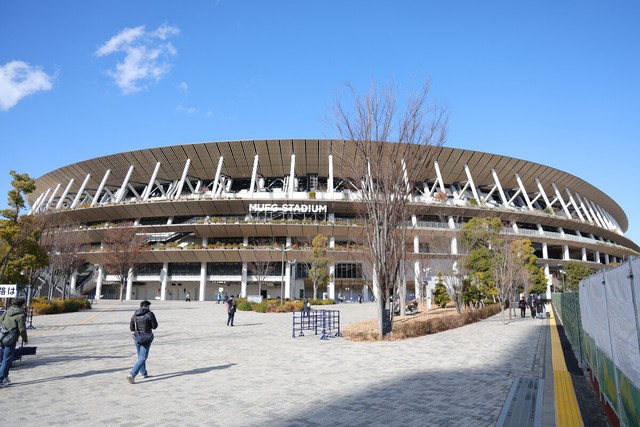
The Japan National Stadium, renamed MUFG Stadium, pictured in Tokyo on January 2, 2026. Photo: Jiji Press
The stadium, built at the heart of the country's capital in November 2019, served as the main venue for the Summer Games.
Its annual maintenance and management costs are estimated to reach 2.4 billion yen, raising concerns that the stadium may turn into a negative legacy of the quadrennial sporting events.
To make it viable, the government-affiliated Japan Sport Council, the owner of the stadium, last spring privatized its management and operations.
Banking giant Mitsubishi UFJ Financial Group Inc., which earned the facility's naming rights, changed its name to MUFG Stadium in January this year.
Last month, the stadium's operator announced the outline of a new project called "Kokuritsu Next," under which some nine billion yen was spent on renovation.
The stadium unveiled its revamped restaurant areas, as well as its newly built 53 hospitality suites for corporate clients.
"We aim to transform our facility into a future-oriented stadium connected with culture, the economy, the local community and society, not just a place where sports competitions are held," said Koji Takeuchi, president of the stadium operator, Japan National Stadium Entertainment Inc.
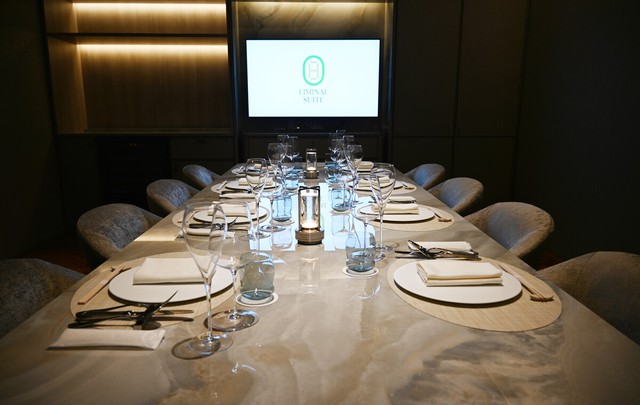
A new hospitality suite at MUFG Stadium pictured on March 16, 2026. Photo: Jiji Press
Another key task is how to enhance the value of visitor experiences.
A successful example is the Nagasaki Stadium City commercial complex, which opened in October 2024 in the southwestern city of Nagasaki.
Combining a soccer stadium, a hotel, shops and restaurants, the facility has become a place where local residents can mingle and relax, with eating establishments open every day throughout the week.
According to a report released in autumn last year to mark the first anniversary of its opening, Nagasaki Stadium City had about 20,000-30,000 visitors per day on average on weekends with no games scheduled for the V-Varen Nagasaki soccer team, based in the prefecture of Nagasaki, in the top division of the Japan Professional Football League, or J.League.
The national stadium in Tokyo has great potential for attracting visitors thanks to its location.
An official of the stadium operator said that it will "gradually" open up its facility on days with no major scheduled events and "mull" stadium use on weekdays.
The stadium is slated to host a public-private partnership event and seasonal events, such as a beer garden, an outdoor area where beer and food are served.
Tokyo Governor Yuriko Koike said, "I hope that (the stadium) will bring further vibrancy and energy to Tokyo."
"We aim to achieve profitability in the next two to three years," the stadium operator official said.
"We hope to create a stadium that is open to all."









Max: 1500 characters
There are no comments yet. Be the first to comment.