


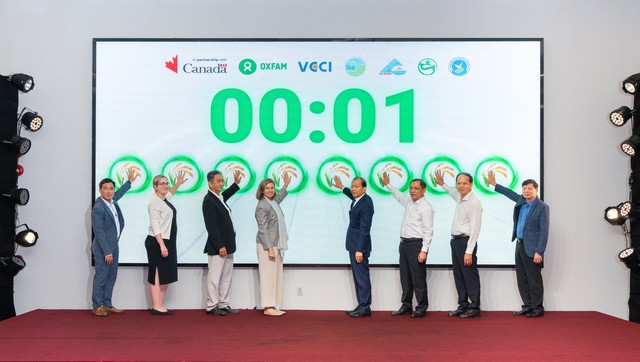
Delegates launch the GORICE project for sustainable, low-emission, climate-resilient rice development in southern Vietnam’s Mekong Delta, October 28, 2026. Photo: Vietnam Government Portal
The sustainable, low-emission and climate-resilient rice value chain development project, known as GORICE, was officially launched in the Mekong Delta city of Can Tho on Wednesday, local media reported.
Funded by the Canadian government through Global Affairs Canada, the program will run from 2025 to 2030 in Can Tho, An Giang Province, and Vinh Long Province.
The initiative is being implemented by Oxfam in Vietnam in partnership with the Vietnam Chamber of Commerce and Industry (VCCI), the Institute of Agricultural Environment, and local agricultural authorities.
The project focuses on three main pillars, including climate-smart, low-emission rice production; inclusive green economic opportunities; stronger multi-stakeholder cooperation and governance.
Activities will include training farmers in low-emission cultivation techniques, promoting circular economy practices, developing markets for low-carbon rice, expanding access to green technologies and financing, and strengthening systems for measuring, reporting, and verifying greenhouse gas emissions.
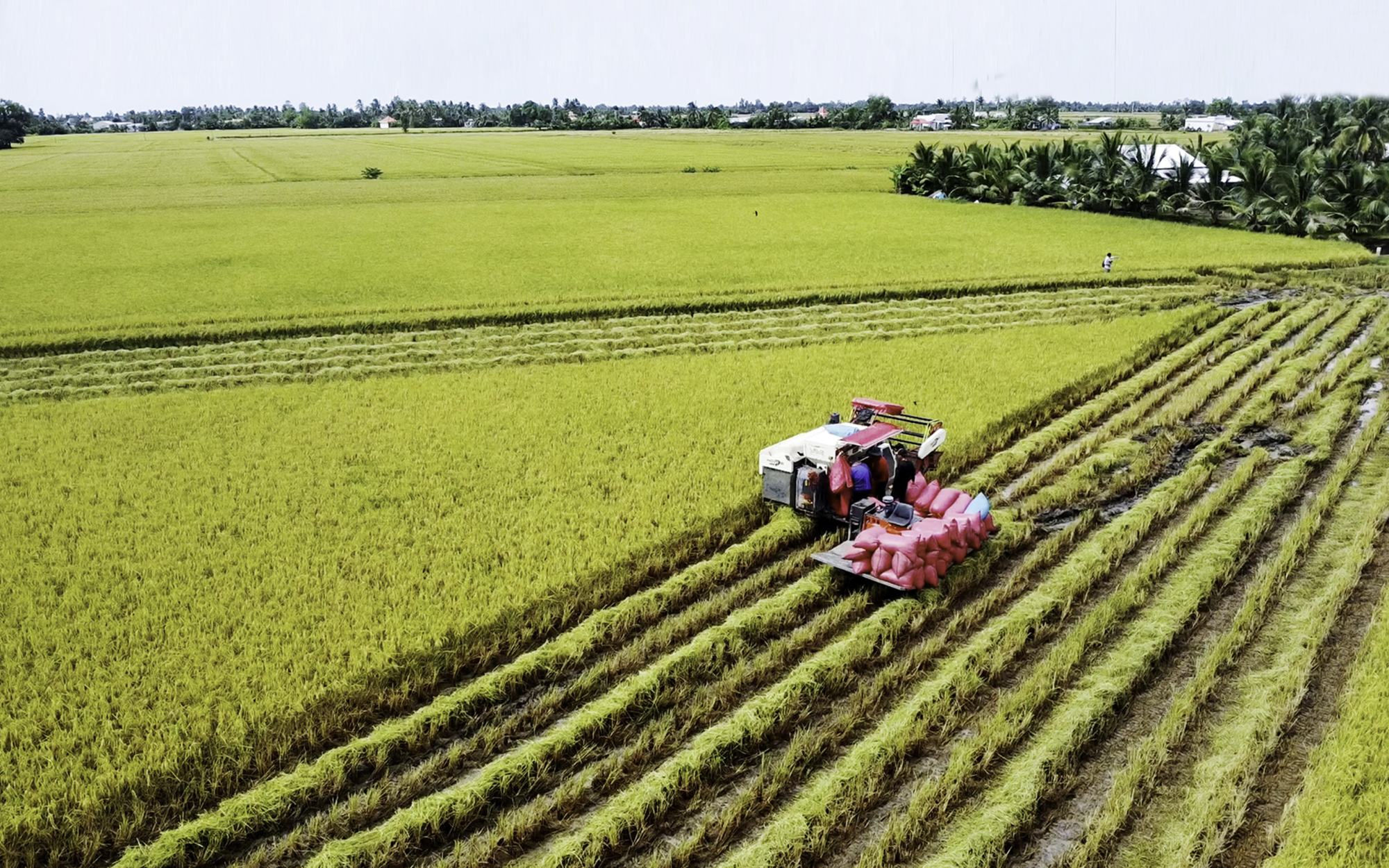
By 2030, the project aims to apply low-emission, high-quality rice cultivation practices on 180,000 hectares; directly benefit 48,200 people, with women accounting for 50 percent of beneficiaries; cut carbon emissions by approximately 748,000 metric tons; and reach approximately 100,000 consumers through sustainable rice products.
Canadian Ambassador to Vietnam Jim Nickel said the project complements Vietnam’s national program to develop one million hectares of high-quality, low-emission rice in the Mekong Delta.
According to the ambassador, Canada brings expertise in climate-smart agriculture, carbon accounting, measurement-reporting-verification systems, climate finance, and agricultural innovation, while Vietnam contributes local knowledge and institutional leadership.
The partnership is expected to improve competitiveness in Vietnam’s rice sector, attract private investment, mobilize climate finance, and create long-term opportunities for farmers, especially women.
Hoang Quang Phong, vice-chairman of VCCI, said businesses have a critical role throughout the rice value chain.
Companies can provide financing, transfer production technologies, supervise quality standards, and guarantee product purchases.
However, he said that long-term participation from businesses requires transparent production zones, stable contracts, access to working capital, and mechanisms to share risks during periods of market volatility.
Through GORICE, VCCI plans to strengthen links between businesses and agricultural cooperatives, improve farmers’ access to green financing, and expand domestic and export markets for low-emission rice.
A key component of the project will be the development of a participatory digital measurement, reporting, and verification system to track emission reductions.
The system is expected to improve transparency and credibility while helping Vietnam meet requirements associated with climate finance and carbon markets.
Training programs will also be provided to local officials responsible for emission monitoring and reporting.
Pham Quang Tu, deputy director of Oxfam in Vietnam, emphasized that social inclusion is a fundamental principle of the project.
Special attention will be given to women, young people, ethnic minorities, and other vulnerable groups to ensure they have equal opportunities to participate in and benefit from the green transition.
Through technical assistance, capacity building, stronger value-chain links and multi-stakeholder cooperation, GORICE is expected to help develop a more competitive, high-quality, low-emission rice sector in the Mekong Delta while improving farmers’ livelihoods and resilience to climate change.


Max: 1500 characters
There are no comments yet. Be the first to comment.