


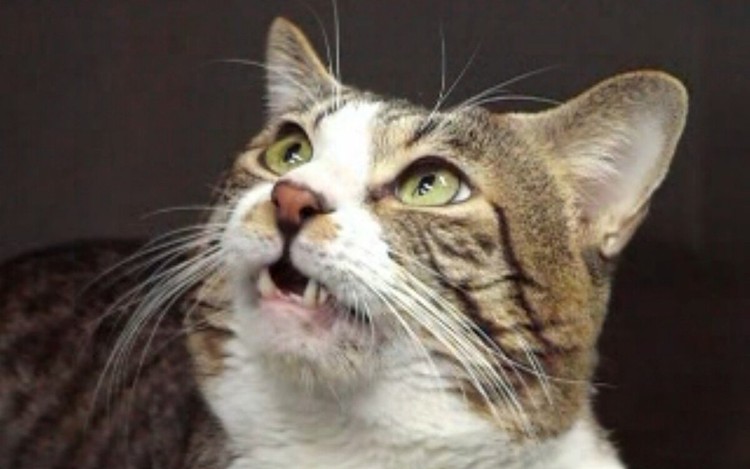
A cat displaying the Flehmen response, typically shown by feline species when they smell urine and other odorous substances with their mouths half-open (Courtesy of Iwate University professor Masao Miyazaki)
The team's findings were published in the online edition of U.S. scientific journal Current Biology on Wednesday.
Masao Miyazaki, a professor at the Japanese university, and other members of the team focused on the Flehmen response, shown by cats when they smell urine and other odorous substances with their mouths half-open.
Observing that this response usually comes when cats encounter smells of unfamiliar peers, the team discovered 13 types of branched-chain fatty acids and found that the types and ratios of the acids in urine vary among individuals.
As these fatty acids are semivolatile, the informative urine odors remain detectable for an extended period.









Max: 1500 characters
There are no comments yet. Be the first to comment.