


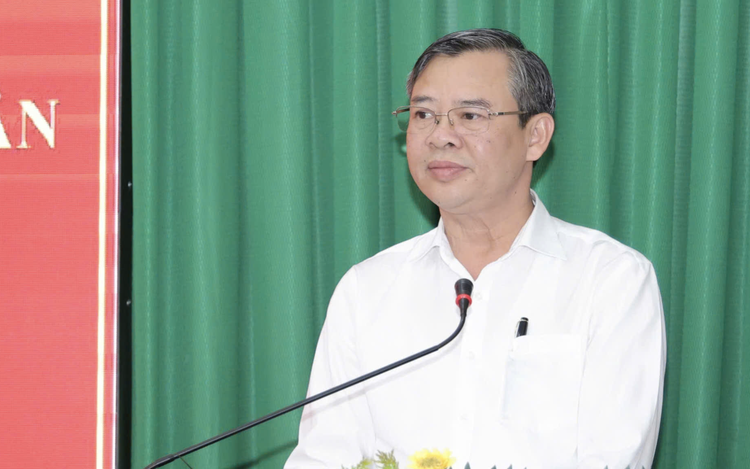
Truong Canh Tuyen, chairman of Can Tho City in southern Vietnam, speaks at a meeting with voters, March 9, 2026. Photo: Trung Pham
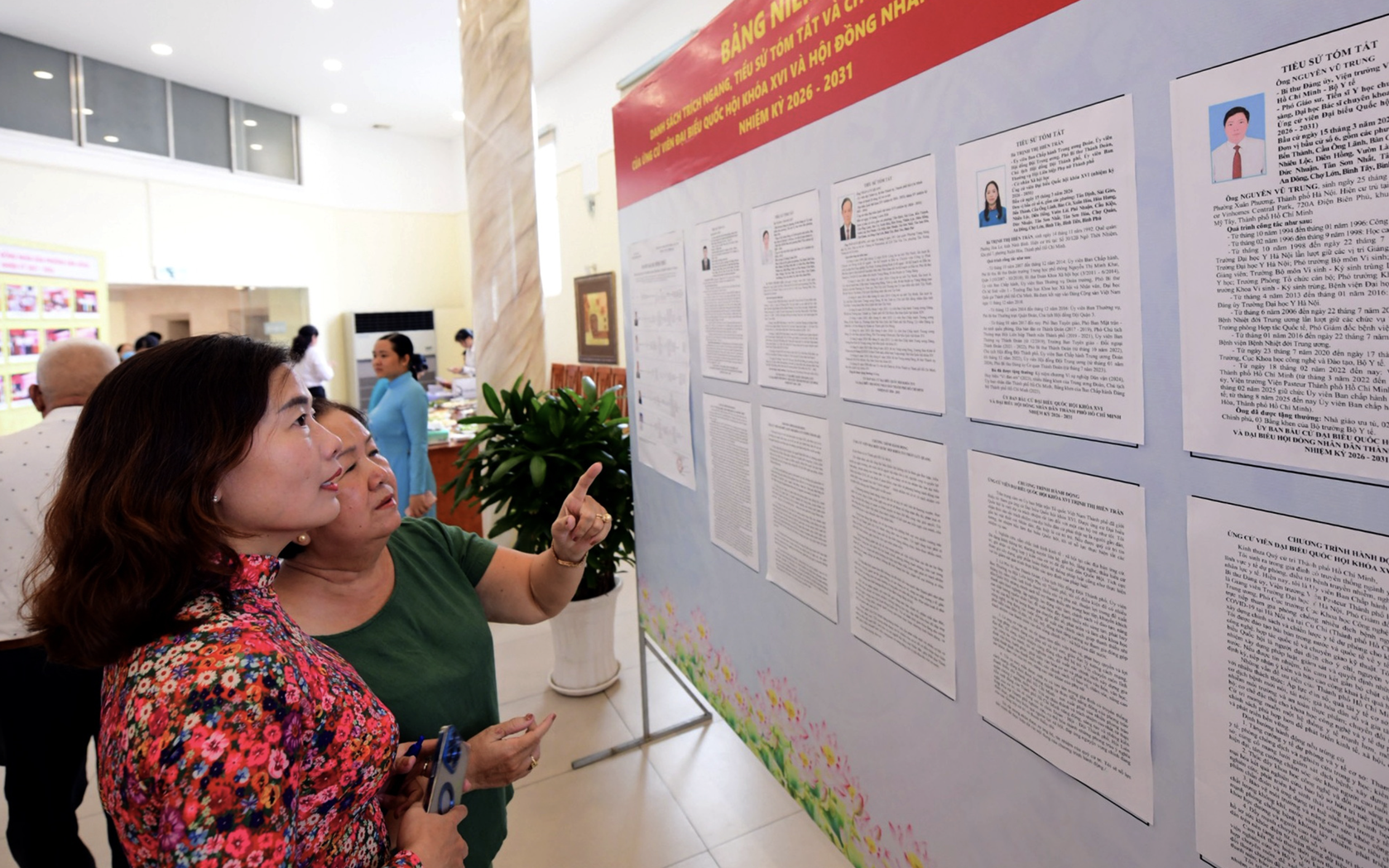
The voter meeting took place at the Party Committee headquarters of Tan An Ward in Can Tho.
The event connected candidates running for seats in the Can Tho People’s Council from Electoral Unit No. 2 with voters in Tan An Ward.
Electoral Unit No. 2 includes five candidates representing three wards: Tan An, Cai Khe, and Ninh Kieu.
The candidates are Nguyen Minh Khoi, a doctor and CEO of Saigon Can Tho Dentomaxillofacial Joint Stock Company, Tran Thi Vinh Nghi, a member of the municipal Party Committee and secretary of the Ninh Kieu Ward Party Committee, Thieu Quang Than, deputy head of the urban affairs committee of the Can Tho People’s Council, Le Thi Ngoc Truc, a member of the Ninh Kieu Ward Party Committee, and Tuyen, deputy secretary of the Can Tho Party Committee and chairman of the Can Tho People’s Committee.
Commitment to infrastructure breakthroughs
Presenting his action program, Tuyen said that as the leader of the municipal administration, he clearly understands voters’ expectations for Can Tho to develop faster, improve infrastructure, simplify administrative procedures, and raise living standards.
If elected, he pledged to stay close to the people, listen to their concerns, and personally monitor and push forward solutions to complicated and long-standing issues.
“Citizens’ petitions will not fall into silence without response,” he told voters.
He also emphasized the need to boost economic development while improving residents’ income and quality of life.
According to Tuyen, the municipal administration will continue to enhance the investment climate, support businesses, households and farmers, and prioritize logistics development and deep processing of agricultural products.
He highlighted plans to promote high-tech agriculture as well as green, digital, and circular economic models.
Infrastructure development will be another key priority.
Tuyen said the city will review and accelerate major transport projects, particularly those linking industrial zones and strengthening regional connectivity.
Also, the city will implement a roadmap to address severe flooding and traffic congestion hotspots, publicly disclose progress for voter oversight, and take firm action against delayed or wasteful projects.
Administrative reform and stronger discipline within the public sector were also emphasized.
Tuyen said he would direct agencies to shorten processing times for procedures affecting residents and businesses, expand online public services, and minimize repeated travel for administrative matters.
The city would strictly handle cases of harassment or negligence among officials while strengthening accountability among agency leaders to ensure that authorities truly serve the people.
Focus on practical, feasible policies
Other candidates also presented their commitments.
Nghi said that if elected she would actively contribute to drafting and issuing policies to ensure that People’s Council resolutions are practical and feasible in real life.
She also pledged to support policies that assist small- and medium-sized enterprises, helping create stable employment opportunities for working-age residents.
Environmental protection would be another focus, including efforts to reduce water pollution and protect public health amid the growing impacts of climate change.
Meanwhile, Khoi said he would advocate for administrative reforms that reduce unnecessary bureaucratic layers, shorten processing times, and strengthen accountability.
He also proposed regular dialogue mechanisms between authorities and businesses by industry, rather than broad and general discussions.
Truc was committed to proposing solutions to improve urban planning and management, maintain public order and traffic safety, enhance environmental sanitation, and promote digital transformation to improve public services.
Than said he would prioritize transparent and synchronized urban planning, environmental protection, and clearer public access to land and project information so residents and businesses can easily stay informed.
He also voiced support for policies encouraging trade, services, and digital transformation.
March 15 is designated as the nationwide election day for Vietnam’s legislative and local representative bodies.
Accordingly, voters across the country will cast ballots to elect deputies to the 16th National Assembly, the national legislature, and members of People’s Councils at provincial and commune levels.
These elected bodies will serve for the 2026–31 term.








Max: 1500 characters
There are no comments yet. Be the first to comment.