


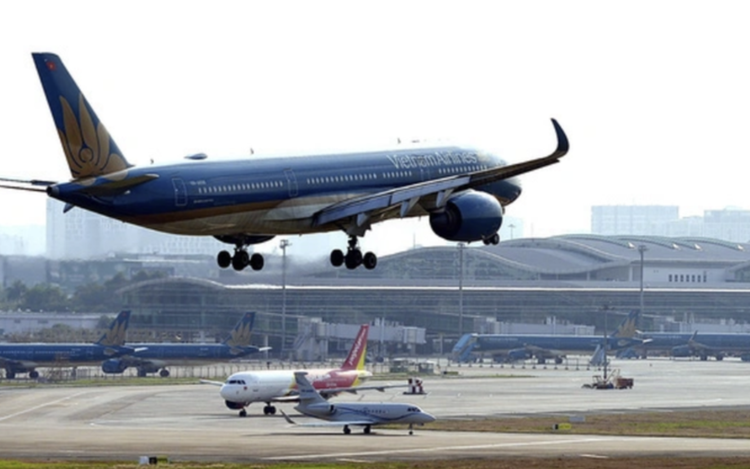
Planes at Ho Chi Minh City's Tan Son Nhat International Airport, one end of the planned metro line No. 6 in which China’s Pacific Construction Group plans to invest. Photo: Quang Dinh / Tuoi Tre
Deputy chairman of the Ho Chi Minh City administration Bui Xuan Cuong has instructed the Department of Construction and the Department of Finance, along with the city’s Urban Railway Management Board, to review the proposals.
Proposals under review
The finance department is responsible for providing guidance on procedures, urgently examining the submissions, and advising the city on the use of the EPCF contracting model for large-scale, technically complex projects requiring substantial investment.
The department is expected to complete its assessment by February 1.
The Urban Railway Management Board has been tasked with coordinating with relevant agencies and working directly with PCG on project implementation, including investment models, technology solutions, standards, and other technical matters.
In previous meetings with PCG founder Jiehe Yan, city leaders appointed the director of the construction department as the main contact for engaging with the company on strategic infrastructure projects.
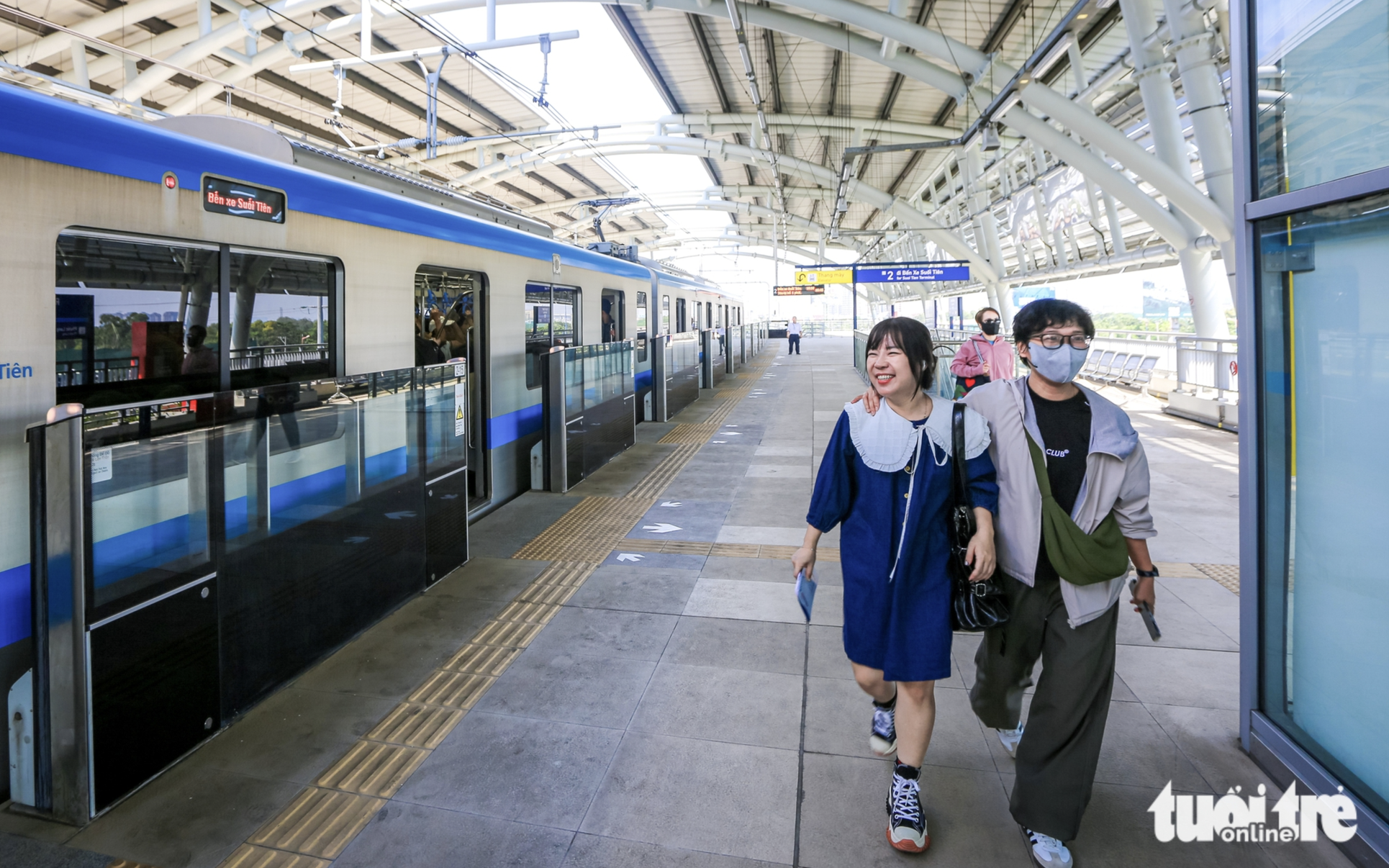
According to the construction department, PCG is a leading private enterprise in investment and construction, with extensive experience in public-private partnership (PPP) projects and EPCF (Engineering, Procurement, Construction, and Financing) contracts.
PCG currently leads the consortium for Hanoi’s metro line No. 5 (Van Cao – Hoa Lac segment), which began construction on December 19, 2025, under an EPCF contract.
PCG has emphasized that it will participate only in large-scale, technically complex projects requiring rapid execution, focusing on initiatives where local contractors may face limitations in technical capability, financing, or timelines.
Its proposals in Ho Chi Minh City include a coastal road developed under a PPP model using a build-transfer (BT) contract, with deferred payment from the state budget.
In the field of urban railways, the group has proposed studying metro line No. 6, running from Tan Son Nhat International Airport to Phu Huu intersection in Thu Duc Ward, and metro line No. 2, connecting Thu Dau Mot Ward with the Binh Phuoc crossroads in Hiep Binh Ward, as public investment projects implemented under EPCF contracts.
EPCF model involves upfront funding, deferred repayment
Under the EPCF model, the contractor will advance part of the investment without interest during the construction period and the deferred repayment phase, while the city will make deferred repayments to the contractor over five years once the projects enter commercial operation.
The construction department noted that the revised texts of the Law on Railways and the Law on Investment, along with National Assembly Resolutions 188 and 260, provide mechanisms to mobilize investment, particularly for strategic transport infrastructure.
The proposed projects align with the city’s development strategy outlined in the municipal Party Committee’s Action Program No. 3 for the 2025–30 term.
Some aspects of the EPCF model still require legal clarification in Vietnam, the department added, making continued discussions with PCG essential before applying the model locally.
PCG has pledged to prioritize Vietnamese products, goods, and services during project implementation and plans to lead a consortium of leading Chinese and Vietnamese enterprises to study and carry out the proposed projects.








Max: 1500 characters
There are no comments yet. Be the first to comment.