


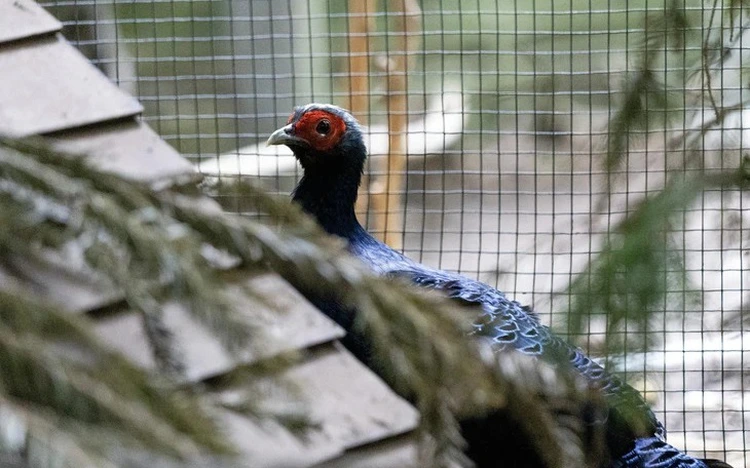
One of the two Vietnamese pheasant chicks hatched at Pairi Daiza wildlife park in Belgium. Photo: Vietnam News Agency
After the hatching, the chicks have been closely monitored and cared for in the park’s Oasis greenhouse facility, according to the Vietnam News Agency.
Conservationists have described the successful hatching as a small but meaningful milestone in efforts to prevent the species’ extinction.
The Vietnamese pheasant is classified as ‘critically endangered’ by the International Union for Conservation of Nature, with some assessments suggesting it may already be extinct in the wild.
Breeding programs in captivity are considered a key component of the European Endangered Species Program, which focuses on maintaining genetic diversity and supporting long-term species recovery.
The latest hatching comes amid renewed momentum in international conservation attempts.
In 2026, about 20 individuals bred through global conservation programs were reintroduced to Vietnam as part of a coordinated initiative involving multiple organizations and wildlife experts.
Beyond the Vietnamese pheasant, Pairi Daiza has recorded several other successful births this spring involving rare and threatened species.
These include two Roxellana snub-nosed monkeys, among the world’s most endangered primates, and two bearded vulture chicks participating in European conservation and reintroduction programs.
In the park’s Edenya zone, four ring-tailed lemurs are being raised in a semi-natural environment.
Native to Madagascar, an island nation in the Indian Ocean off southeastern Africa, this lemur species is increasingly threatened by habitat loss and human activity.
The park has also welcomed a Sulawesi flying lemur transferred from Germany.
The species is found only on Sulawesi Island in Indonesia and faces ongoing pressure from deforestation and illegal hunting.
In addition, four capybara pups have been born at the facility, contributing to broader educational efforts aimed at raising public awareness of biodiversity conservation.
Park officials said the series of successful births reflects close collaboration among veterinarians, scientists, and international conservation networks, helping sustain vulnerable wildlife populations while strengthening global awareness of conservation efforts.









Max: 1500 characters
There are no comments yet. Be the first to comment.