


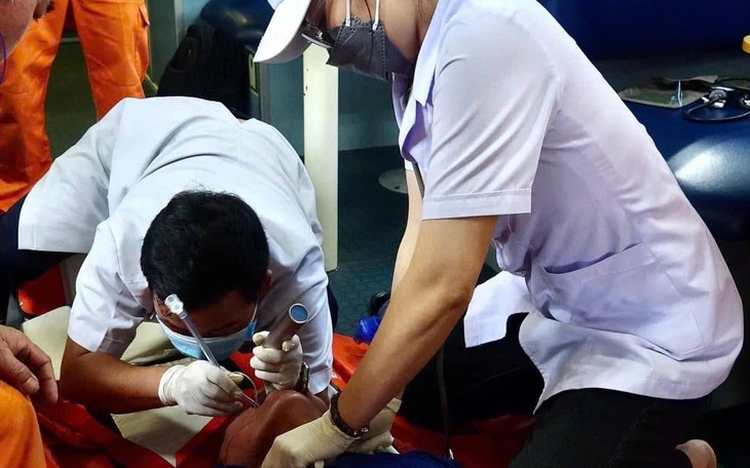
The Da Nang 115 Emergency Center can more easily reach fishermen in distress at sea thanks to what3words technology. Photo: Da Nang 115 Emergency Center
The city has become the first locality in Vietnam to integrate what3words into its emergency medical response system, enabling dispatchers to pinpoint the caller's location more accurately and coordinate assistance more efficiently.
In the past, situations involving tourists on beaches or injured people in narrow alleys who could not identify their exact location often required emergency dispatchers to spend extra time verifying their whereabouts.
Now, people calling the 115 emergency hotline in Da Nang can be guided to use what3words technology to identify their location through a combination of three words.
According to Tran Cong Linh, an information technology engineer from the Da Nang 115 Emergency Center, users are not required to download the what3words app and can access the service directly through a web platform.
When using the system, a three-word identifier corresponding to the user's current location is displayed.
Callers only need to read out or send the three-word combination to a 115 dispatcher, allowing emergency personnel to pinpoint the location more accurately, particularly in places that are difficult to describe using conventional addresses, such as beaches, trails, alleys, and outdoor areas.
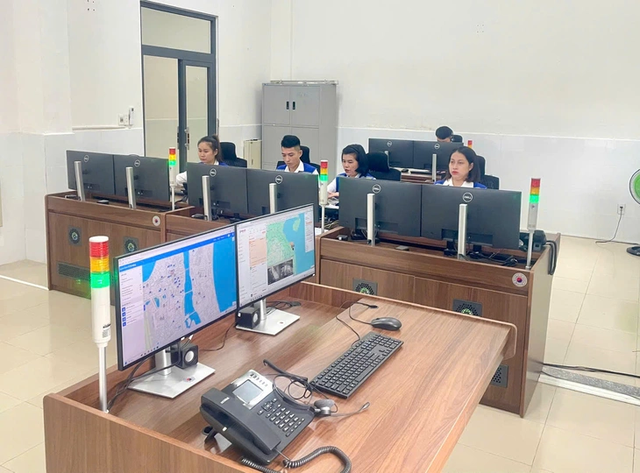
Emergency callers only need to provide a three-word code, which dispatchers can enter into the system to accurately identify the location requiring assistance and coordinate response teams. Photo: Chau Sa / Tuoi Tre
Linh said that emergency location identification previously relied mainly on landmarks provided by callers, mapping applications such as Google Maps or Apple Maps, or descriptions of nearby locations.
However, these methods have limitations. People may not remember addresses, visitors may be unfamiliar with local areas, some locations may lack specific street numbers, and verbal descriptions can sometimes cause confusion.
Such difficulties are especially common in beaches, parks, tourist destinations, narrow alleys, and hilly or mountainous areas, where identifying a patient's location can become a major obstacle to emergency response efforts.
According to Linh, what3words offers a practical solution in these situations.
“The system divides the entire world into three-meter-by-three-meter squares, with each square assigned a unique three-word address. Callers only need to provide the three-word combination, and dispatchers can enter it into the system to accurately identify the location requiring assistance and coordinate emergency teams accordingly,” he explained.
During a recent meeting with leaders of the Da Nang People’s Committee, Truong Van Trinh, deputy director of the municipal Department of Health, highlighted the city’s efforts to advance digital transformation in out-of-hospital emergency care, including the deployment of the what3words technology to improve emergency response capabilities.








Max: 1500 characters
There are no comments yet. Be the first to comment.