


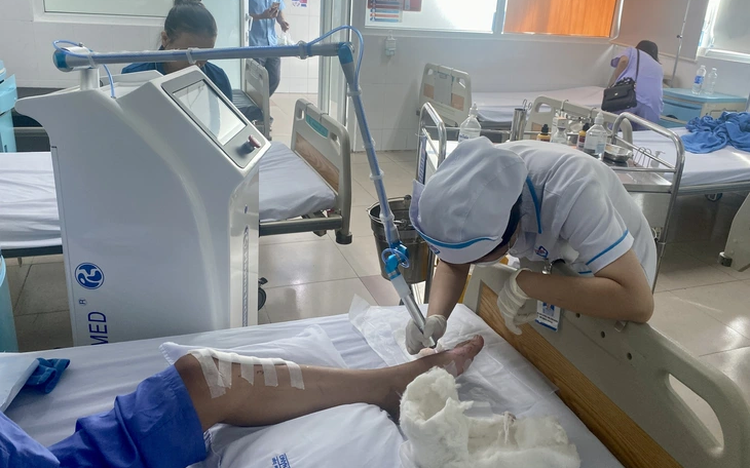
Da Nang residents will receive free annual health check-ups and screenings from July 1, 2026. Photo: Truong Trung / Tuoi Tre
The plan was signed on Thursday by Nguyen Thi Anh Thi, vice-chairwoman of the Da Nang People’s Committee.
It was meant to ensure that all residents have access to preventive healthcare services, early disease detection, and continuous health management, while improving public health quality and reducing the burden of disease.
Under the program, all eligible residents will be listed for periodic health examinations or screenings.
At least 95 percent of electronic health records are expected to be fully updated and connected to the healthcare management system.
The free health check-ups and screenings will be carried out by qualified public and private healthcare facilities under the supervision of the municipal Department of Health, Department of Education and Training, social insurance agency, and local authorities.
The Da Nang administration has also instructed relevant agencies to review and compile lists of eligible residents and organize examinations either at healthcare facilities or through mobile medical services at schools and residential areas.
Priority will be given to vulnerable groups, including out-of-school children, elderly people, poor households, people with disabilities, and residents in remote areas.
Da Nang will also apply information technology to managing medical records through the national electronic health record platform, ensuring integration with population and health insurance databases.
The city expects to complete the review and listing process before June 30 and begin the examinations on July 1.
From 2027 onward, the annual health check program will continue every year.
Earlier this month, Tran Cam Tu, Politburo member and standing member of the Party Central Committee’s Secretariat, emphasized during a meeting with Da Nang voters that localities are required to organize free annual health check-ups and screenings for residents.
According to Tu, health checks in some localities found that more than 30 percent of the residents had medical conditions, allowing for early detection and timely treatment.
“This is a highly practical policy that directly serves the people, and there is no reason for any delay," he said.








Max: 1500 characters
There are no comments yet. Be the first to comment.