


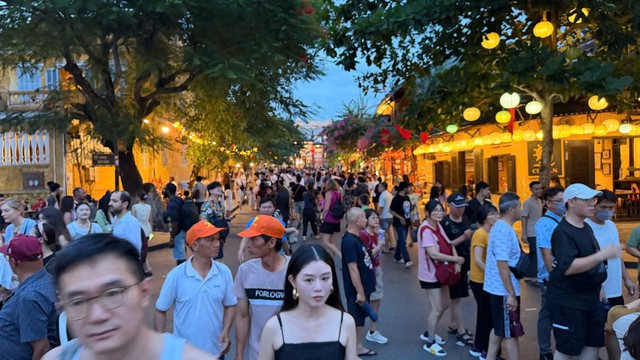
Tourists crowd Hoi An Ancient Town in Da Nang City, central Vietnam during peak hours. Photo: Ba Dung / Tuoi Tre
The recommendation was made by Vu Quang Dung, deputy head of the Vietnam National Authority of Tourism, at a conference on green tourism and sustainable development held by Da Nang’s Department of Culture, Sports and Tourism on Wednesday.
The event drew more than 200 delegates, experts, international organizations, and businesses.
Participants said the green transition should go beyond environmental cleanup campaigns and become an integral part of tourism business operations and destination management.
Dung said green tourism is no longer optional but essential for competitiveness.
A 2026 survey by Booking.com found that 85 percent of travelers considered sustainable tourism important, while 35 percent of respondents in an Agoda survey wanted more eco-friendly tours and community-supporting experiences.

Champa artisans demonstrate stone carving at the UNESCO-listed My Son Sanctuary in Da Nang City, central Vietnam. Photo: Ba Dung / Tuoi Tre
Several destinations in Vietnam have piloted programs to reduce plastic waste and promote greener tourism.
Examples of green initiatives include Hoi An’s circular tourism model aimed at cutting plastic waste by 60 percent, Co To Island in Quang Ninh Province reducing plastic waste by 75 percent, and eco-resorts in Ninh Binh Province pioneering water recycling and renewable energy use.
Dung stressed that Da Nang must not sacrifice environmental quality for growth.

He urged the coastal city to establish carrying capacity indicators for ecologically sensitive areas such as Son Tra Peninsula and Cham Island, as well as heritage destinations including Hoi An and My Son.
He also recommended expanding tourism toward the west of the city, developing community-based ecotourism, connecting clean agricultural products with tourism services, and piloting energy audits and technology-based waste management at major hotels along the coast and Han River.
The Vietnam National Authority of Tourism is also studying proposals for green credit policies offering interest rates 1.5 to 2 percentage points below standard rates, along with support for green certification costs and priority promotion for tourism products meeting green standards.
The conference also highlighted energy efficiency in hospitality.
A representative from energy services company GreenYellow said cooling and boiler systems account for up to 70 percent of hotel energy costs, adding that inefficient operations can significantly reduce profits.
Citing the Hilton Garden Inn in Thailand, the representative said upgrades to its cooling system had cut energy consumption by 65 percent, saving 1.35 million kilowatt-hours annually and reducing carbon dioxide emissions by 566 metric tons.
Businesses can also adopt energy partnership models that require no initial capital investment from the hotel operator, with a partner financing and managing the project while committing to performance targets.
A WWF Vietnam representative emphasized reducing plastic at the source, not just collecting waste, by limiting single-use items and prioritizing reuse.
Green commitments should be backed by measurable results instead of vague claims, the representative said.
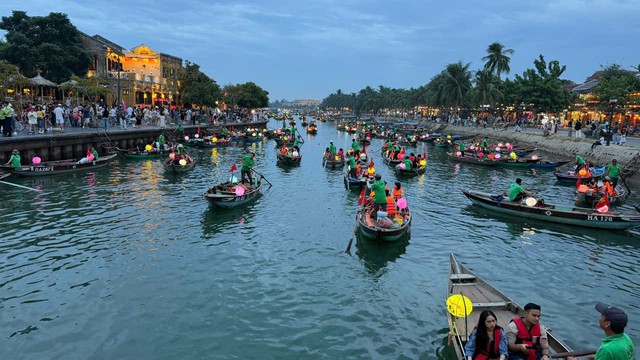
Visitors take boat rides along the Hoai River in Hoi An, central Vietnam. Photo: Ba Dung / Tuoi Tre
Nguyen Thi Hoai An, deputy director of the Da Nang Department of Culture, Sports and Tourism, said the city has more than 2,400 lodging facilities with 67,000 rooms, offering significant potential for energy savings.
In August this year, Da Nang introduced the ‘Green Stay’ criteria for hotels, and by 2027 plans to expand green standards to tourist sites, linking hotels, travel agencies, restaurants, and craft villages into sustainable tourism chains.
She added that the city will shift from awareness campaigns to practical support for businesses, ensuring measurable results.
The ultimate goal is to embed environmental standards into everyday operations, making sustainability a core part of Da Nang’s tourism identity.








Max: 1500 characters
There are no comments yet. Be the first to comment.