


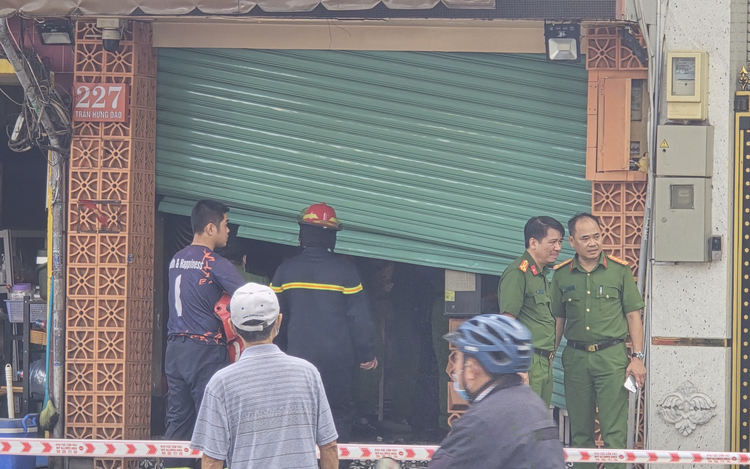
Police cordon off the scene of the fire that killed four people in a four-story house on Tran Hung Dao Street in downtown Ho Chi Minh City, December 5, 2025. Photo: Minh Hoa / Tuoi Tre
The blaze, which killed four people in the early hours of Friday, as well as another deadly fire at the Doc Lap apartment building in Phu Tho Hoa Ward on July 6 that claimed eight lives have reignited concerns over fire safety in the southern metropolis.
Most of the affected buildings are narrow, deep tube houses with multiple floors used for a mix of living, trading, and storage.
While this housing model has expanded rapidly to meet urban living and business needs, the division warned that its convenience comes with a high risk of fire and explosion.
The greatest danger comes from the single escape route through the ground-floor entrance. This space is often used to park motorbikes, store goods, or house machinery, making it the first area to be engulfed when a fire breaks out.
Within minutes, thick smoke and flames can block the only way out, trapping residents on the upper floors.
The risk is further heightened by the widespread installation of iron bars and so-called ‘tiger cages’ on balconies, loggias, and windows.
Intended as a security measure, these metal barriers instead seal off potential escape routes, effectively turning homes into deadly traps during a fire.
Another widespread problem is the lack of basic firefighting and escape equipment.
Many homes and rental properties are not equipped with portable extinguishers, gas masks, rope ladders, or simple tools that could help residents break through barriers in an emergency.
The risk is further compounded when homeowners expand buildings without permission, add extra floors, or store flammable materials in cramped spaces while relying on old, overloaded electrical systems, greatly increasing the likelihood of ignition and rapid fire spread.
Fires that occur late at night or in the early morning are particularly deadly, as residents are usually asleep and most buildings lack smoke or heat detectors.
Many victims lose consciousness from toxic smoke before the flames even reach them.
Despite repeated awareness campaigns, calls to the emergency hotline 114 are often delayed, allowing fires to spiral out of control before rescue teams can arrive.
Although household responsibilities are clearly defined in the Law on Fire Prevention and Fighting, awareness and compliance among some residents remain low, the division said.









Max: 1500 characters
There are no comments yet. Be the first to comment.