


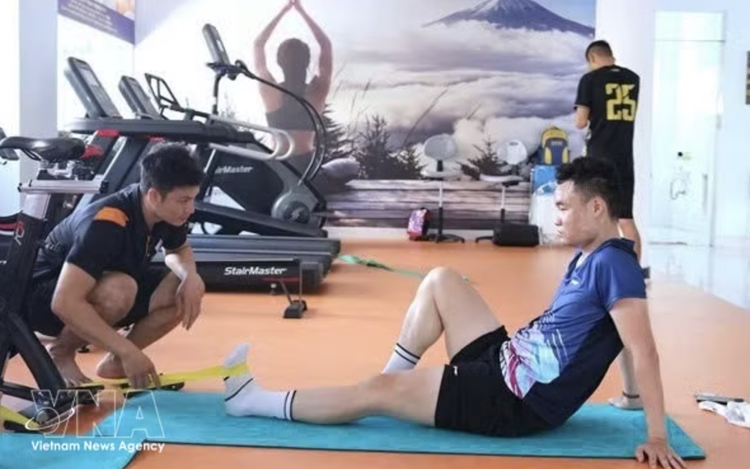
An athlete receives care and undergoes rehabilitation training at the Ho Chi Minh City National Sports Training Center. Photo: Vietnam News Agency
The development aligns with the Politburo's Resolution No. 57 issued on December 22, 2024, on breakthroughs in science and technology, innovation and national digital transformation.
With its network of hospitals, universities, training centers and rehabilitation facilities, Ho Chi Minh City has favorable conditions to develop sports medicine.
However, closer cooperation and standardised procedures are needed to turn research into practical applications.
Dr Vu Hong Huy, vice-chairman of the Vietnam Sports Medicine Association, said cooperation among doctors, rehabilitation specialists, nutritionists, sports scientists and coaches was essential to improving professional standards and training future specialists.
Sports medicine should focus not only on treating injuries but also on identifying risks early and helping athletes maintain their physical condition throughout training and competition.
Associate Prof. Dr Nguyen Dang Chieu, senior lecturer and former acting deputy head of the Faculty of Sports Medicine at Ho Chi Minh City University of Sports, said the discipline applied medical and scientific knowledge to study the body's responses to physical activity.
Regular health checks, fitness assessments and training-load monitoring can help specialists tailor exercise intensity, nutrition and recovery to individual needs.
For elite athletes, these measures can identify fatigue, reduce overtraining risks and improve performance. Recreational exercisers can also benefit from personalised guidance to prevent injuries.
Huy said data and AI could support standardised health records, injury-risk assessment and personalised treatment and rehabilitation plans.
However, technology cannot replace medical expertise. Reliable data, consistent procedures and qualified personnel remain essential.
The establishment of a professional sports medicine organisation in Ho Chi Minh City offers opportunities to strengthen links among hospitals, universities, training centres and sports institutions.
By combining digital technology with professional expertise, the city can improve athlete performance, promote safer exercise and contribute to better public health.








Max: 1500 characters
There are no comments yet. Be the first to comment.