


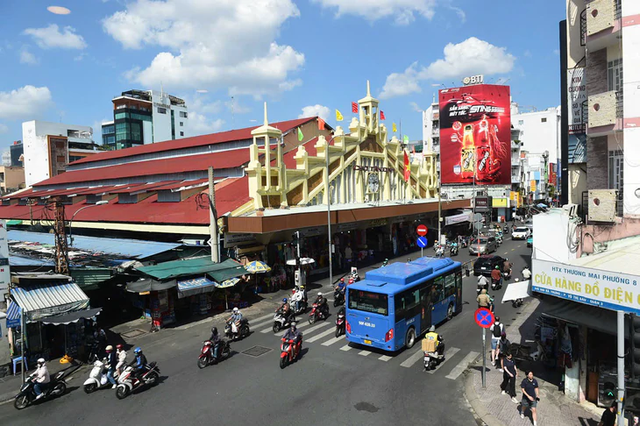
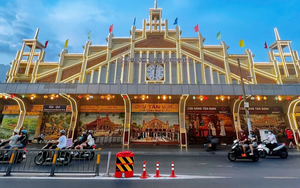
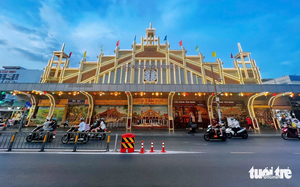
Tan Dinh Market, a landmark in Tan Dinh Ward, Ho Chi MInh City. Photo: Pham Vu / Tuoi Tre
In The 40 Coolest Neighborhoods in the World 2026, released in September, Tan Dinh was Vietnam's sole representative at No. 12, ranking behind Russafa in Valencia, Spain and ahead of São Bento in Lisbon, Portugal.
According to Time Out, the neighborhoods were nominated by its global network of local experts before being assessed by the magazine's editorial team based on a range of factors, including food and drink, nightlife, culture, independent businesses, livability, and community.
Time Out describes Tan Dinh as one of the increasingly rare pockets of central Ho Chi Minh City that retain their low-rise character, relatively laid-back pace, and vibrant food scene.
Alongside the eateries that have been part of the neighborhood for decades, Tan Dinh has in recent years welcomed a new generation of restaurants, bars, and hospitality concepts.
One alley, three ways to experience the city
On Hai Ba Trung Street, where traffic flows almost continuously throughout the day, an alleyway leading to addresses 178–180 opens onto a setting noticeably removed from the bustle of the main road.
Tucked close together inside the alley are three venues under Journey of the Senses (JOS): Du Du Xanh, Noir. Spa, and Noir. Dining in the Dark.
The three concepts span dining, body care, and sensory experiences, yet share a common focus on how people perceive a space, a meal or simply a moment to themselves.
Near the entrance to the alley, Du Du Xanh occupies a villa bearing traces of French architecture and surrounded by greenery.
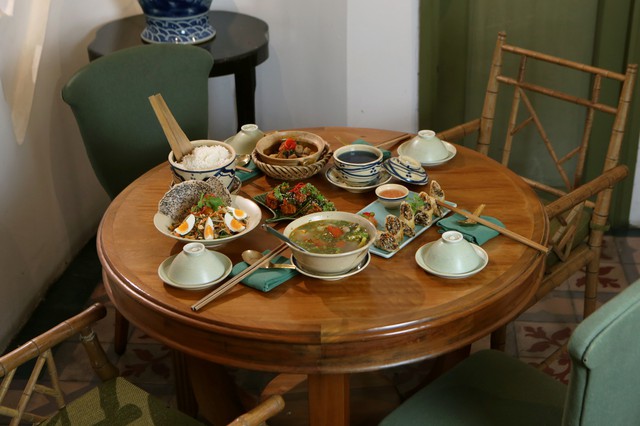
Its windows, patterned tiles, wooden furnishings, courtyard, and balconies have been retained, creating a setting that feels relatively removed from the traffic just outside.
Dining here takes a contemporary approach, drawing on natural ingredients and familiar flavors. The greenery and relaxed table setting encourage a slower pace, inviting diners to spend time over their meal and conversations rather than simply stopping by.
A few steps further in, the experience shifts from taste to touch. At Noir. Spa, treatments are provided by professionally trained visually impaired therapists.
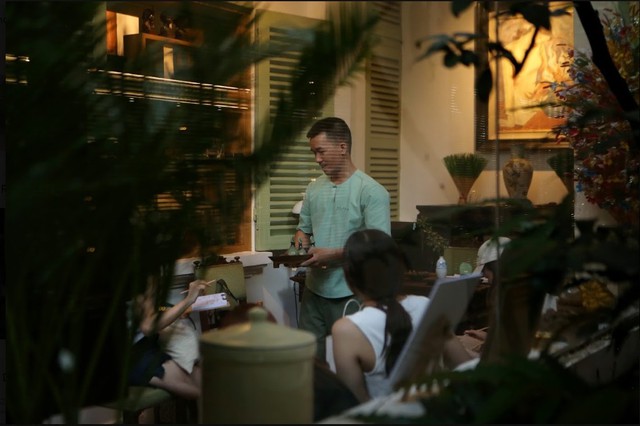
In an environment designed to minimize distractions, attention turns to the therapists' hands, movements, and their sensitivity to the body through touch.
Not far away, Noir. Dining in the Dark is a pioneering concept that brought the experience of dining in complete darkness to Vietnam.
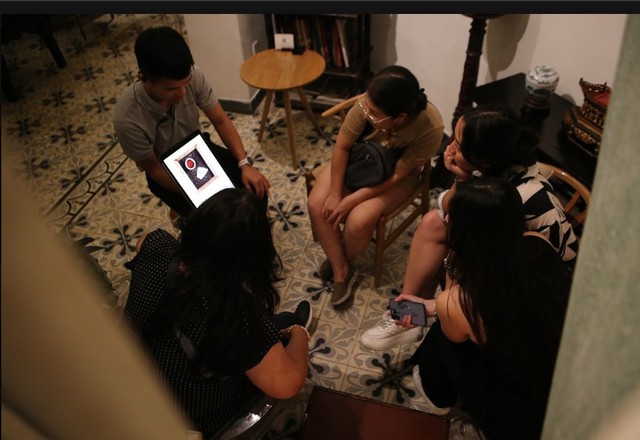
Here, guests enjoy a secret menu in a dining room completely devoid of light, guided throughout the experience by visually impaired hosts.
Before entering the dining room, guests leave behind their phones, smartwatches, and other light-emitting devices.
Without being able to see the dishes, their colors or presentation, diners explore what is in front of them through aroma, flavor, texture, temperature, and sound.
In the darkness, guests may also find themselves paying closer attention to the meal, the sounds around them and the conversations unfolding with those sharing the table.
When visual cues and other distractions are temporarily removed, guests become more attentive to their own senses and to the person across the table.
Without eye contact or facial expressions to rely on, conversations depend more on voice and attentive listening, creating space for more open and genuine exchanges.
Dining in the dark is no longer an unfamiliar concept internationally.
The Smithsonian has documented dark restaurants operating in multiple countries, while Food Network has described dining in the dark as an experiential dining trend with staying power, with variations of the concept appearing in cities around the world.
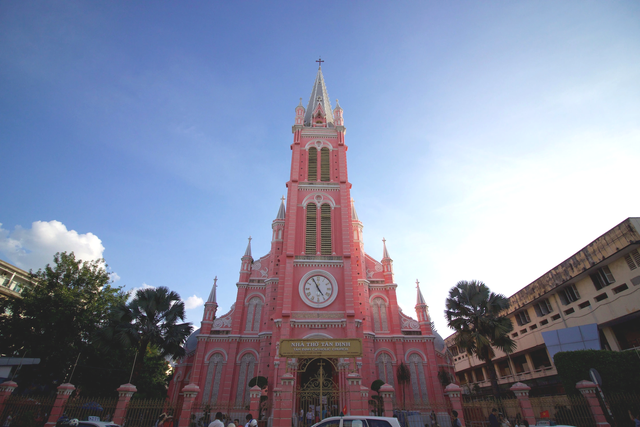
Tan Dinh Church in Ho Chi Minh City. Photo: Minh Huyen
When experiences add to the appeal of a destination
Tan Dinh's inclusion in Time Out's global list presents another opportunity for a neighborhood long familiar to Ho Chi Minh City residents to gain greater visibility on the international tourism map.
Yet a neighborhood is never defined by just a handful of individual addresses.
Markets, churches, long-standing eateries, restaurants, cafés, spas, cultural spaces, and newer experiential concepts can all become different pieces of a visitor's journey.
As these services develop alongside one another, travelers have more reasons not simply to see a landmark and move on, but to eat, relax, explore, and spend more time in the neighborhood.
On a broader scale, the interplay between dining, accommodation, wellness, shopping, entertainment, culture, and locally rooted experiences plays an important role in building a more complete urban tourism ecosystem.
Each additional experience gives visitors another reason to stay longer, explore further, and spend more within the local economy.
When these experiences are better communicated and made more accessible to international markets, their impact can extend beyond individual businesses.
Visitor traffic can spill over into surrounding services, contributing to the local economy while bringing the neighborhood, and Ho Chi Minh City itself, closer to international travelers.
Tan Dinh's recognition by Time Out is a notable sign of the neighborhood's current appeal.
Turning that international attention into actual visits and meaningful experiences, however, involves an entire ecosystem, from long-established businesses woven into the fabric of the neighborhood to newer concepts that continue to broaden the ways visitors can experience Ho Chi Minh City.
- REFERENCE MORE
- REFERENCE MORE
- REFERENCE MORE
- REFERENCE MORE








Max: 1500 characters
There are no comments yet. Be the first to comment.