


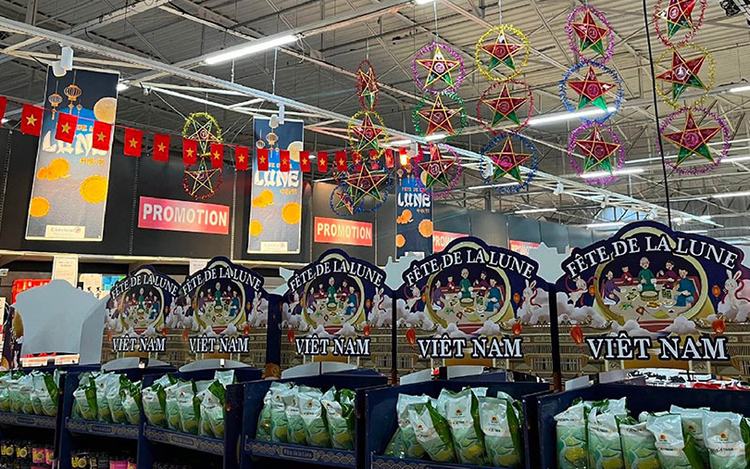
Vietnamese rice is sold under Loc Troi Group's ‘Com - Rice Vietnam’ brand at a supermarket in France. Photo: Tuoi Tre
Experts said businesses need greater technical support and investment to meet the new packaging standards and remain competitive.
While the changes may increase pressure and costs in the short term, meeting the standards could help Vietnamese businesses strengthen their competitiveness and expand into other international markets.
The issue was highlighted at a seminar on promoting long-term business growth through sustainable development and consumer trust, jointly organized on Thursday by the Vietnam Competition Commission, the Department of Foreign Market Development under the Ministry of Industry and Trade, and the German Agency for International Cooperation (GIZ).
Nguyen Thi, a lecturer at the Hanoi University of Natural Resources and Environment, said the EU's Packaging and Packaging Waste Regulation, introduced under the Ecodesign for Sustainable Products Regulation, will directly affect several of Vietnam's major export industries, including textiles and garments, electronics, steel, and packaging.
Packaging placed on the EU market must be at least 70 percent recyclable by 2030. The requirement will rise to 95 percent by 2040 as the bloc seeks to reduce landfill and waste incineration.
Pham Thi Chung, a sustainable trade expert, said packaging is no longer just a protective layer for products but it has become a technical requirement that determines whether goods can enter international markets.
She noted that export products are now assessed not only for quality but also for their carbon footprint and the sustainability of their packaging.
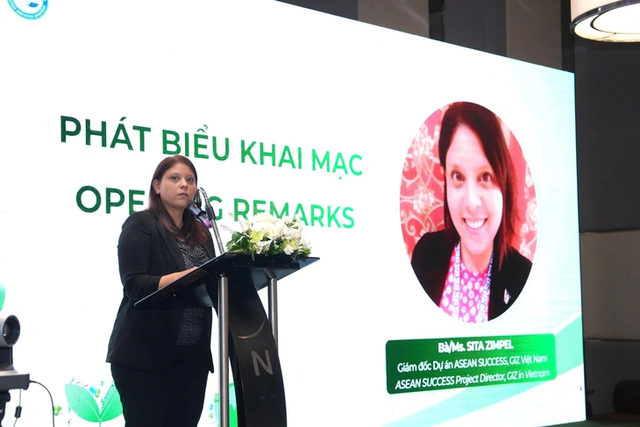
Sita Zimpel, project director of GIZ Vietnam, speaks at the seminar on August 6, 2026. Photo: Courtesy of organizers
According to Chung, businesses exporting to major markets such as the EU, the United States, Japan, and South Korea will need to comply with new requirements, including designing packaging for recyclability, increasing recycled material content, fulfilling extended producer responsibility obligations, reducing single-use packaging, and ensuring traceability through digital product passports.
Nguyen Thi described the transition as "a packaging game," with the EU setting the rules.
He said Vietnamese businesses, particularly during the initial phase, need additional support from European partners in technical guidance, capacity building, and technology transfer to help meet the new standards.
Businesses seek stronger support
At the seminar, many businesses said they were prepared to invest in meeting the new requirements but lacked clear guidance and access to testing and certification systems for packaging standards.
Nguyen Ngoc Sang, chairman of the Vietnam Packaging Association, said most companies in the industry are small- and medium-sized enterprises with limited financial capacity.
He said policymaking should take account of these constraints and provide a suitable road map, especially as Vietnam still lacks specialized packaging research centers.
"Vietnam's economy depends heavily on exports, and no export product can be shipped without packaging. However, support policies for the packaging industry remain inadequate," Sang said.
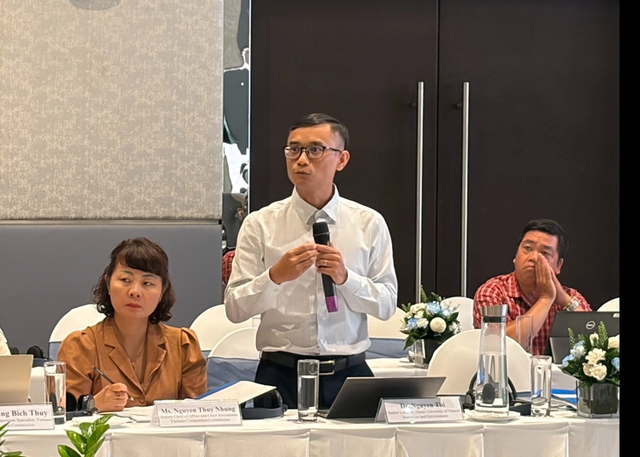
Nguyen Thi (standing), lecturer at the Hanoi University of Natural Resources and Environment. Photo: Nghi Vu / Tuoi Tre
EU rules seen as opportunity, not trade barrier
Responding to concerns that the EU's new requirements could serve as non-tariff trade barriers, Sita Zimpel, project director of GIZ Vietnam, said the rules may increase pressure on businesses in the short term but would create long-term growth opportunities.
She said the EU has high expectations for sustainability, and companies that meet its standards will also find it easier to expand into other international markets.
"We are only at the beginning of the adaptation process. The important thing is to start with practical and achievable steps. GIZ and its partners will continue supporting businesses in understanding and implementing these new requirements effectively," she said.










Max: 1500 characters
There are no comments yet. Be the first to comment.