


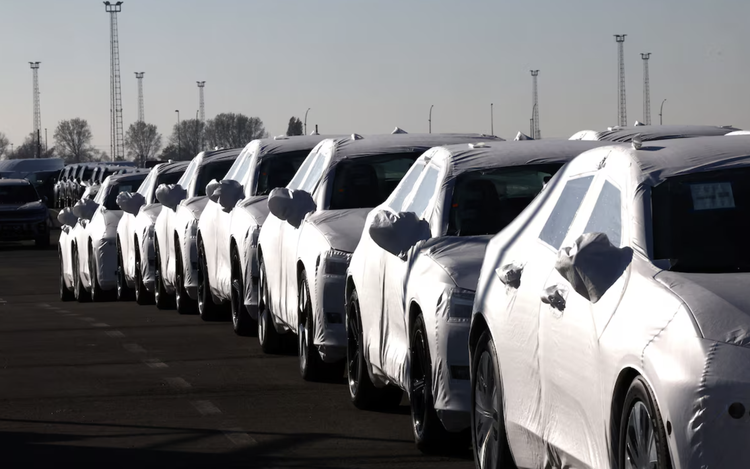
New cars are seen parked in the port of Zeebrugge, Belgium, October 24, 2024. Photo: Reuters
The EU executive appears to have yielded to the call from carmakers to be allowed to keep selling plug-in hybrids and range extenders with CO2-neutral biofuel or synthetic fuel as they struggle to compete against Tesla and Chinese electric vehicles.
The move, which will need approval by EU governments and the European Parliament, would be the EU's most significant climb-down from its green policies of the past five years.
Carmakers such as Volkswagen and Fiat owner Stellantis have pushed for an easing of targets and fines for missing them. European automotive lobby group ACEA called it "high noon" for the sector, adding that the Commission should ease intermediate 2030 targets as well.
However, the electric vehicle industry says this will undermine investment and result in the EU yielding even more ground to China in the shift to EVs.
"Moving from a clear 100% zero-emissions target to 90% may seem small, but if we backtrack now, we won't just hurt the climate. We'll hurt Europe's ability to compete," said Polestar CEO Michael Lohscheller.
William Todts, executive director of clean transport advocacy group T&E, said the EU was playing for time while China was racing ahead.
"Clinging to combustion engines won't make European automakers great again," he said.
The Commission will also detail plans to boost the share of EVs in corporate fleets, notably company cars, which account for about 60% of Europe's new car sales. The precise measure is not clear, but there may be an insistence on some local content. The auto industry wants incentives rather than mandatory targets.
The EU executive is also likely to propose a new regulatory category for small EVs that would incur lower taxes and earn extra credits towards meeting CO2 targets.
Credits might also be earned through more sustainable production, such as vehicles made with low-carbon steel.








Max: 1500 characters
There are no comments yet. Be the first to comment.