


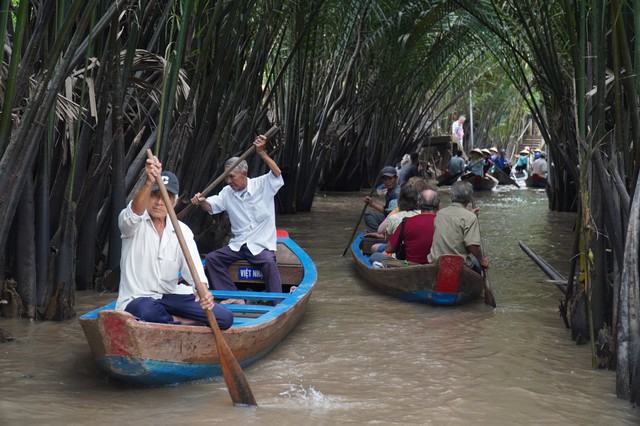
A 30-minute sampan ride through the nipa palm canal of Thoi Son Islet in Dong Thap Province, southern Vietnam, operated by two rowers, currently costs only VND15,000 (US$0.57). The fare has remained for the past over 17 years. Photo: Mau Truong / Tuoi Tre
For nearly two decades, two rowers at Thoi Son Islet, a popular tourist attraction in Dong Thap Province, navigated visitors through the Mekong Delta’s nipa palm canals for just VND15,000 ($0.57) a ride.
Starting October 1, local officials and tour operators will triple that rate in phases - first to VND 30,000, then reaching VND 50,000 ($1.90) within a year.
A fare frozen for nearly two decades
The fare increase has received broad support, as the old rate had remained unchanged for 17 years and nine months.
Amid rising living costs, boat rowers earned only VND 1 to 2 million ($38 to $76) per month. As a result, many have been forced to leave the trade, driving the number of operating sampans down from more than 300 to about 245.
"A boat rower can complete around 100 trips a month, with each trip lasting more than 30 minutes, earning only about VND 1 million ($38),” said Le Van Kiem, chairman of the Thoi Son Tourist Sampan Union.
Speaking at a recent meeting on proposed fare adjustments organized by local authorities, Kiem added that even with tips, a rower's total monthly income barely reaches VND 2 to 2.5 million ($76 to $95).
At the meeting, Luong Thi Diem Trang, chairwoman of the Dong Thap Tourism Association, along with other participants, agreed that the current fare no longer reflects the physical labor required.
Several attendees described the VND 15,000 fare as not only outdated but "unreasonable," noting it is worth less than a soft drink today.
However, participants emphasized that higher fares must go hand in hand with improved service. It was reported that low earnings had driven some rowers to solicit extra tips from visitors, creating an uncomfortable experience for tourists.
Elaborating on the need to professionalize the workforce, Trang said rowers should be viewed not merely as manual laborers, but as "tourism ambassadors" who can share local culture and introduce regional specialties in a warm, engaging manner.
Concluding the meeting, Nguyen Thi Xuan Mai, vice-chairwoman of the Thoi Son Ward People's Committee, stated that local authorities would act decisively to ensure the price hike is paired with higher standards.
The ward plans to conduct regular inspections at boat piers to address service shortcomings and enforce compliance.
The rise of a viral attraction
The discussions came amid a tourism boom sparked by viral videos on social media recently, which have turned sampan rides through the nipa palm groves of Thoi Son Islet into a ‘must-visit’ experience for many travelers.
Particularly noticeable were the many young visitors, especially female tourists, dressed in ao ba ba (traditional southern Vietnamese shirts) and ao dai (Vietnamese national costume), who carefully prepared to capture photos against the picturesque river scenery of the Mekong Delta.
However, the rapid increase in visitor numbers has caused several boat piers to become overcrowded.
At some boarding points, hundreds of tourists have had to queue for their turn.
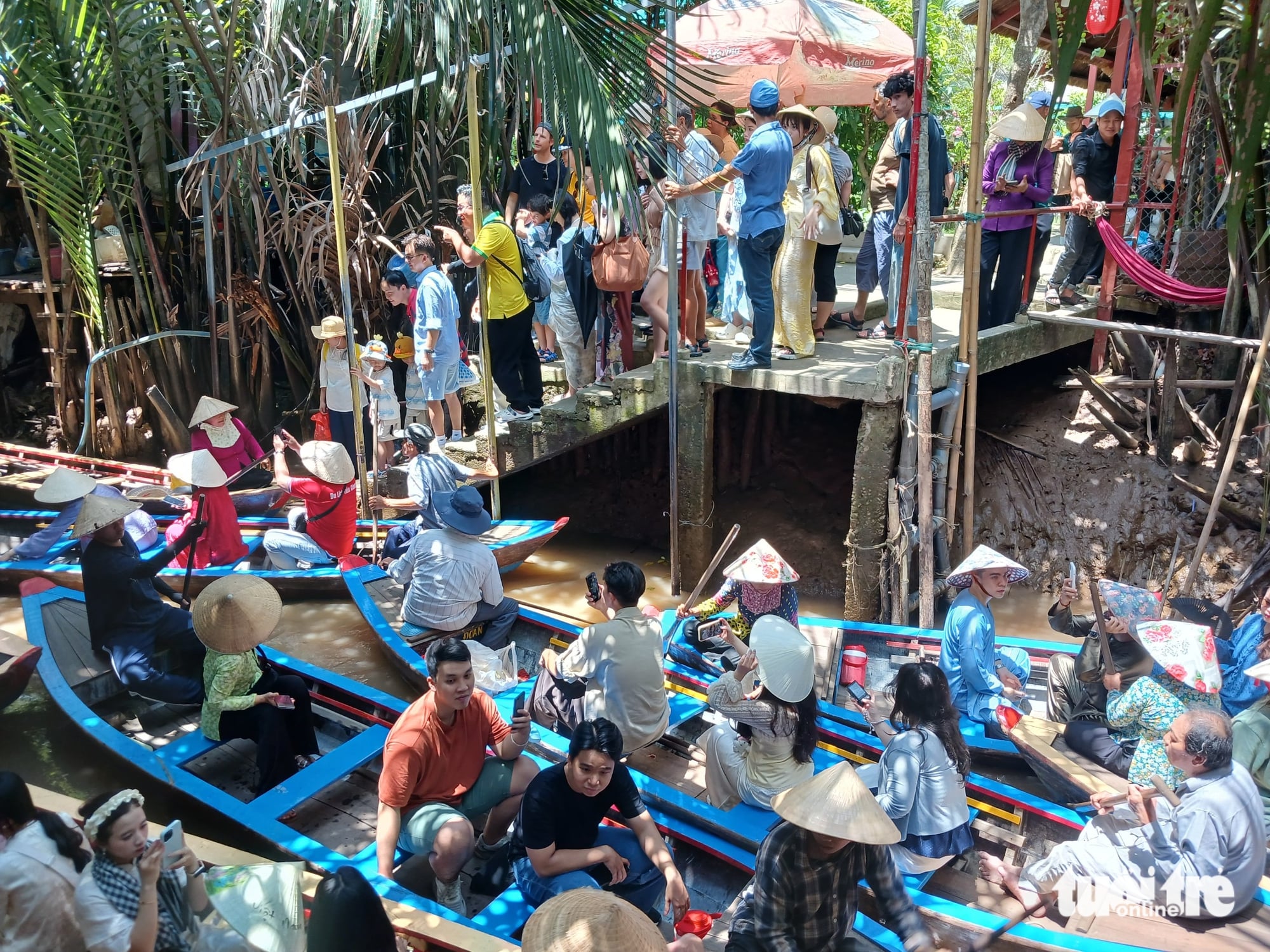
Overcrowding at the sampan piers on Thoi Son Islet often occurs on weekends. Photo: Mau Truong / Tuoi Tre
Nguyen Thanh Phong, director of a travel company that frequently brings visitors to Thoi Son, said the number of tourists had surged over the past 10 days after several Chinese influencers posted photos and videos of the sampan ride experience on social media.
"During peak periods, visitors sometimes have to wait nearly two hours before it is their turn to board a sampan. The congestion mainly occurs during busy hours," Phong said.
According to the Dong Thap Tourism Association, besides the sudden surge in visitor numbers, some groups of tourists also stop their boats along the route to take photos and record videos.
As the canals are relatively narrow, just a few boats stopping can be enough to cause congestion for the entire line of boats behind them.
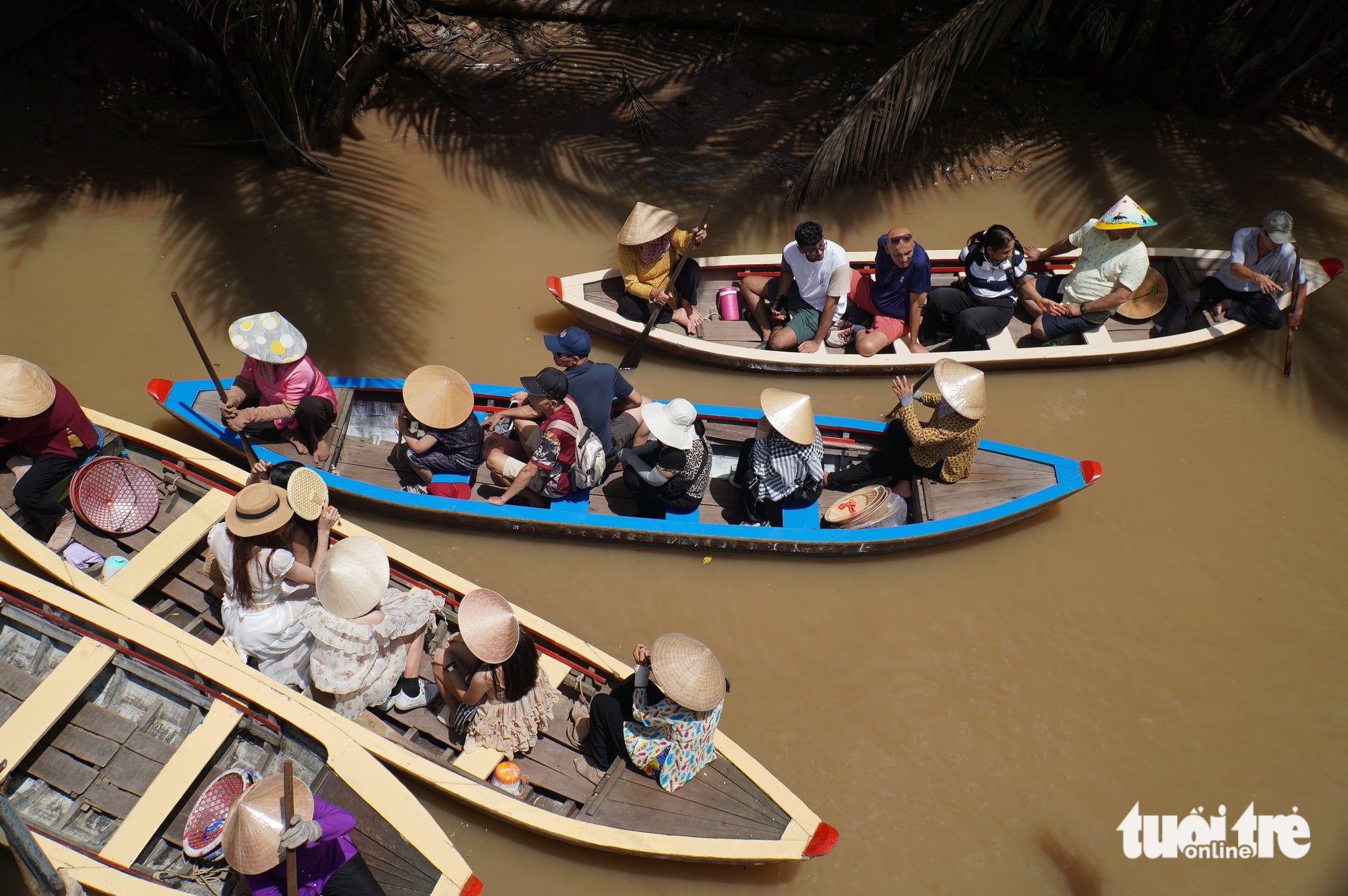
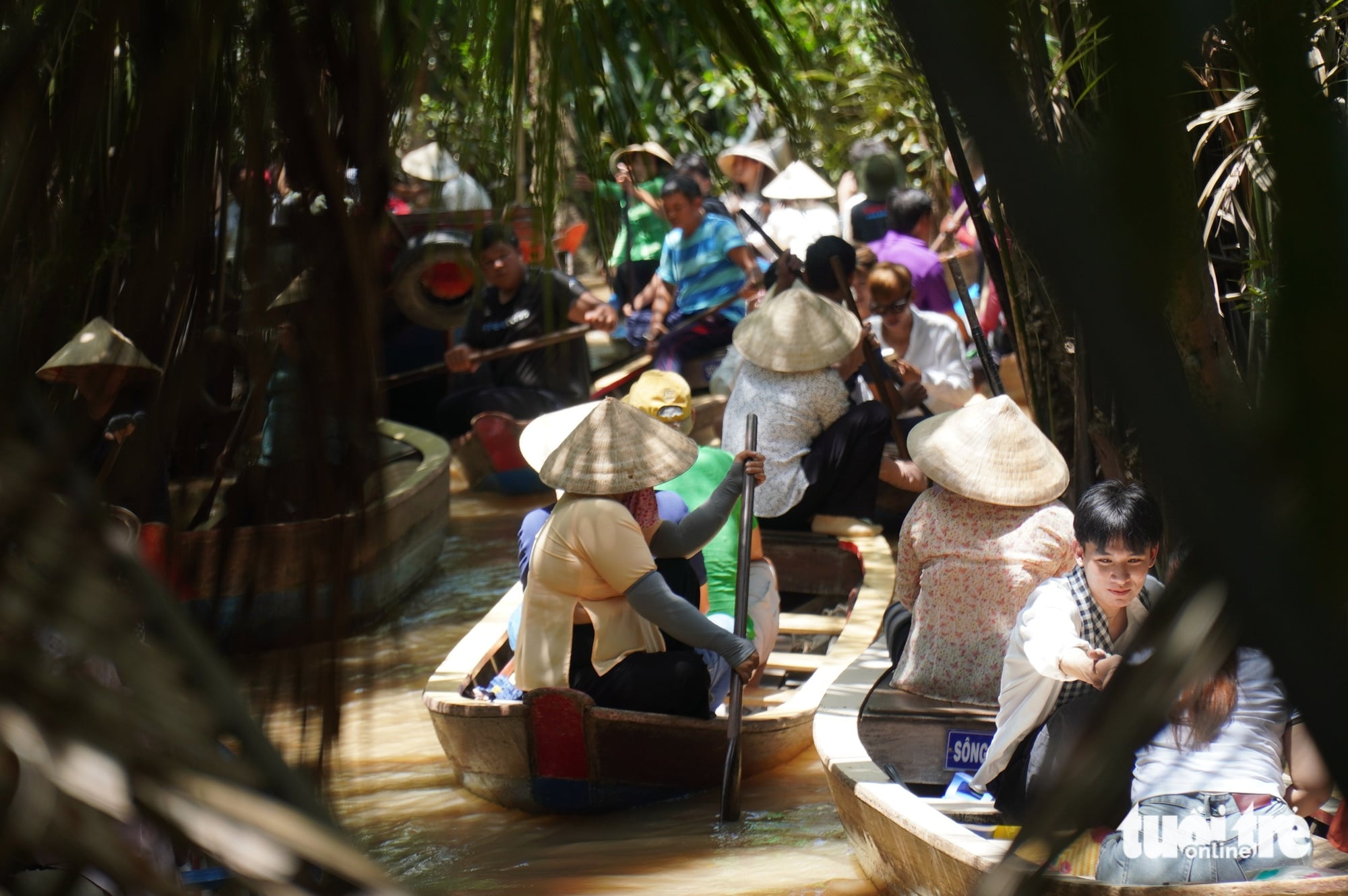
Due to the narrow waterways, sampan services on Thoi Son Islet often become overcrowded. Photo: Mau Truong / Tuoi Tre
The situation directly caused ‘sampan jams,’ forcing tour groups traveling behind them to wait for long periods, leading to frustration and seriously affecting their travel experience.
To address the issue, tourism officials proposed a plan to regulate visitor flows by encouraging photo-taking groups to visit during off-peak hours, such as early morning or after 3:00pm when the sunset light is ideal.
The move would allow visitors to take better photos without disrupting the main sightseeing flow.









Max: 1500 characters
There are no comments yet. Be the first to comment.