


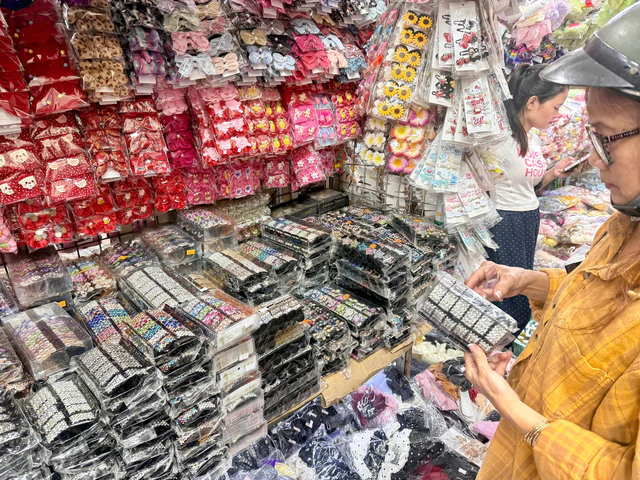
Many visitors head to Binh Tay Market in Binh Tay Ward, Ho Chi Minh City to buy accessories such as hair clips and brooches in bulk. Photo: Ha Phuong / Tuoi Tre
Beyond shopping, visitors to Ho Chi Minh City are also keen to experience everyday local life, sample the city's signature dishes, and browse for souvenirs that reflect Vietnamese culture and craftsmanship at traditional markets.
They see traditional markets as places to discover local food, interact with vendors, and find distinctive gifts to take home.
Foreign tourists enjoy exploring traditional markets
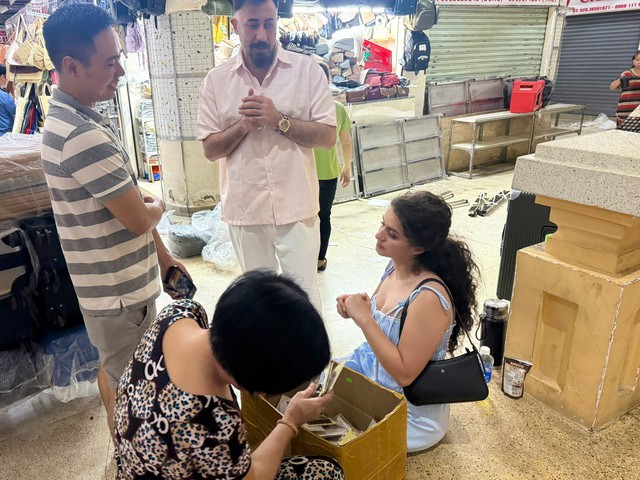
Australian tourist Sophie Martin receives gift recommendations from vendors at Binh Tay Market in Ho Chi Minh City. Photo: Ha Phuong / Tuoi Tre
At Binh Tay Market in Binh Tay Ward, Ho Chi Minh City, Australian tourist Sophie Martin picked out three souvenir magnets featuring famous Vietnamese landmarks to take home for family and friends.
Priced at VND40,000 ($1.60) each, the small keepsakes caught her attention.
"I like buying souvenirs that remind me of the places I have visited. These magnets featuring famous Vietnamese landmarks are attractive and bring back memories of the trip," Sophie said.
"I also enjoy exploring traditional markets because I can shop while learning more about local culture and people's daily lives," she said.
French tourist David Wilson also included a traditional market in his Ho Chi Minh City itinerary, visiting Ben Thanh Market.
"I enjoy the lively atmosphere of local markets. They offer a variety of spices, food and specialty products that are not easy to find back home. I want to bring back some Vietnamese tea, coffee and spices as gifts for friends so they can experience a taste of the country," David said.
Kim Thuy, 60, owner of the Kim Thuy handbag stall at Binh Tay Market, said some of her best-selling products were canvas bags and small purses printed with the names and images of popular Vietnamese destinations, including Hoi An, Da Lat, Phu Quoc, Nha Trang and Da Nang.
Priced affordably at around VND30,000-40,000 ($1.16-$1.55) each, the items are popular with foreign tourists, who often buy five to 10 at a time or even more when shopping for larger groups of friends to take home as gifts.
International visitor numbers at the market have risen noticeably over the past three to four months, Thuy said.
She attributed the increase to Binh Tay Market's development as a commercial and tourism destination, along with promotional efforts on online platforms.
She added that initiatives by the market management board and travel agencies had helped bring more customers to vendors, boosting their business and income.
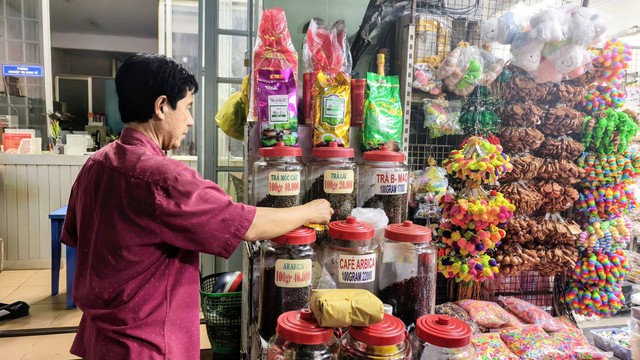
Thanh, a vendor who has been selling tea and coffee at Binh Tay Market for more than 40 years. Photo: Thy Nhung / Tuoi Tre
In a conversation with Tuoi Tre (Youth) online newspaper, Thanh, a coffee vendor who has spent more than 40 years at Binh Tay Market, shared insights into the daily trading activity at the traditional marketplace.
He said wholesale goods were currently the best-selling items because of their affordable prices and low barriers to resale.
Buyers include traders from other provinces and street vendors operating near schools and night markets, particularly in the lead-up to Tet, Vietnam's Lunar New Year.
Meanwhile, stalls selling traditional sweets, dried seafood such as shrimp and squid, as well as Cambodian-style banh mi carts outside the market, continue to attract a steady stream of customers.
"The night market is a recent addition, operating from around 6 pm to 11 pm or midnight, depending on visitor numbers. Since the market has also been developed as a tourist destination, many foreign visitors come here and buy coffee or tea, even if they only purchase small, affordable 100- to 200-gram packs," Thanh said.
Market tours open up new spending opportunities for tourists
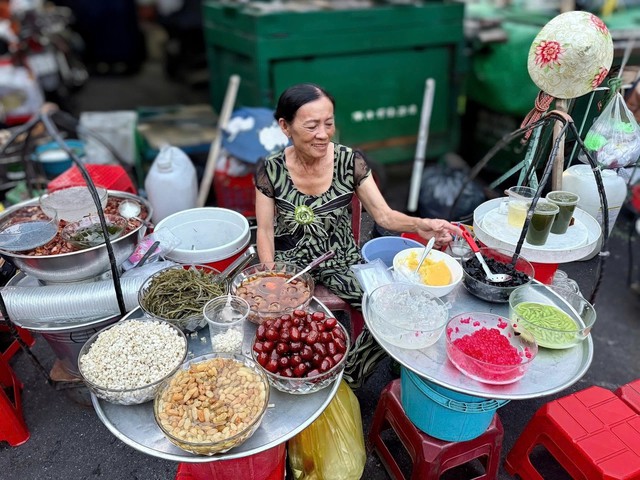
Food stalls at traditional markets are also popular with tourists. Photo: Ha Phuong / Tuoi Tre
A representative of Binh Tay Market's management board said the market has become livelier toward the end of the year, with more tourists visiting.
"More international tourists have become familiar with the market thanks to several programs organized by the management board in coordination with the Department of Industry and Trade to attract residents and visitors for year-end shopping," the representative said.
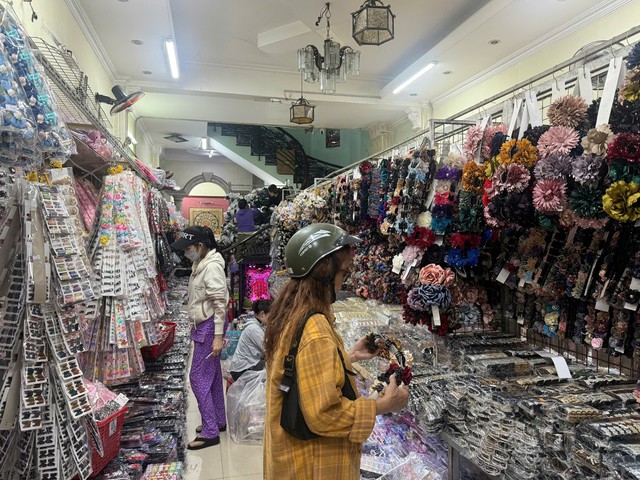
Shopping activity picks up at Binh Tay Market toward the end of the year as more residents and tourists come to shop. Photo: Ha Phuong / Tuoi Tre
The representative said the market management board has introduced several initiatives to improve the shopping experience and attract more visitors.
These include training vendors and introducing online payment solutions through the Payoo payment gateway, particularly for stalls serving tourists.
International visitors can pay directly from their personal accounts without exchanging foreign currency, while an intermediary service transfers the equivalent amount in Vietnamese dong to vendors' accounts.
The market has also joined Ho Chi Minh City's promotional month and organized discount fairs by encouraging retail businesses to participate in promotional programs under the Department of Industry and Trade's plans.
Beyond shopping, the market is developing daytime and nighttime activities to encourage visitors to spend more time there.
During the day, tourists can explore local culture, listen to guided explanations and shop, while rotating workshops offer activities such as calligraphy, lion dance head-making and mask-making.
In the evening, cultural performances will be held in front of and around the market, linking the venue with the Cho Lon night street area, a nighttime destination in Ho Chi Minh City's historic Chinatown area.
The market also plans to introduce more programs to cater to year-end shopping demand.
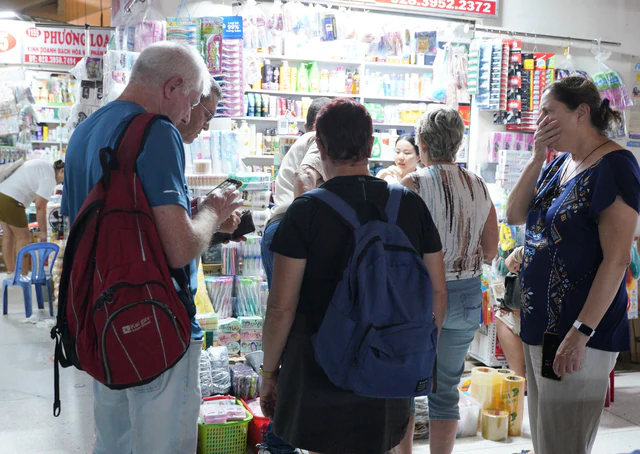
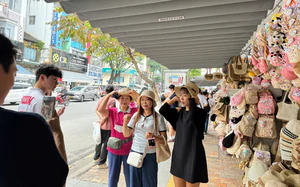
Tourists browse and shop at a traditional market during their visit to Ho Chi Minh City. Photo: Ha Phuong / Tuoi Tre
Speaking to Tuoi Tre (Youth) online newspaper, Hoang Hai, a representative of Ha Long Cruises, a travel company, said international tourists, particularly cruise passengers, were keen to visit traditional and local markets when traveling to Ho Chi Minh City.
He said visitor preferences varied by market. Beyond sampling local food and buying specialty products, many European and American tourists enjoy photographing distinctive market scenes, observing vendors and customers bargaining, and interacting with local residents.
"Cruise passengers typically travel in large groups and have only around eight to 10 hours to explore the city. Convenient transport connections and well-organized market spaces would give them more time to explore, shop, and use local services," Hai said.
He explained this would not only attract more visitors to market tours but also encourage higher spending and create additional business opportunities for vendors.
Diversifying market experiences can help traditional markets attract more visitors, extend their stays, and stimulate spending on shopping and services.
These efforts could also strengthen the role of traditional markets as distinctive tourism attractions while generating additional income for local businesses in Ho Chi Minh City.


Max: 1500 characters
There are no comments yet. Be the first to comment.