


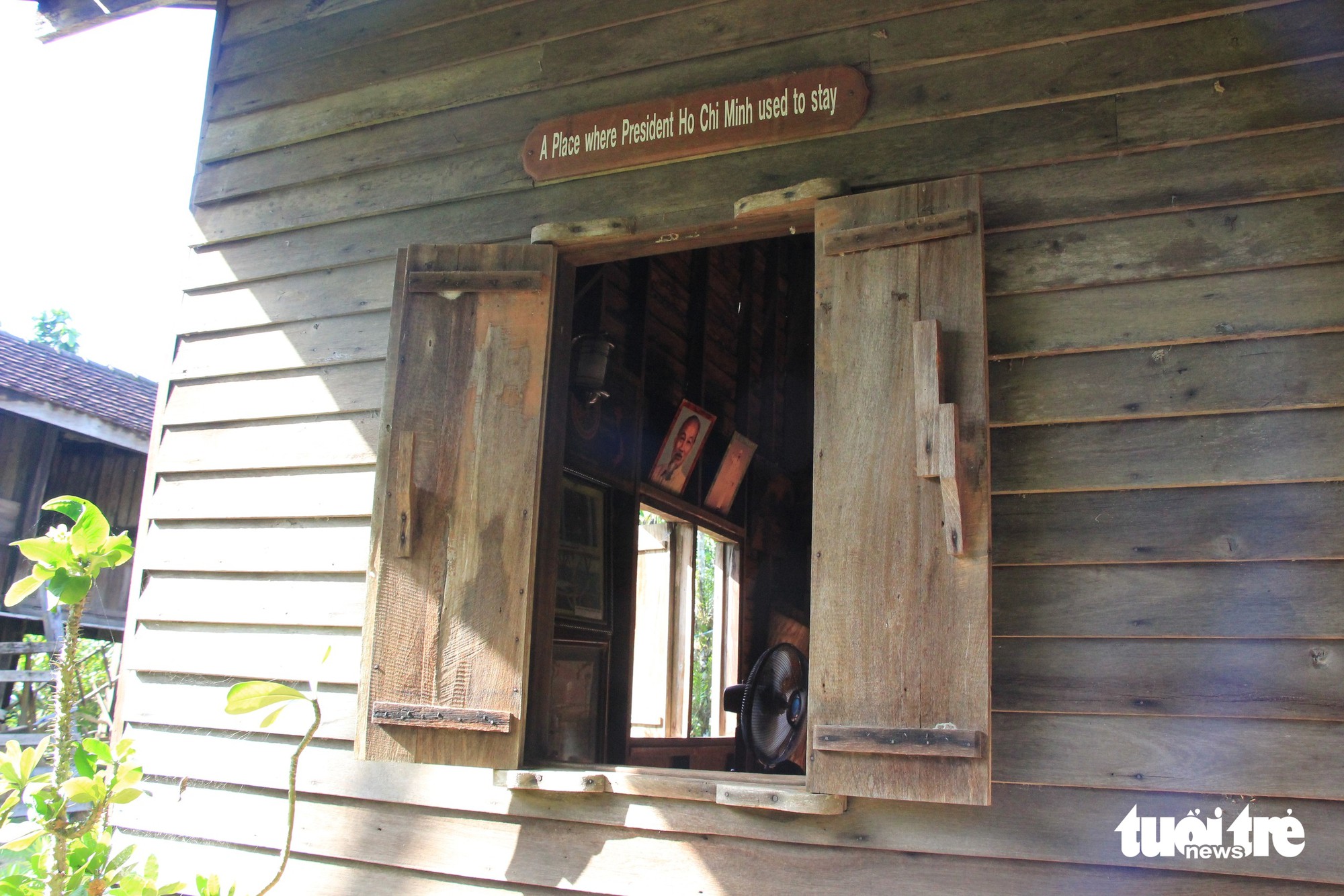
The house where President Ho Chi Minh once lived during his revolutionary activities in Nakhon Phanom Province, northeastern Thailand, is now visited by Vietnamese people and tourists who pay their respects to the late president. Photo: Dong Nguyen / Tuoi Tre News
According to Vietnam’s Ministry of Foreign Affairs, around 100,000 Vietnamese people currently live in Thailand, with most concentrated in northeastern provinces.
Vietnam-Thailand friendship in northeastern Thailand
Nakhon Phanom is one of the northeastern Thai provinces where Vietnamese influences and Vietnam-Thailand friendship remain particularly visible.
The most notable site is the commemorative site for President Ho Chi Minh (1890-1969) in Nachok Village, which includes a memorial area, a museum, and the house where Uncle Ho lived while conducting revolutionary activities in Thailand from 1928 to 1929.
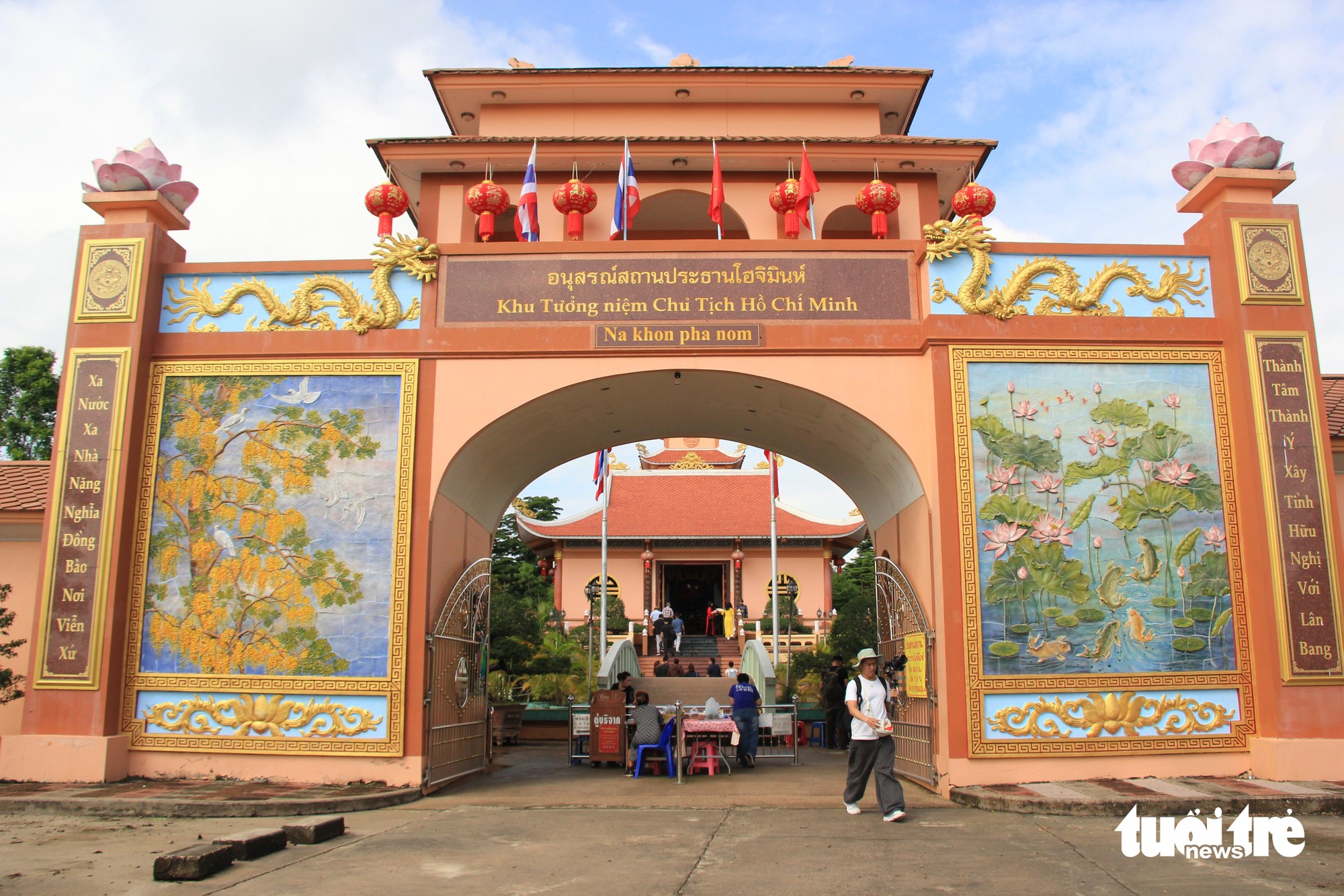
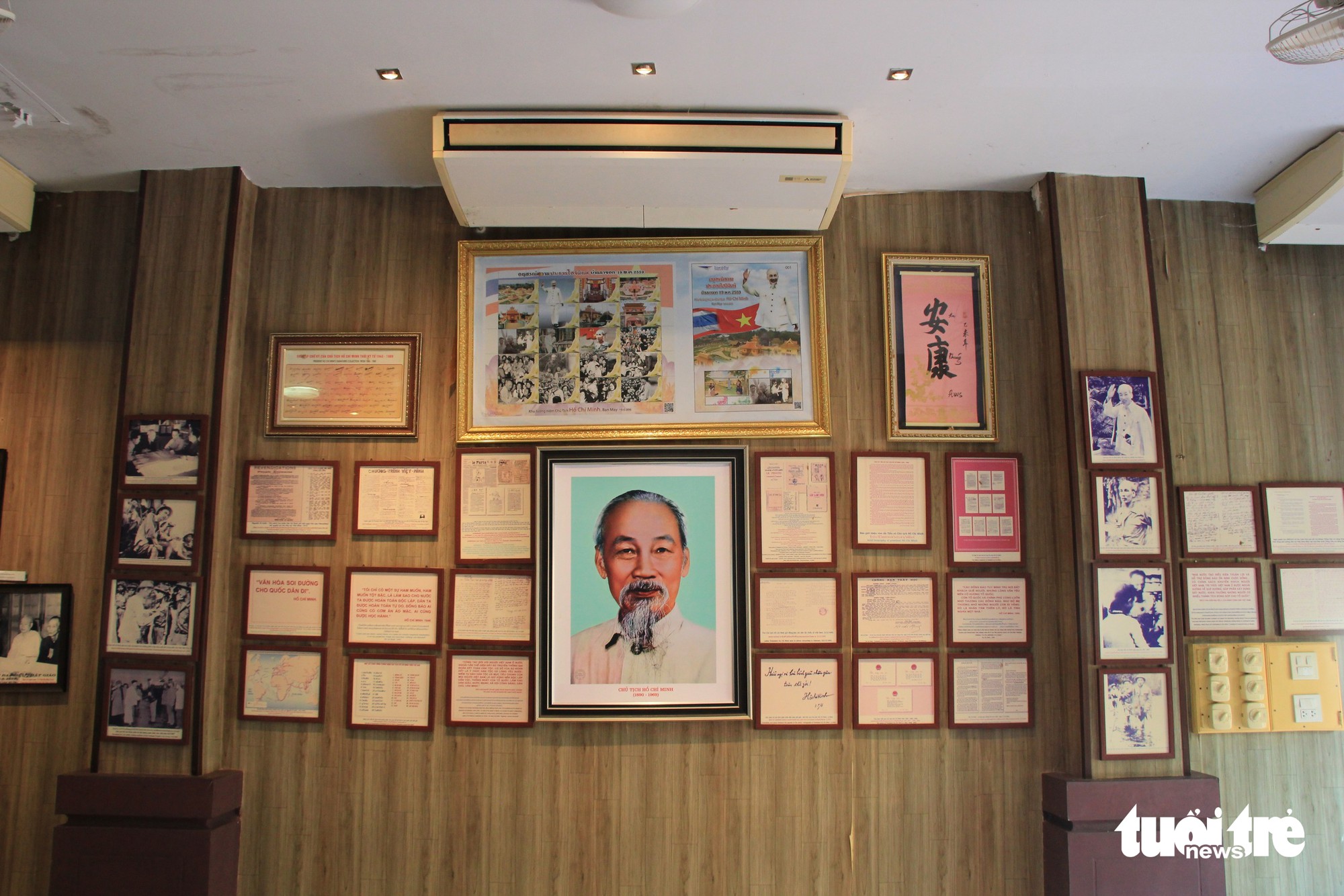
The Ho Chi Minh President Memorial Site in Nakhon Phanom, northeastern Thailand. Photo: Dong Nguyen / Tuoi Tre News
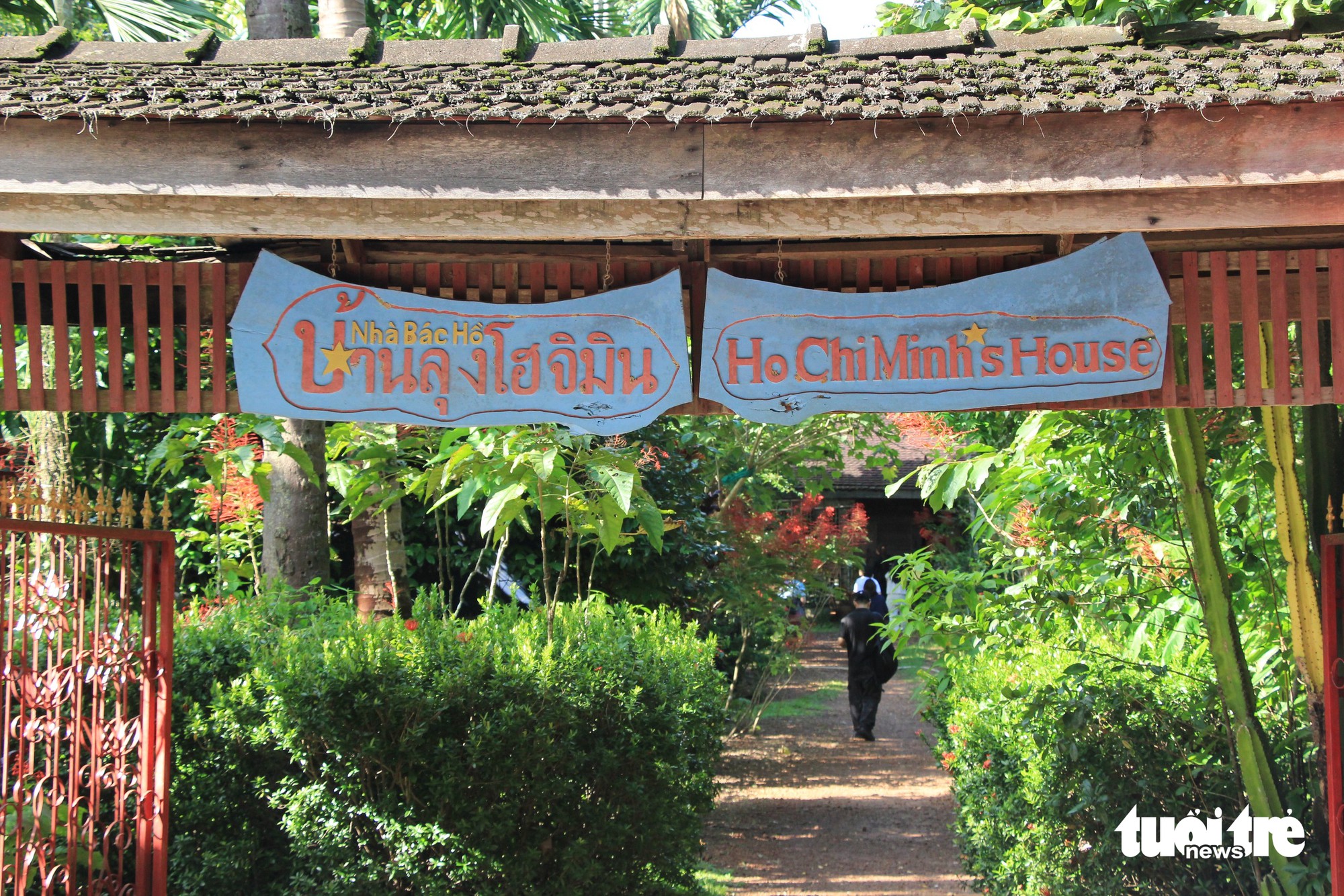
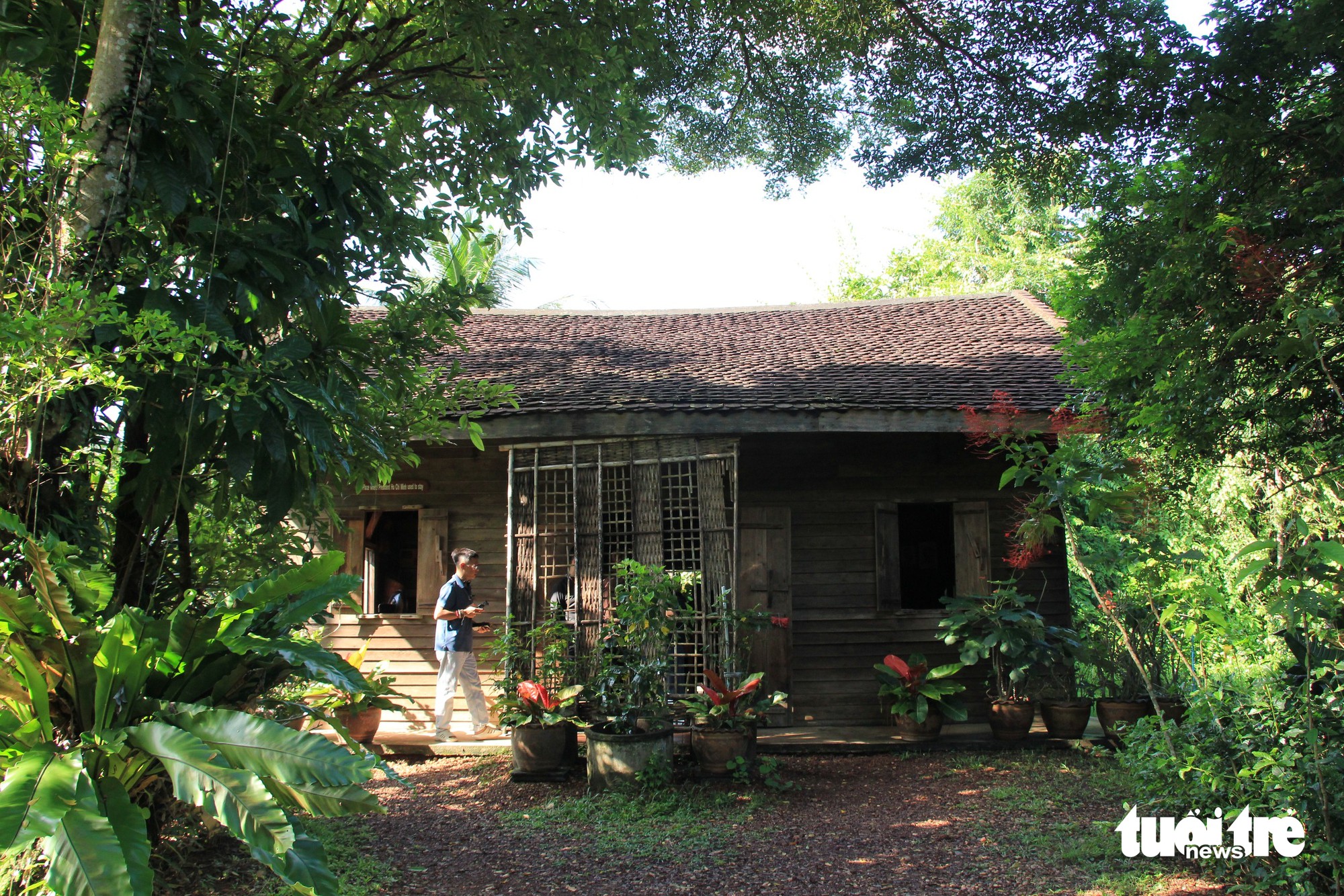
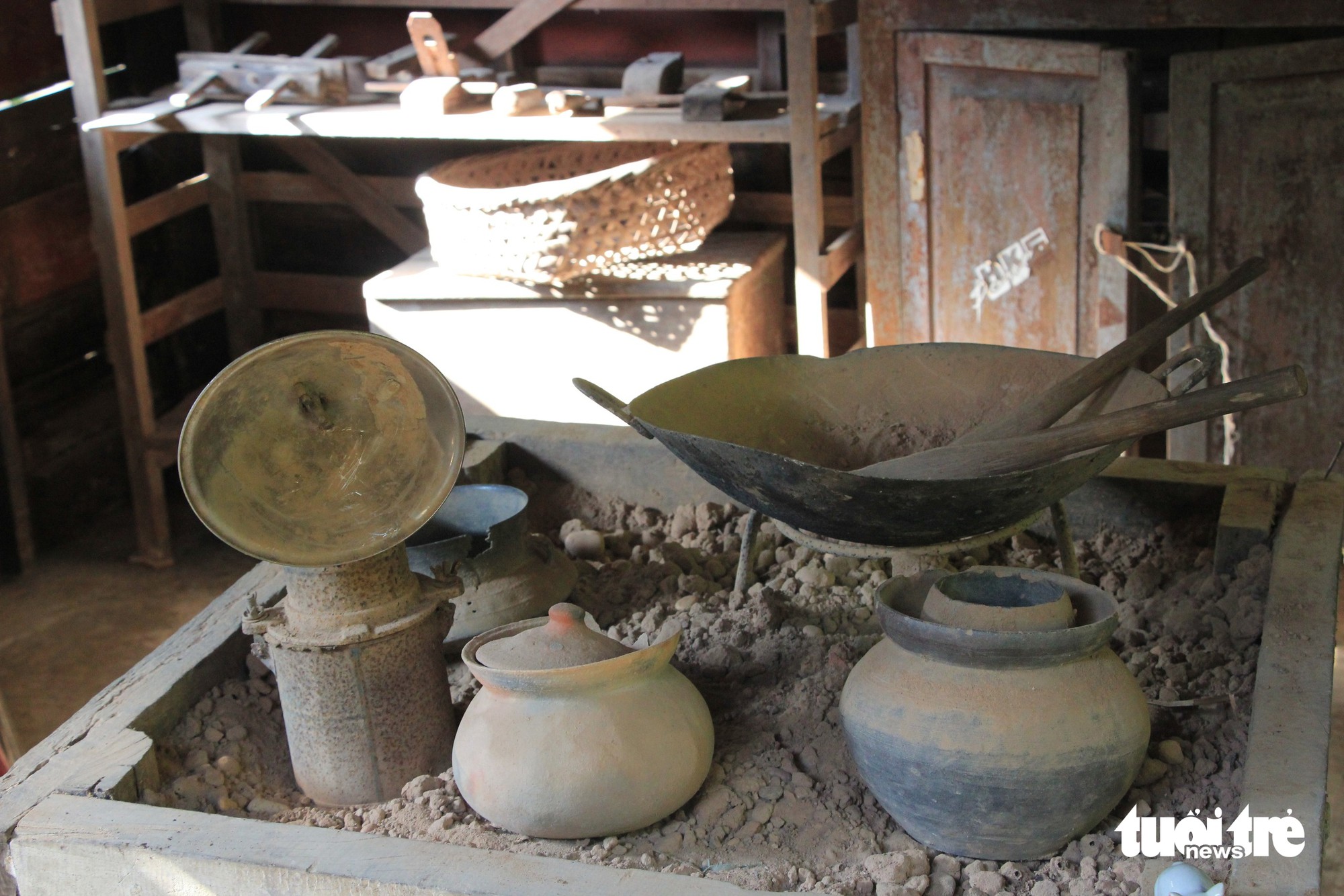
The house where President Ho Chi Minh once lived in Nakhon Phanom, northeastern Thailand. Photo: Dong Nguyen / Tuoi Tre News
On commemorative occasions, Vietnamese people from different places gather at the site to offer incense and remember the great leader of Vietnam.
Nakhon Phanom is also home to the Thai-Vietnamese Memorial Clock Tower, which was built before the Vietnamese community’s repatriation in 1960.
More than 60 years ago, the Vietnamese residents decided to raise funds to build the tower as a gesture of gratitude to the Thai king and government.
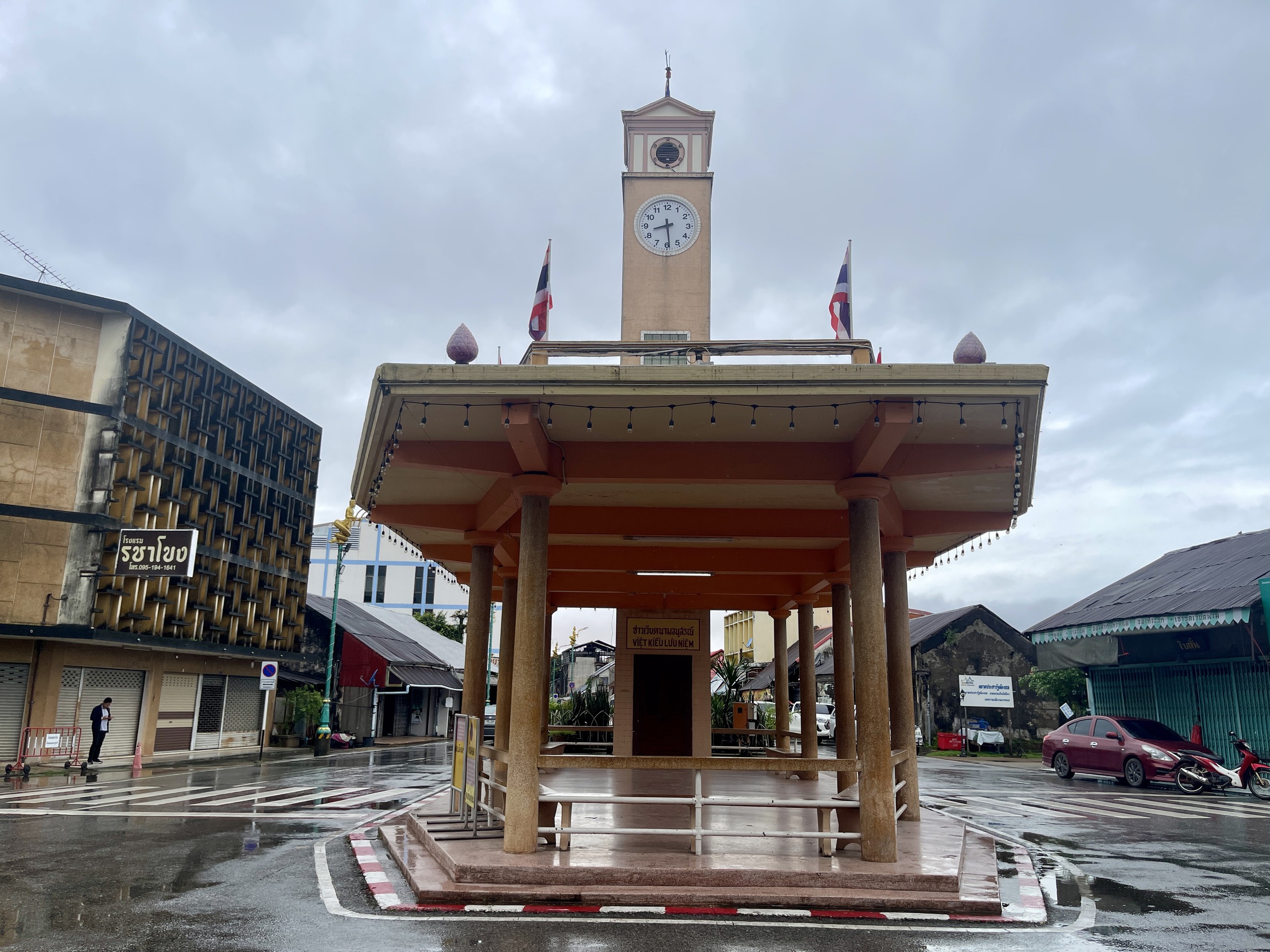
The Thai-Vietnamese Memorial Clock Tower in Nakhon Phanom, northeastern Thai Lan. Photo: Dong Nguyen / Tuoi Tre News
Your correspondent visited the site on a rainy day in early September. Right next to the clock tower was a fairly busy local breakfast restaurant.
Inside, the correspondent came across familiar Vietnamese dishes and drinks, including sticky rice, banh canh noodles and phin-brewed coffee.
"You can tell this is a Vietnamese-owned restaurant because there is a photo of Uncle Ho," one member of the journalist's group said, referring to the way Vietnamese people affectionately call President Ho Chi Minh.
A portrait of the late president was respectfully displayed on the wall.
In a city along the Mekong River, the way people remember President Ho Chi Minh, together with familiar Vietnamese dishes, offers a glimpse into the everyday life of a Vietnamese community that has been connected to Nakhon Phanom for generations.
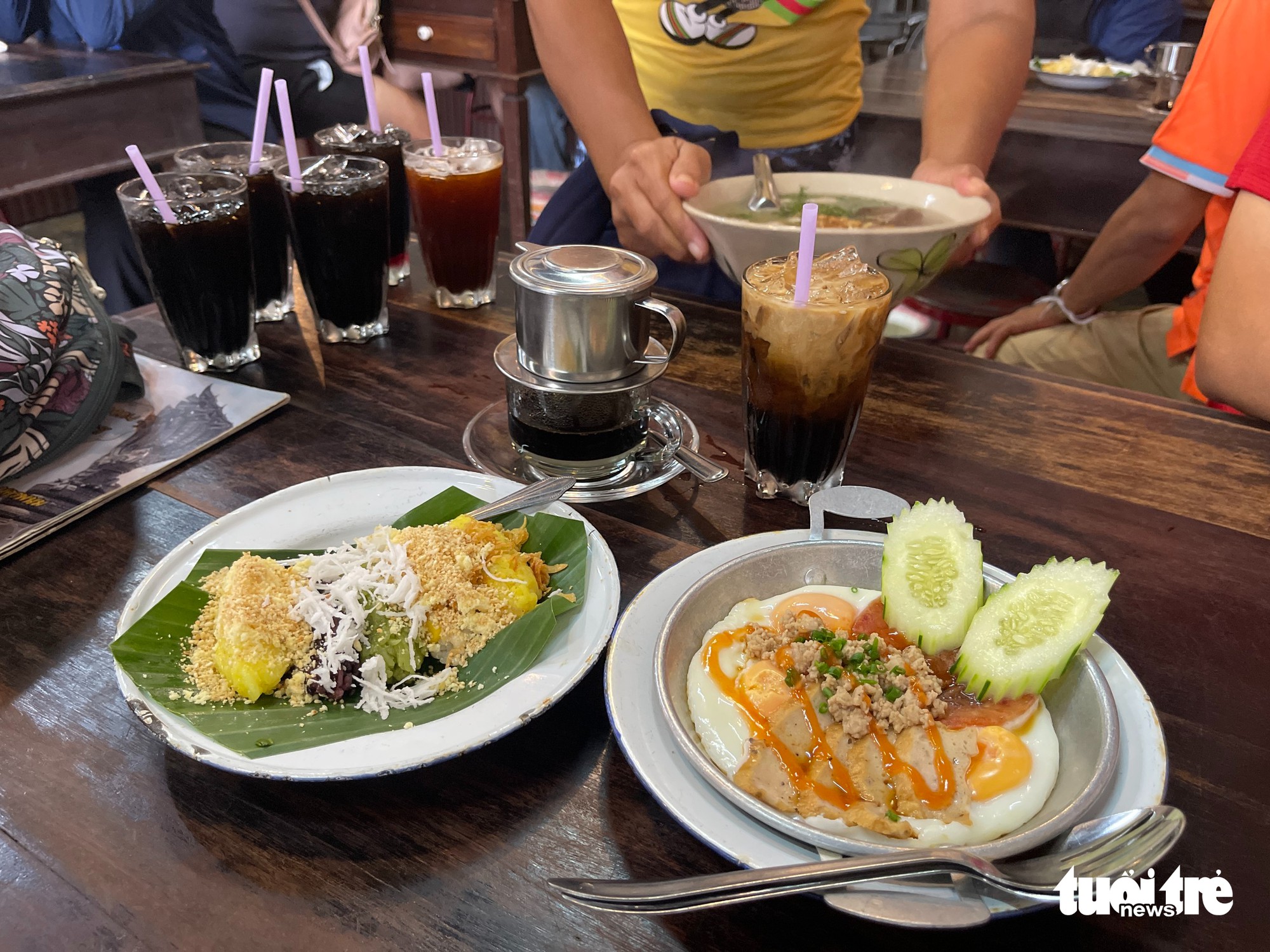
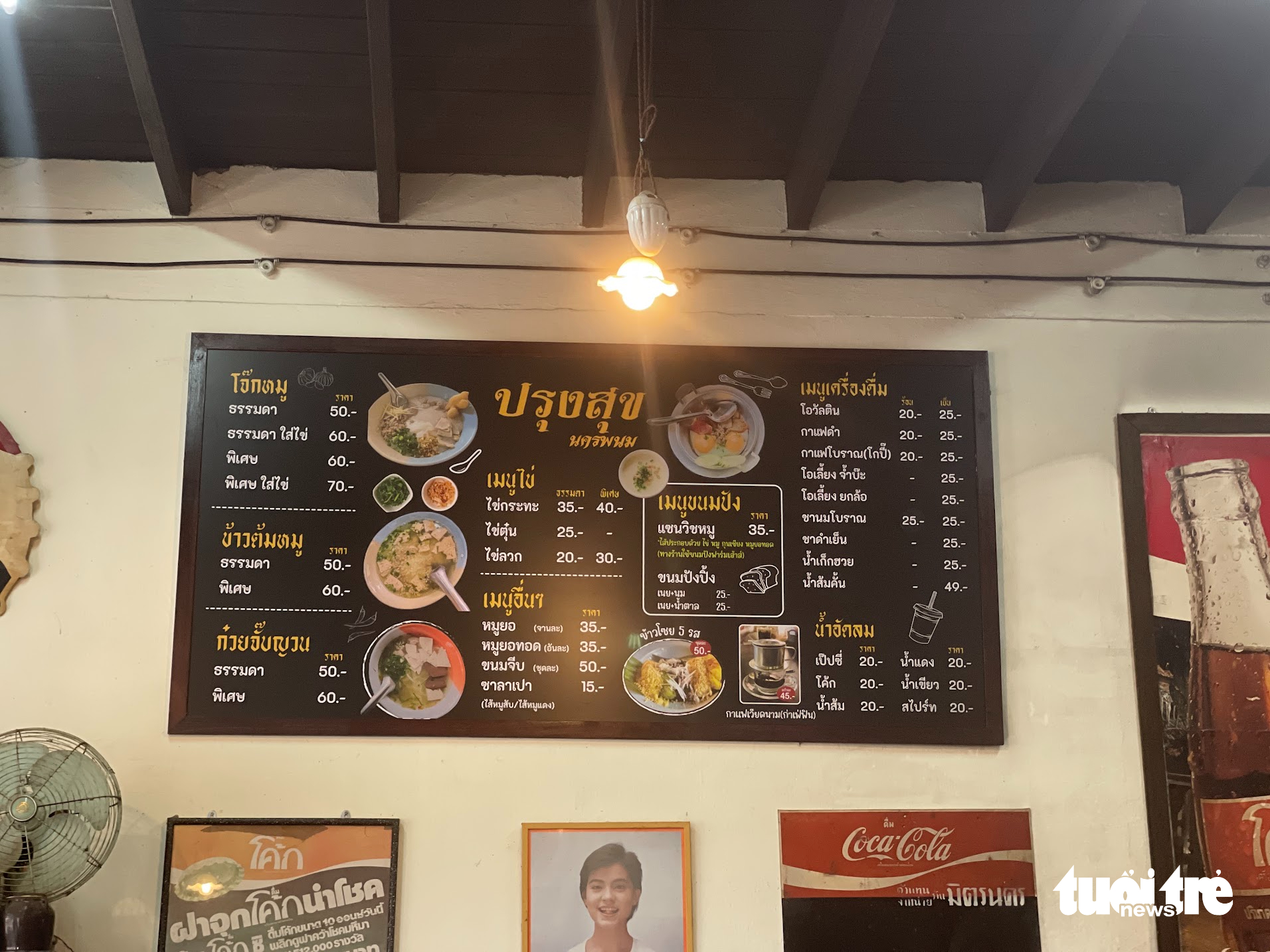
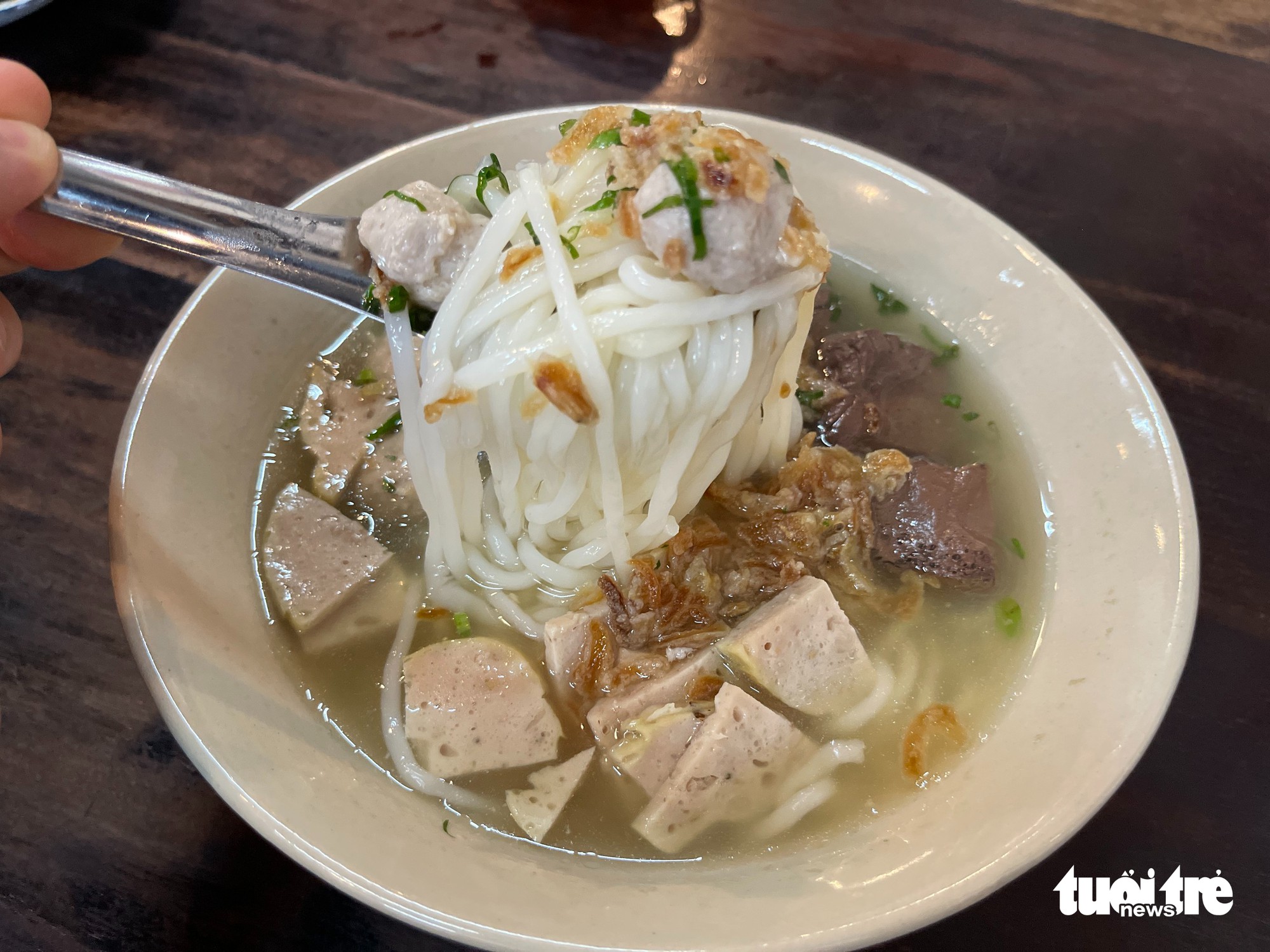
Familiar Vietnamese dishes at a local breakfast restaurant in Nakhon Phanom, northeastern Thailand. Photo: Dong Nguyen / Tuoi Tre News
From historical sites to everyday corners of local life, Vietnamese influences in Nakhon Phanom have been preserved and passed down naturally over time.
A Vietnamese noodle shop of over 50 years in Mukdahan
Before reaching Nakhon Phanom, the correspondent also visited Mukdahan, a province in northeastern Thailand bordering Laos.
In an area known as Vietnamese Communities 5-Junction in Mukdahan, a Vietnamese family has been running a banh canh shop for more than half a century.
The restaurant is owned by the family of Nguyen Van Tan. They have lived in Thailand for four generations.
They opened the central Vietnamese-style banh canh noodle shop in 1972.
Tan and his wife, Ha Thi Gai, were both born in Thailand. In the past, they also spent time teaching Vietnamese to Vietnamese people living in Thailand.
Their son, Nguyen Van Phi, 50, now runs the family restaurant.
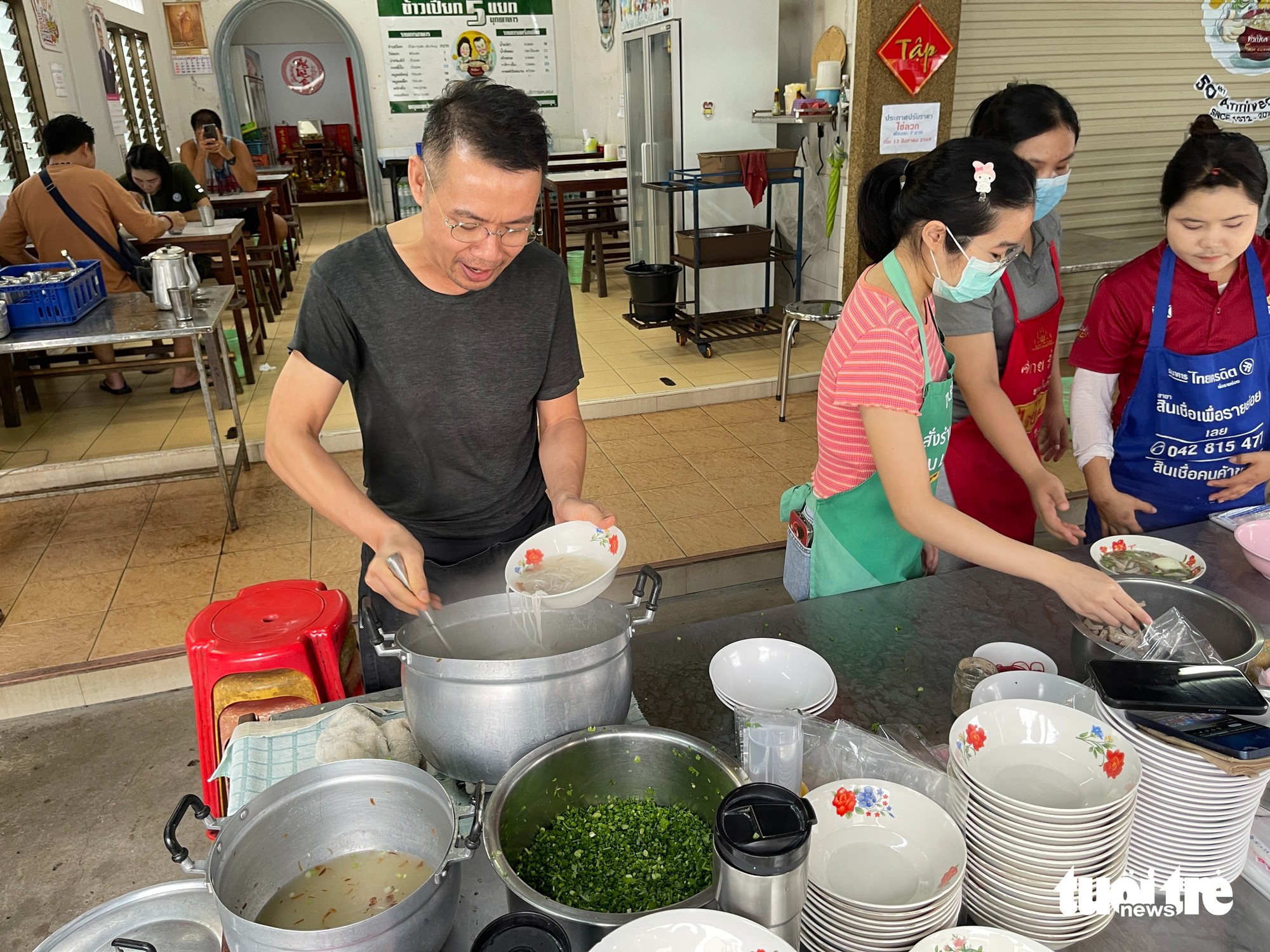
Nguyen Van Phi serves 'banh canh' to customers. Photo: Dong Nguyen / Tuoi Tre News
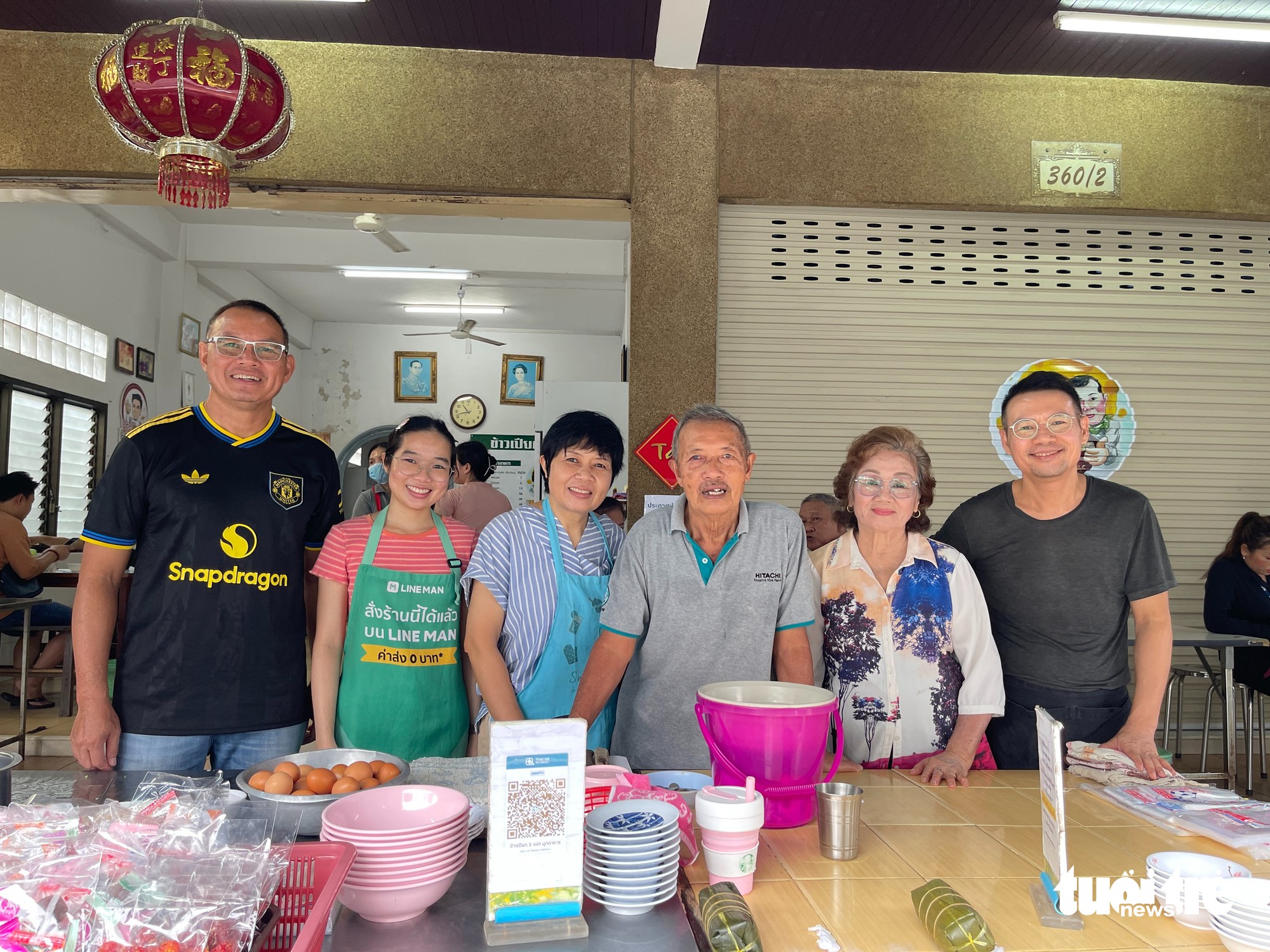
From right: Nguyen Van Phi, Ha Thi Gai, Nguyen Van Tan, and family members who have lived in Thailand for four generations. Photo: Dong Nguyen / Tuoi Tre News
The restaurant is open daily from 6:00 am to 10:30 am.
Ingredients such as pork rolls and banh canh noodles are made in-house.
In the past, the noodles were made entirely by hand. The family now uses a machine to press the noodles, but the flavor has remained appealing throughout the past five decades.
The restaurant’s banh canh noodles are made from rice and are small, round, and moderately chewy.
They are served with Vietnamese pork rolls, meat, and a small twist in the form of a soft-boiled egg, adding to the flavor.
Besides banh canh, the restaurant also serves banh goi (Vietnamese empanada) and banh cuon (Vietnamese steamed rice ools), offering customers more choices.
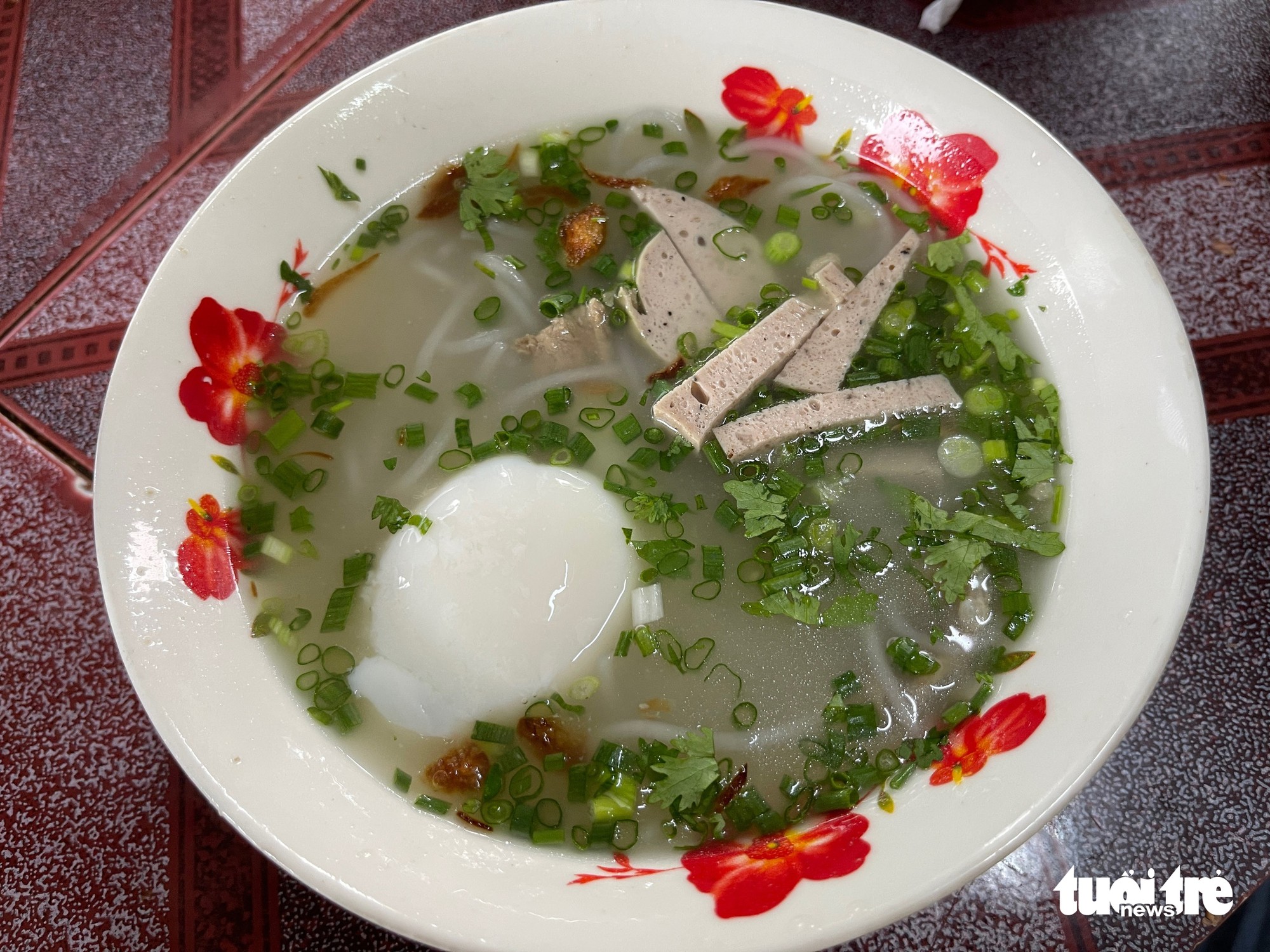
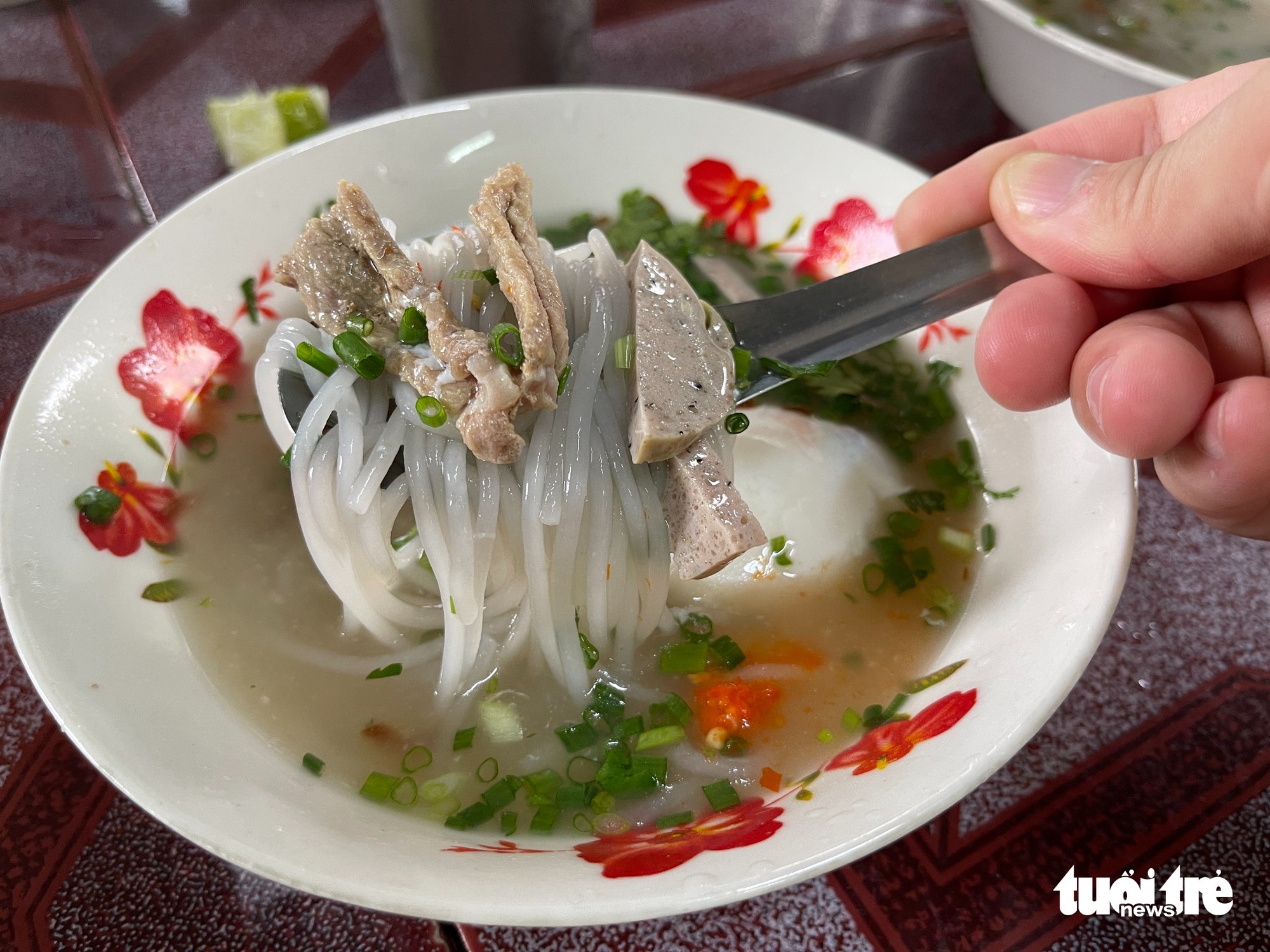
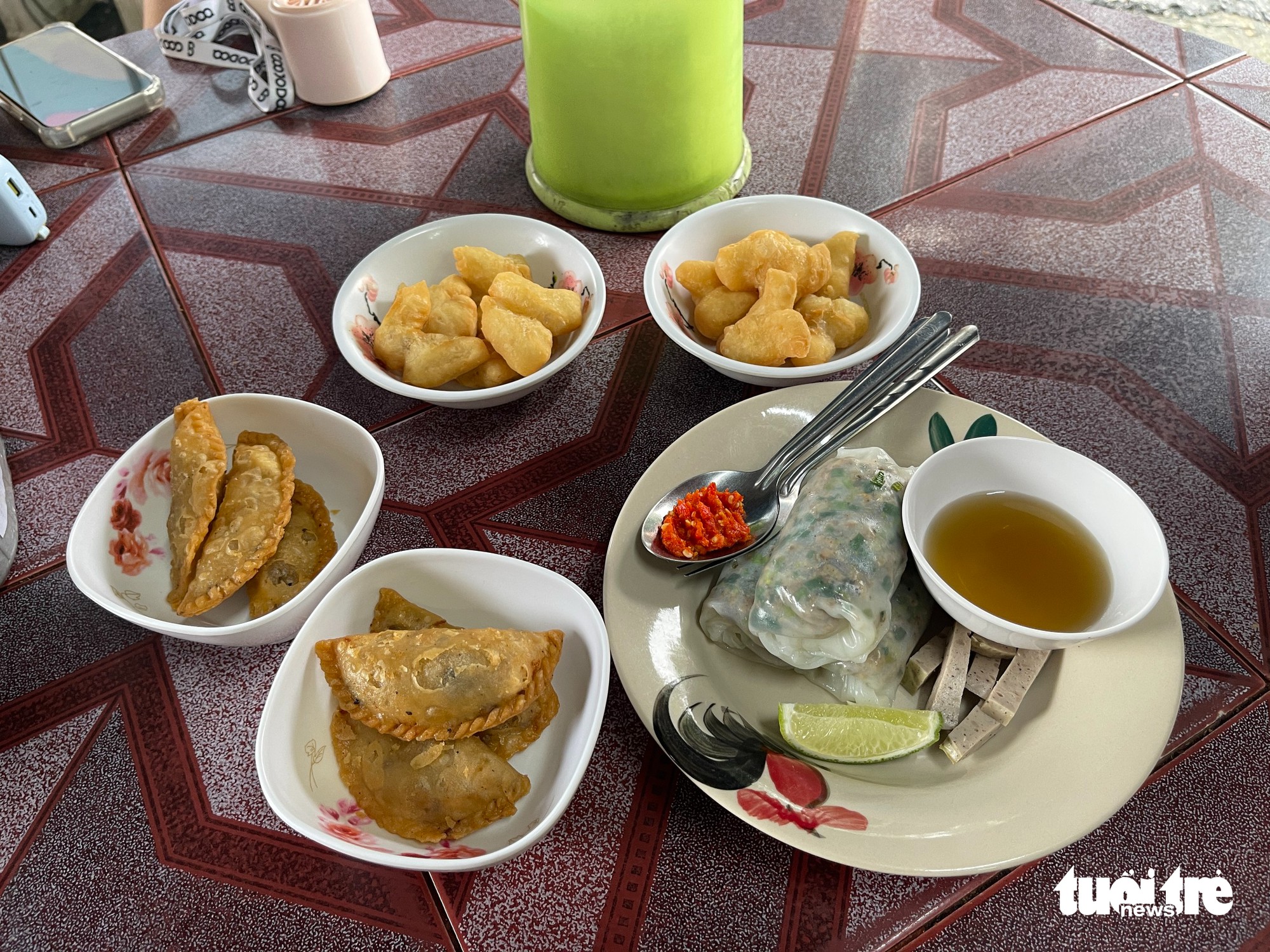
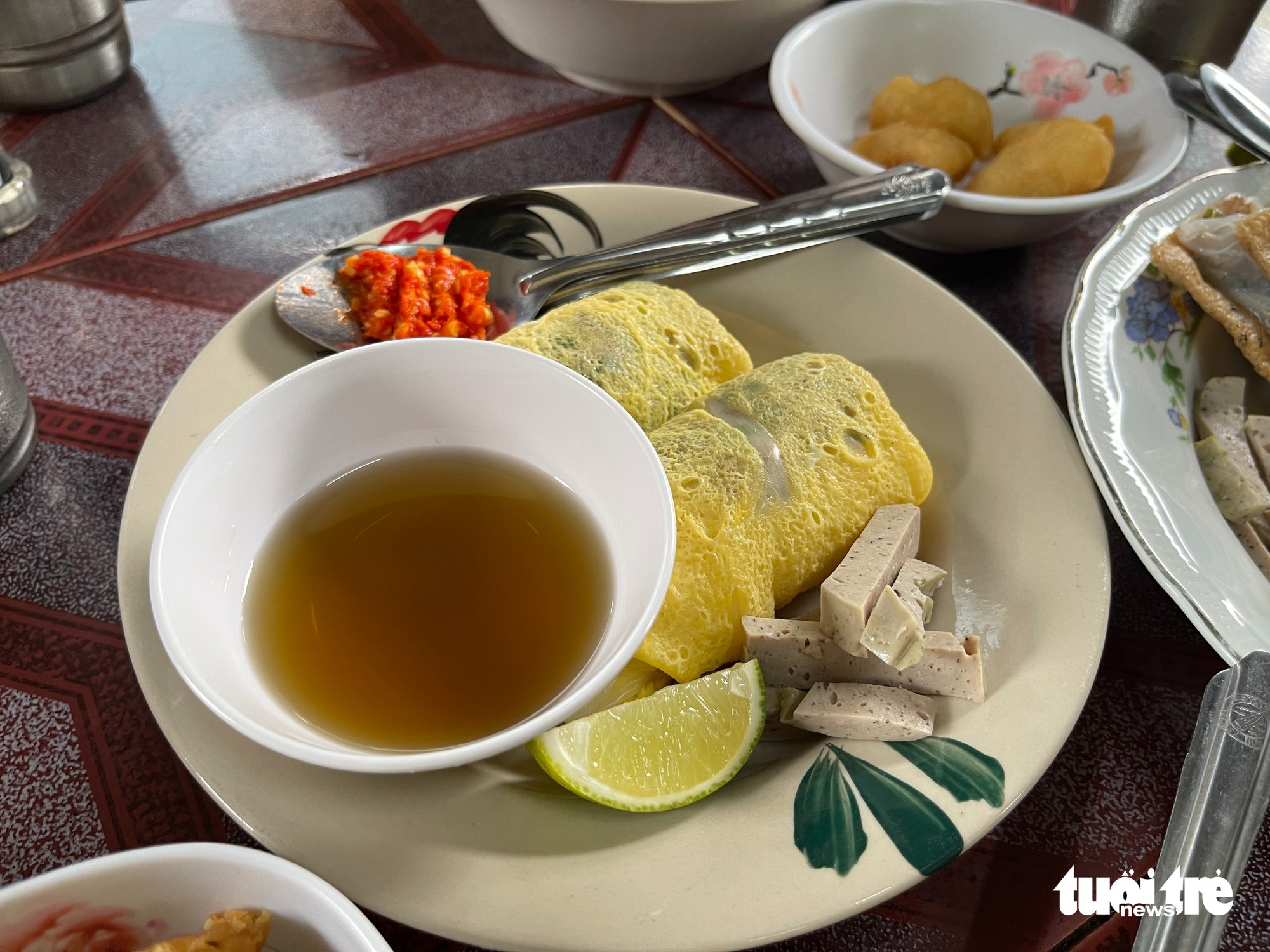
'Banh canh' and other Vietnamese dishes at Nguyen Van Phi’s family restaurant. Photo: Dong Nguyen / Tuoi Tre News
On Google Reviews, the restaurant, listed as 5 yak rice noodle, has a rating of 4.4 stars and has received numerous positive comments.
One reviewer even described it as a “a must-try restaurant when you're in Mukdahan.”
Many Vietnamese families live around the restaurant, most of them with roots in central Vietnam.
“Everyone in our neighborhood is Vietnamese, from Hue, Quang Binh, etc. There are many people from central Vietnam here in Mukdahan,” Tan said.
Familiar Vietnamese flavors in northeastern Thailand
Vietnamese banh mi is also easy to find in northeastern Thailand, from roadside food stalls to restaurants in upscale hotels.
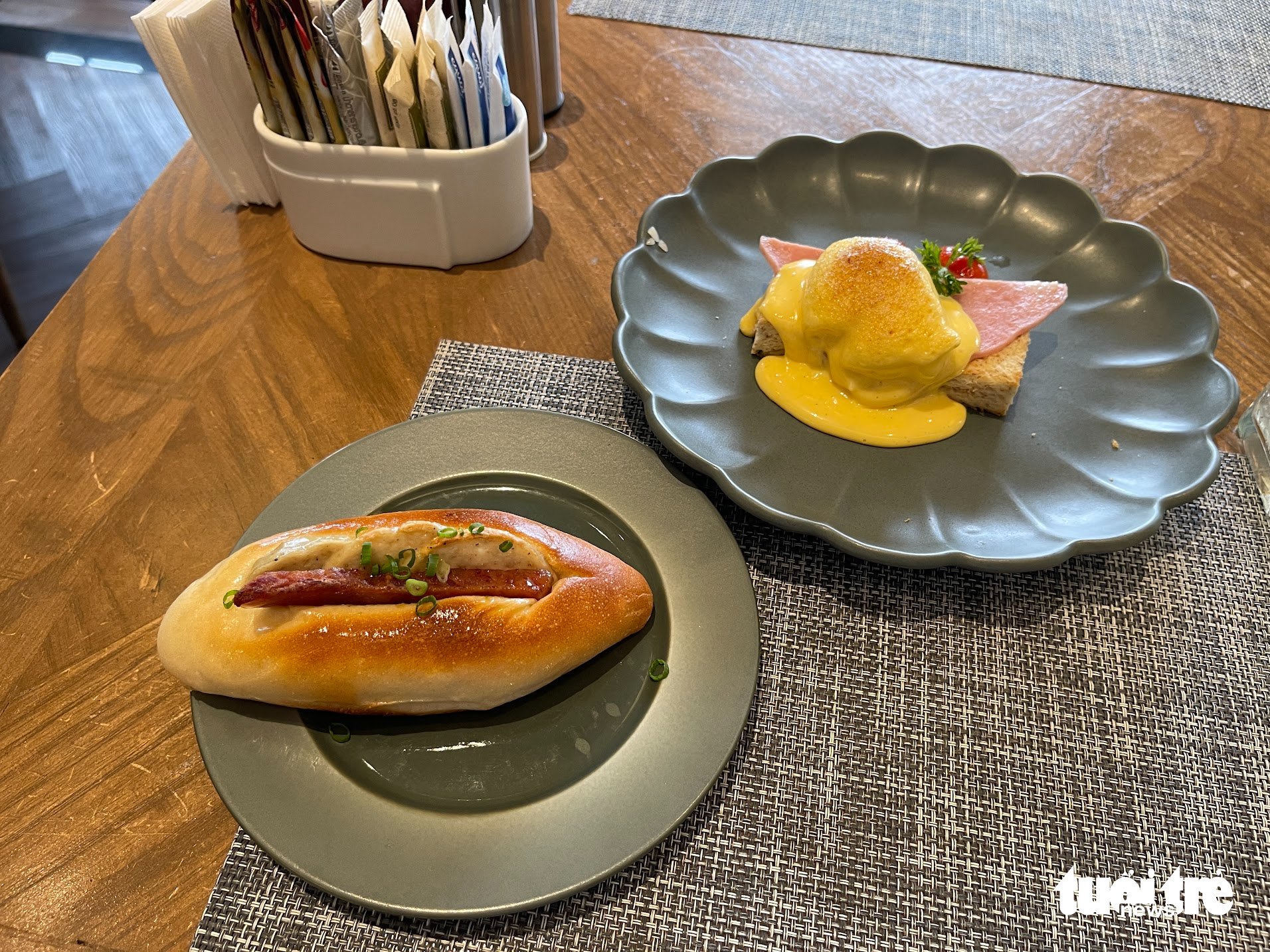
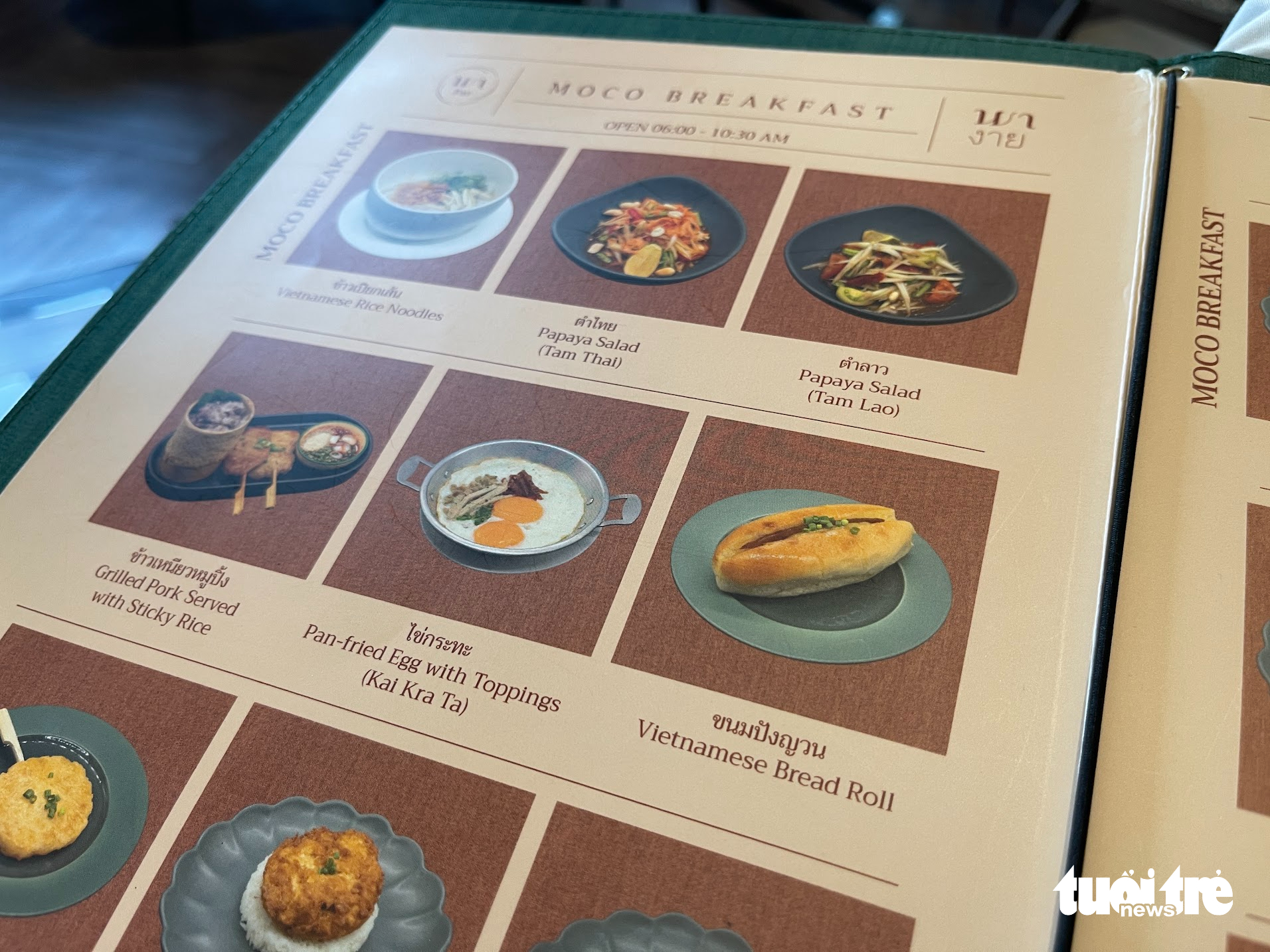
Vietnamese 'banh mi' on the breakfast menu at a hotel restaurant in central Udon Thani, northeastern Thailand. Photo: Dong Nguyen / Tuoi Tre News
However, one Vietnamese dish that is among the most popular with Thai people is nem nuong, Vietnamese grilled pork sausages.
The correspondent's group visited Daeng Namnueng, a Vietnamese restaurant in Nong Khai Province, shortly after lunchtime, but the restaurant was still packed with customers.
Located along the Mekong River near the Indochina Market, the restaurant serves Vietnamese dishes such as cha gio (fried egg rolls), chao tom (grilled ground shrimp wrapped around sugarcane sticks), and goi cha lua (pork roll salad).
But the venue’s “star” dish is nem nuong.
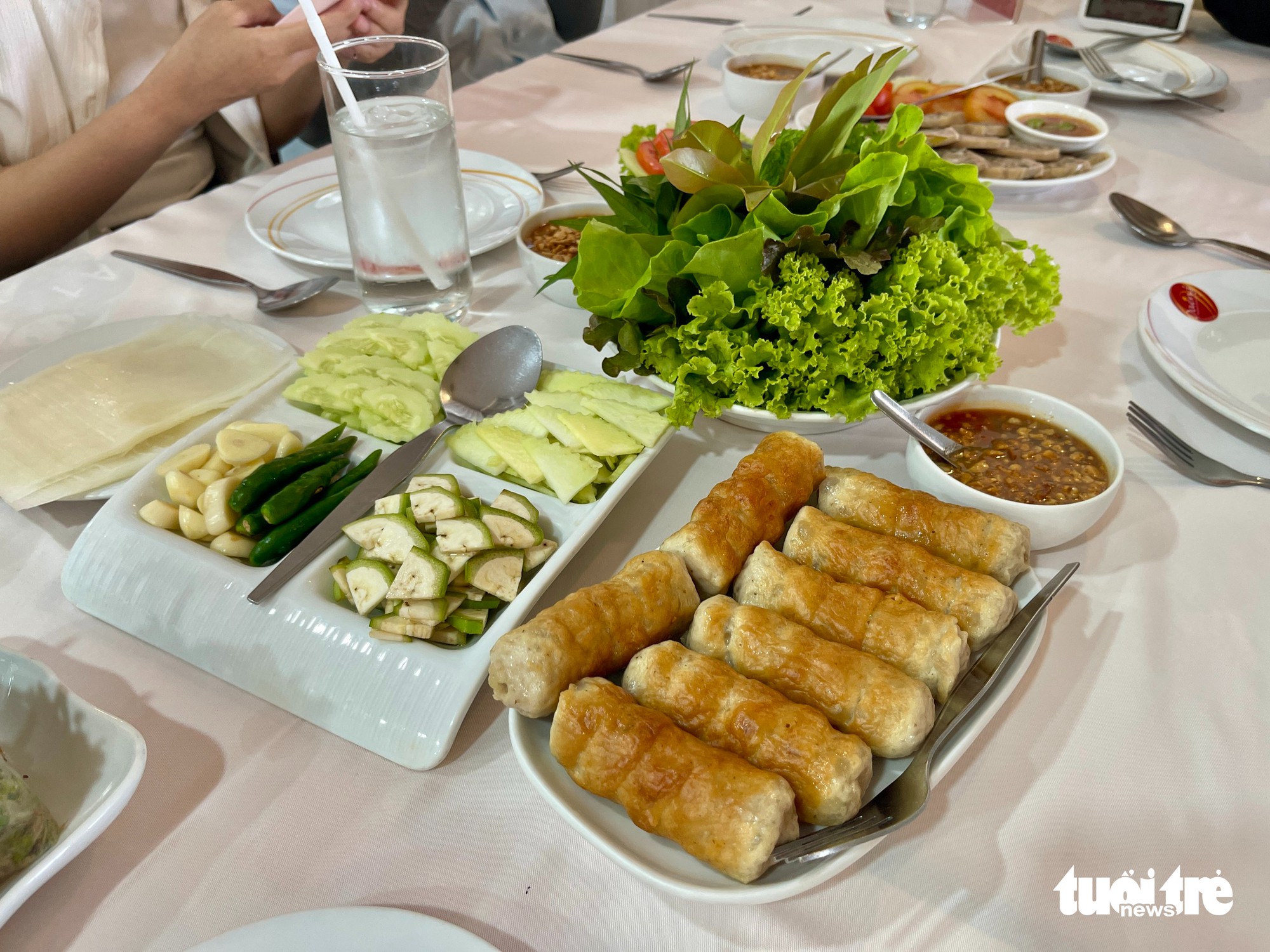
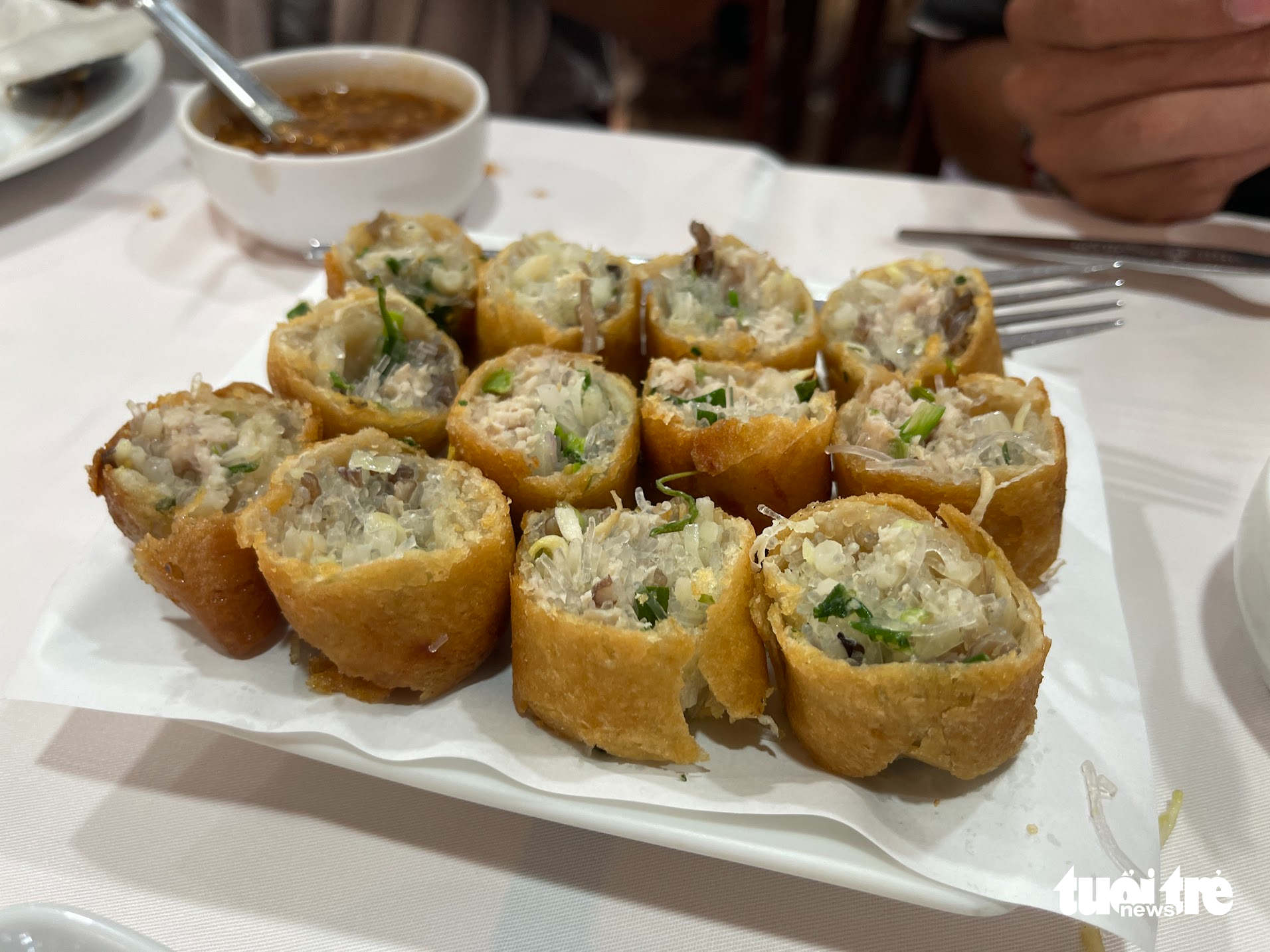
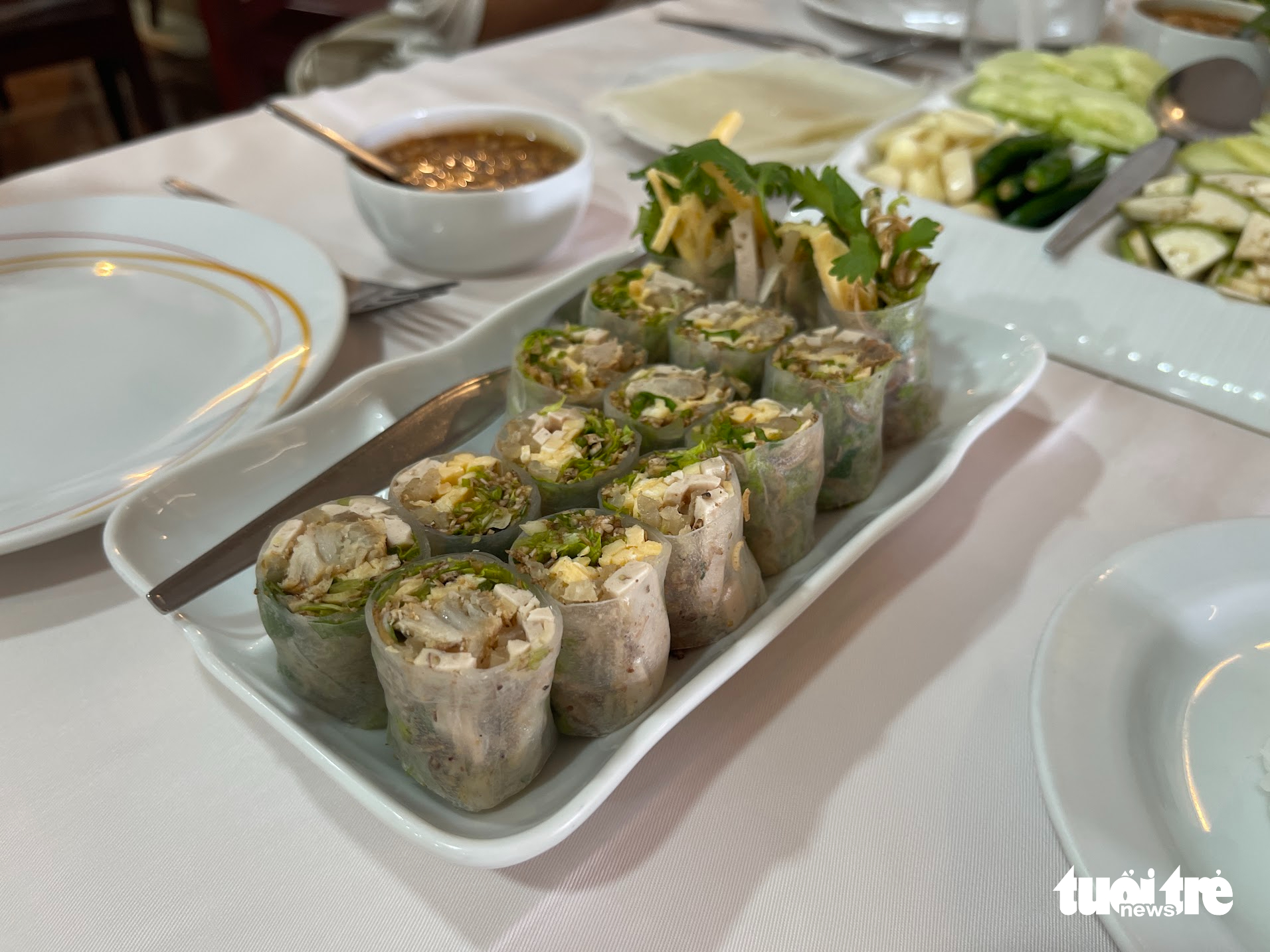
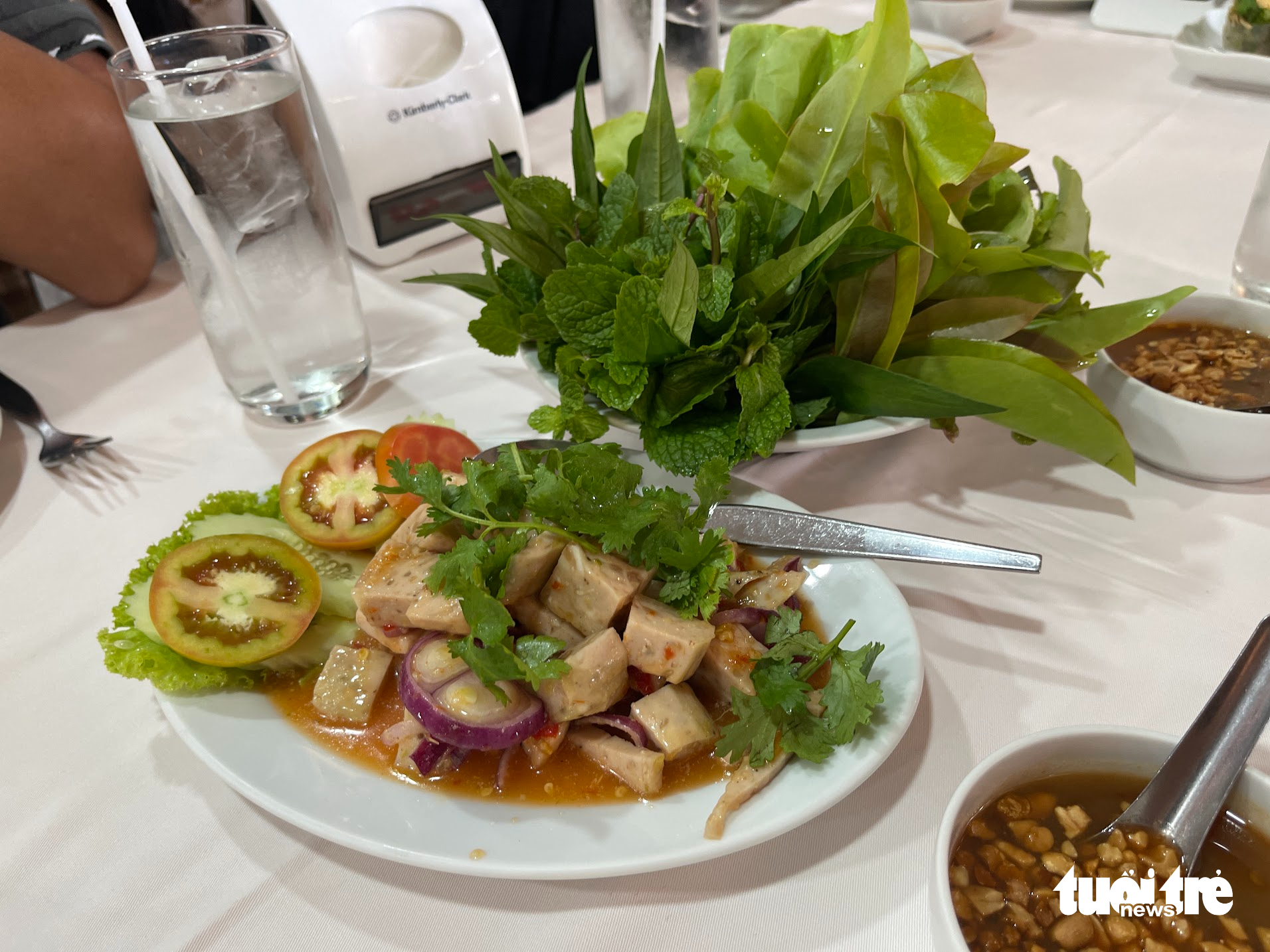
'Nem nuong,' 'cha gio,' 'goi cha lua,' and 'bi cuon' (shredded pork spring rolls) at Daeng Namnueng restaurant in Nong Khai, northeastern Thailand. Photo: Dong Nguyen / Tuoi Tre News
On TripAdvisor, Daeng Namnueng is ranked second among 52 restaurants in Nong Khai.
As your correspondent traveled through northeastern Thailand, she realized that Vietnamese influences in the region are not limited to historical sites and stories.
They are also present in the most familiar aspects of everyday life.
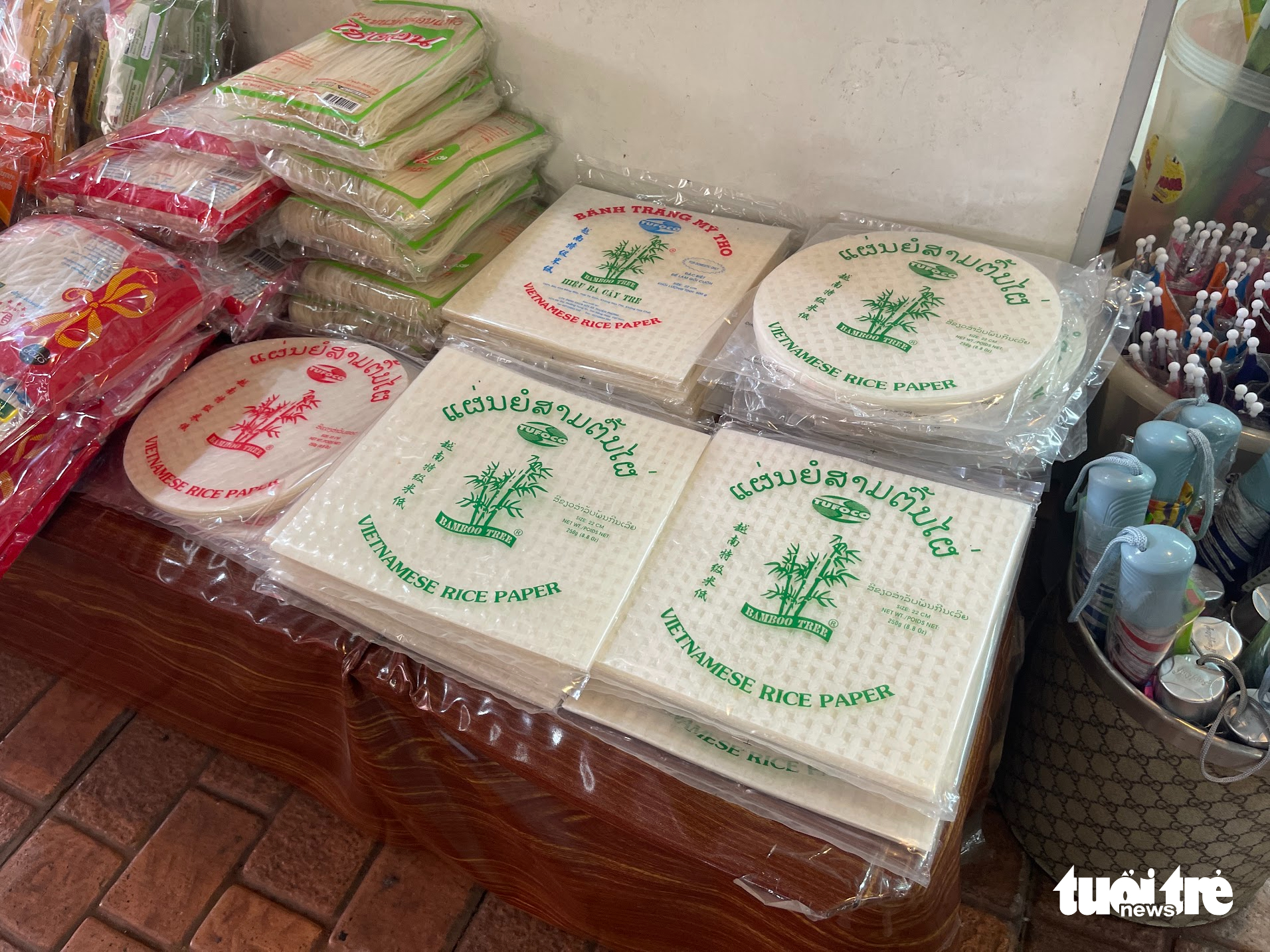
Vietnamese rice paper on sale at a market in Nong Khai, northeastern Thailand. Photo: Dong Nguyen / Tuoi Tre News
Speaking to Tuoi Tre News, Saowanee Khonkla, director of the Tourism Authority of Thailand, Nakhon Phanom Office, expressed her wish to invite Vietnamese visitors to Nakhon Phanom to learn why President Ho Chi Minh came there and understand more about his life in the area.
"Through this, visitors can learn about the history that Thai and Vietnamese people have preserved together, supported, and helped one another through," she said.
"It is like a thread connecting the two peoples."
Saowanee also said that Vietnamese people had brought various cultural elements to the region, from food and lifestyles to clothing.
"Food culture, in particular, has had a very clear influence," she said.
"This is seen not only in Nakhon Phanom but also in other provinces such as Ubon Ratchathani and Sakon Nakhon, where Vietnamese communities live."


Max: 1500 characters
There are no comments yet. Be the first to comment.