



Lawyer Tran Duyen of MZI Lawyers and the Da Nang Bar Association. Photo: Supplied
Speaking to Tuoi Tre (Youth) online newspaper, lawyer Tran Duyen of MZI Lawyers and the Da Nang Bar Association said the cases highlight legal gray areas surrounding conduct that may not clearly violate existing regulations but can still create administrative burdens and social consequences.
Can a marriage registration filed 'for fun' be penalized?
The question arose after a 26-year-old woman from Gia Lai Province and a man in Da Nang submitted an online marriage registration application as a joke, only to later tell authorities they had no intention of getting married.
According to lawyer Tran Duyen, submitting an online marriage registration application is a formal request for a state agency to carry out a legally recognized civil status procedure, not merely an online experiment.
However, current regulations mainly penalize specific violations such as providing false information, using forged documents or failing to meet legal marriage requirements.
Under Decree No. 109/2026/ND-CP, individuals who use genuine documents and provide accurate information may not necessarily face penalties simply because they filed the application "for fun."
"In other words, treating an administrative procedure frivolously does not automatically constitute a violation under current law," she said.
She added that authorities could consider introducing regulations to address cases in which individuals deliberately submit administrative applications without any genuine need, particularly when such actions disrupt the normal operations of state agencies.
Any such rules, however, should distinguish between those who later change their minds and those who never intended to complete the procedure in the first place.
Bridge incident highlights challenges in handling false alarms
The issue also surfaced in a separate case in Da Nang, where a woman left a pair of sandals and a note on a bridge suggesting that she and her child had died, prompting residents to alert authorities and triggering a search operation.
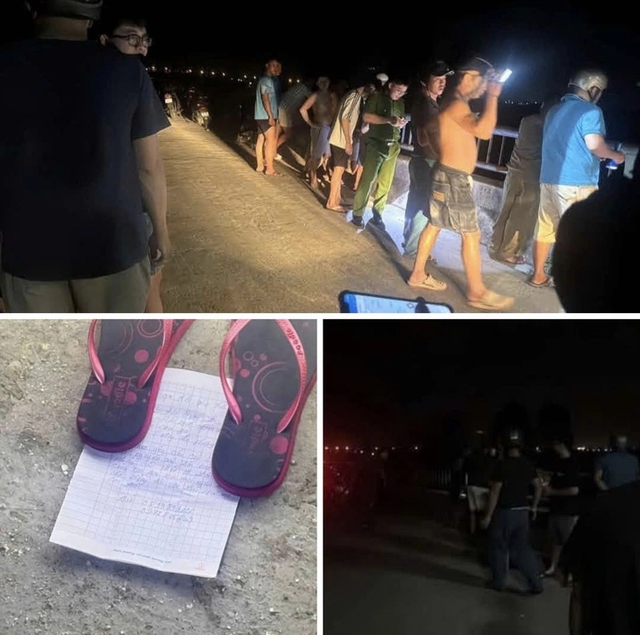
A woman's abandoned sandals and a note asking her husband to "recover the bodies" of her and her child prompted both residents and authorities to launch verification and search efforts. Photo: Screenshot
According to lawyer Tran Duyen, Vietnamese law already provides penalties for intentionally supplying false information to authorities under Decree No. 282/2025/ND-CP.
However, she said a distinction should be made between directly reporting false information and creating circumstances that lead others to believe an emergency has occurred.
If a person directly contacts authorities with fabricated claims, the application of regulations on false reporting is relatively clear, she said.
But when a third party reports an incident after being misled by a staged situation, authorities must carefully assess the conduct, intent and causal relationship before determining whether a violation has occurred.
"Authorities must prove the specific conduct, intent and causal relationship involved. They cannot simply infer false reporting because public resources were mobilized," Duyen said.
She added that policymakers could consider introducing sanctions for deliberately creating false situations that force authorities or rescue teams to carry out unnecessary search, rescue or verification efforts.
Any such measures, however, should be designed carefully to avoid discouraging the public from reporting suspicious situations.
"The law does not need to punish every impulsive act or every prank," Duyen said. "But when someone knowingly creates a false situation that forces authorities to expend public resources, there should be a clear legal mechanism to address such conduct."








Max: 1500 characters
There are no comments yet. Be the first to comment.