


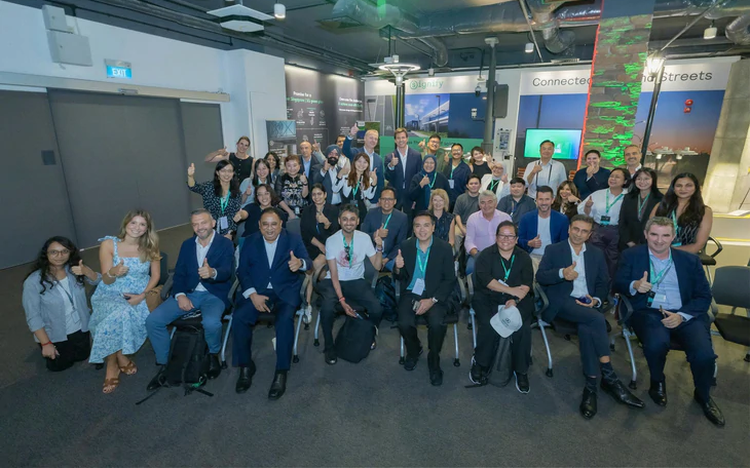
As Tempelman, CEO of Signify, and Toto Wolff, co-owner, team principal and CEO of Mercedes-AMG PETRONAS F1, pose with all the guests at the discussion. Photo: Supplied
From technical room in UK to Singapore GP race track
In a conversation between As Tempelman, CEO of Signify, and Toto Wolff, co-owner, team principal and CEO of Mercedes-AMG PETRONAS F1, stories behind each lap reveal the role of lighting in work environments that demand a high level of concentration.
In Brackley, England, the team's engineers spend hours in the simulator control room analyzing vehicle data.
This is a high-intensity working environment that requires sustained concentration.
Signify's NatureConnect solution simulates daylight in enclosed spaces, aiming to improve working conditions.
According to information shared at the event, Mercedes-AMG PETRONAS F1 driver George Russell once mistook the lighting in the team's simulator control room for natural light.
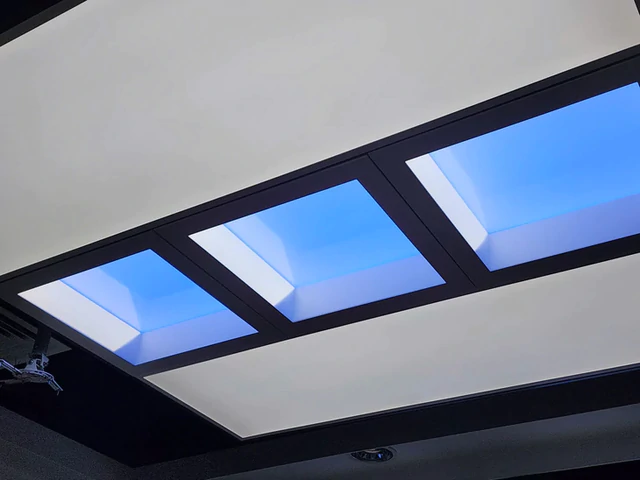
NatureConnect simulates natural light, creating an authentic outdoor-lighting feel in enclosed spaces. Photo: Diem Thi
From indoor working environments, the discussion turned to the challenge of lighting a race track at night in Singapore.
The system there uses around 1,600 Philips ArenaVision gen3.5 LED floodlights supplied by Signify and installed by DZ Engineering.
Roberto Grilli, CEO of DZ Engineering, said the lighting design must prioritize driver safety while meeting the requirements of the operator, broadcasters, and spectators.
As a temporary circuit located in an urban area, the track also requires a system that can adapt to existing infrastructure, maintain stability, and meet operational requirements.
"The current race track lighting solution reduces energy consumption by up to 30 percent compared with the previous solution. LED technology also allows the system to be connected, monitored, and controlled," Grilli said.
Speaking separately to Tuoi Tre (Youth) online newspaper, As Tempelman said the partnership between Signify and Mercedes-AMG PETRONAS F1 had entered its third year.
Beyond motor racing, he said, Signify also provides lighting solutions for various sports facilities, including football fields, tennis courts, and padel courts.
Changing living spaces in Asia
Across Asia, the trends of remote working and multigenerational living mean that homes are increasingly serving multiple purposes.
A room can be used for working and studying, as well as relaxing and gathering with family. This creates a need for lighting systems that can adapt to different activities and usage needs.
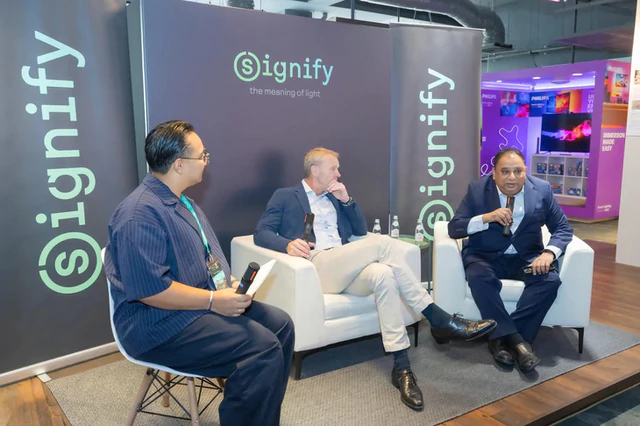
The discussion was held under the theme 'Changing Lifestyles in Asia and the Smart Home: How Is Light Redefining the Home — What’s Next for Asia?' Photo: Supplied
Chandra Vaidyanathan, executive vice-president of consumer business in emerging markets and managing director of Signify Singapore, said lighting solutions need to suit the living conditions and needs of different user groups.
"Each family member has different lighting needs. Older people need safety and clarity; children need stimulation for creativity, while young people need relaxation. Lighting must therefore be a flexible entity that adapts to each individual," Vaidyanathan said.
Accordingly, indoor lighting needs to do more than provide sufficient visibility. It must also suit different activities, from working and studying to resting. This is one area where smart lighting technology can be applied in living spaces.
Room for growth in Vietnamese market
Assessing the Vietnamese market, As Tempelman said the rapid development of new buildings creates opportunities to incorporate lighting technology from the design stage.
According to him, many lighting systems in Europe and North America were installed in the past, so demand there often focuses on renovation and modernization.
Emerging markets such as Vietnam, meanwhile, can integrate new solutions into construction projects from the outset.
"That allows you to move straight to the latest technology," he said.
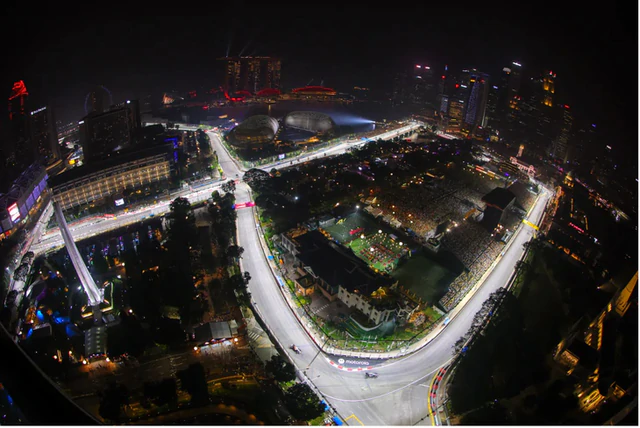
Around 1,600 Philips ArenaVision gen3.5 LED floodlights supplied by Signify were installed by DZ Engineering at the F1 race track in Singapore. Photo: Supplied
As Tempelman highlighted several potential applications in Vietnam, including the transition to LED lighting, upgrades to smart street lighting systems, and the development of solutions for restaurants, hotels, and sports facilities.
Each type of facility has its own requirements. For street lighting systems, the challenge lies in management and operation, while energy efficiency is a key consideration in factories. Hotels and sports facilities, meanwhile, also place emphasis on user experiences.
According to Rami Hajjar, president of emerging markets in Signify's professional business, hotels and tourism infrastructure are among the areas the company is focusing on in the region.
"Hospitality and tourism are major priorities for us in this region. Signify is focusing on optimizing customer experiences at hotels and creating truly pleasant passenger experiences at key transport infrastructure facilities such as airports," Hajjar said.
From sports race tracks to urban infrastructure and living spaces, lighting applications are expanding in response to user needs.
In Vietnam, opportunities lie both in developing new systems and upgrading existing infrastructure, with the ability to integrate technology from the design stage potentially reducing the need for renovations later on.


Max: 1500 characters
There are no comments yet. Be the first to comment.