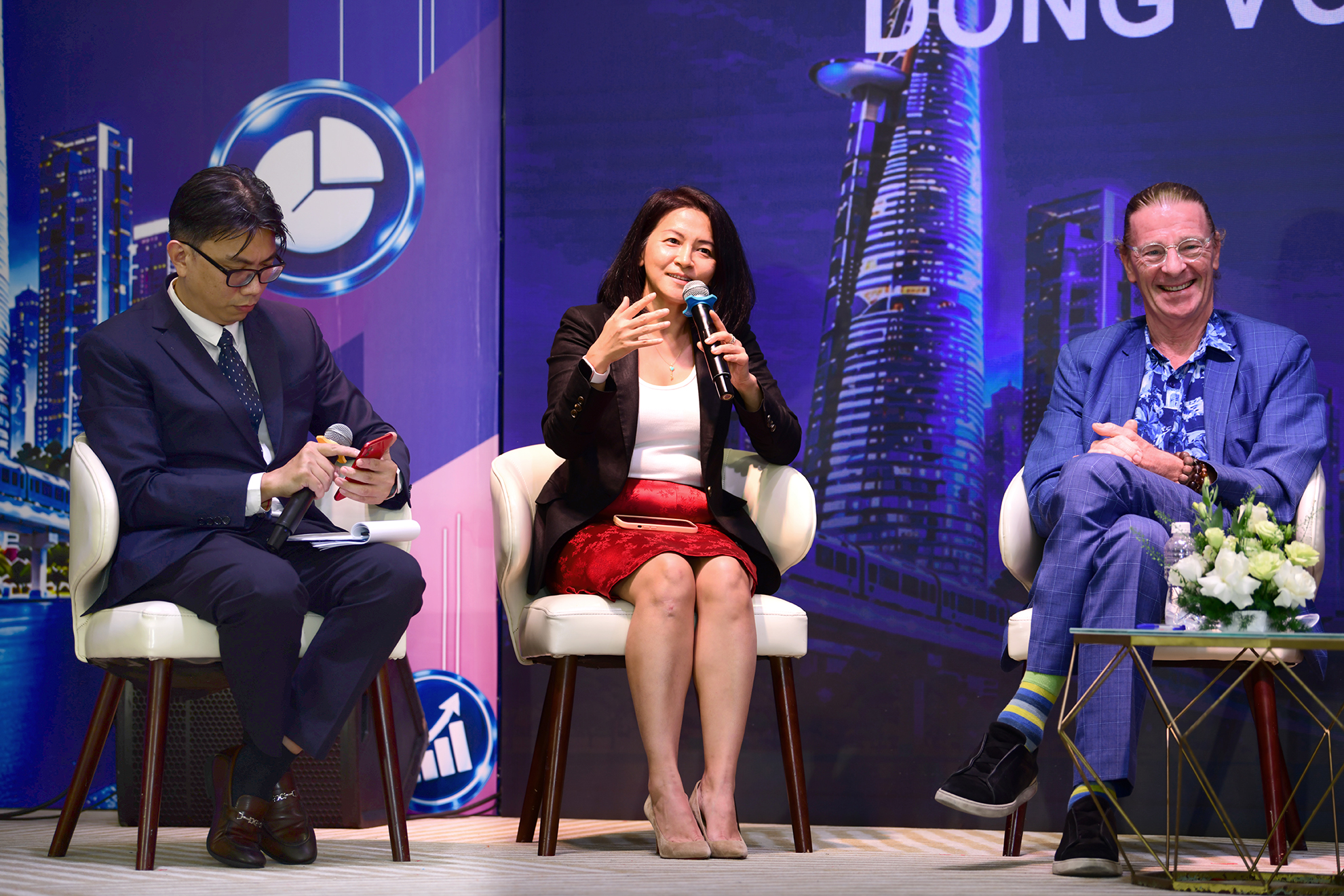
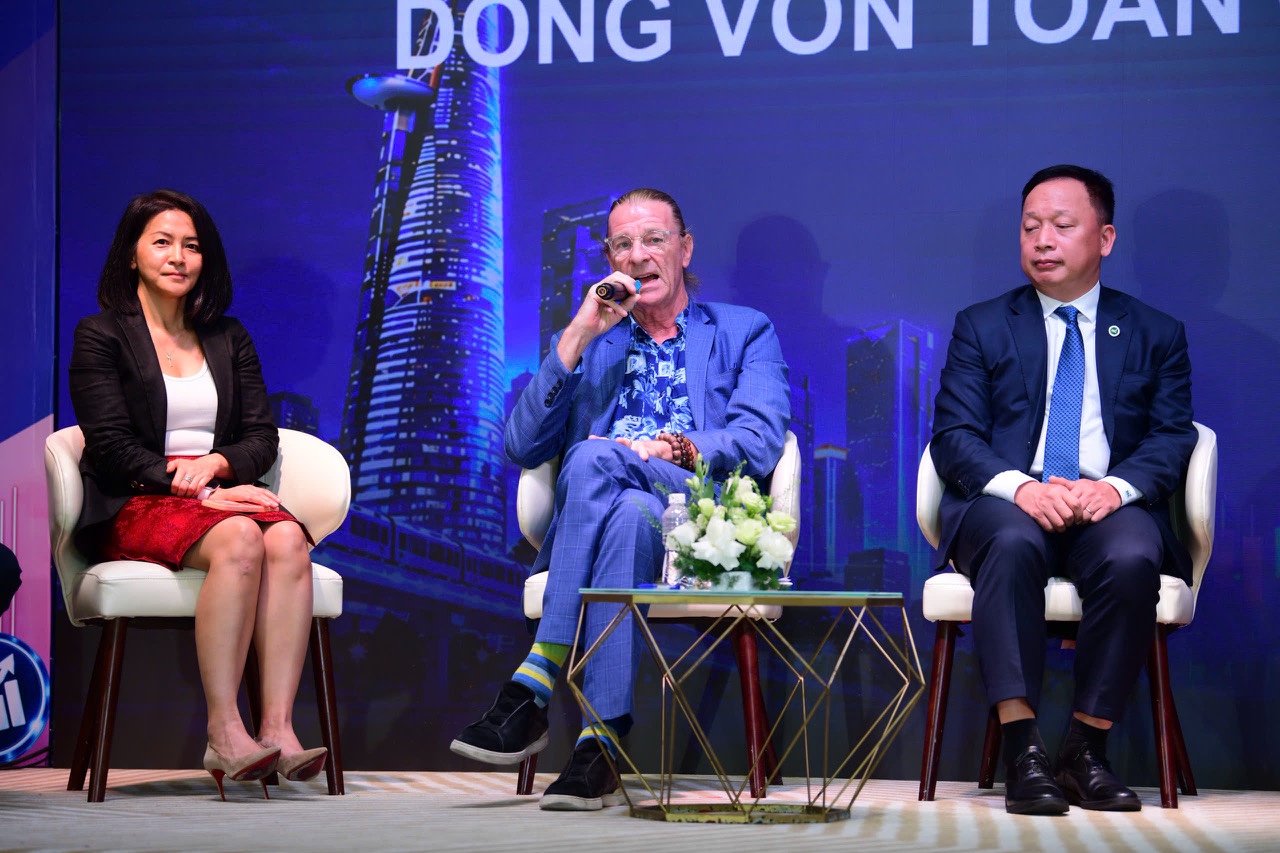
Ms. Wanming Du and Mr. Dominic Scriven, Chairman of Dragon Capital, during a panel discussion at the Vietnam Capital Market Forum. Photo: QUANG DINH
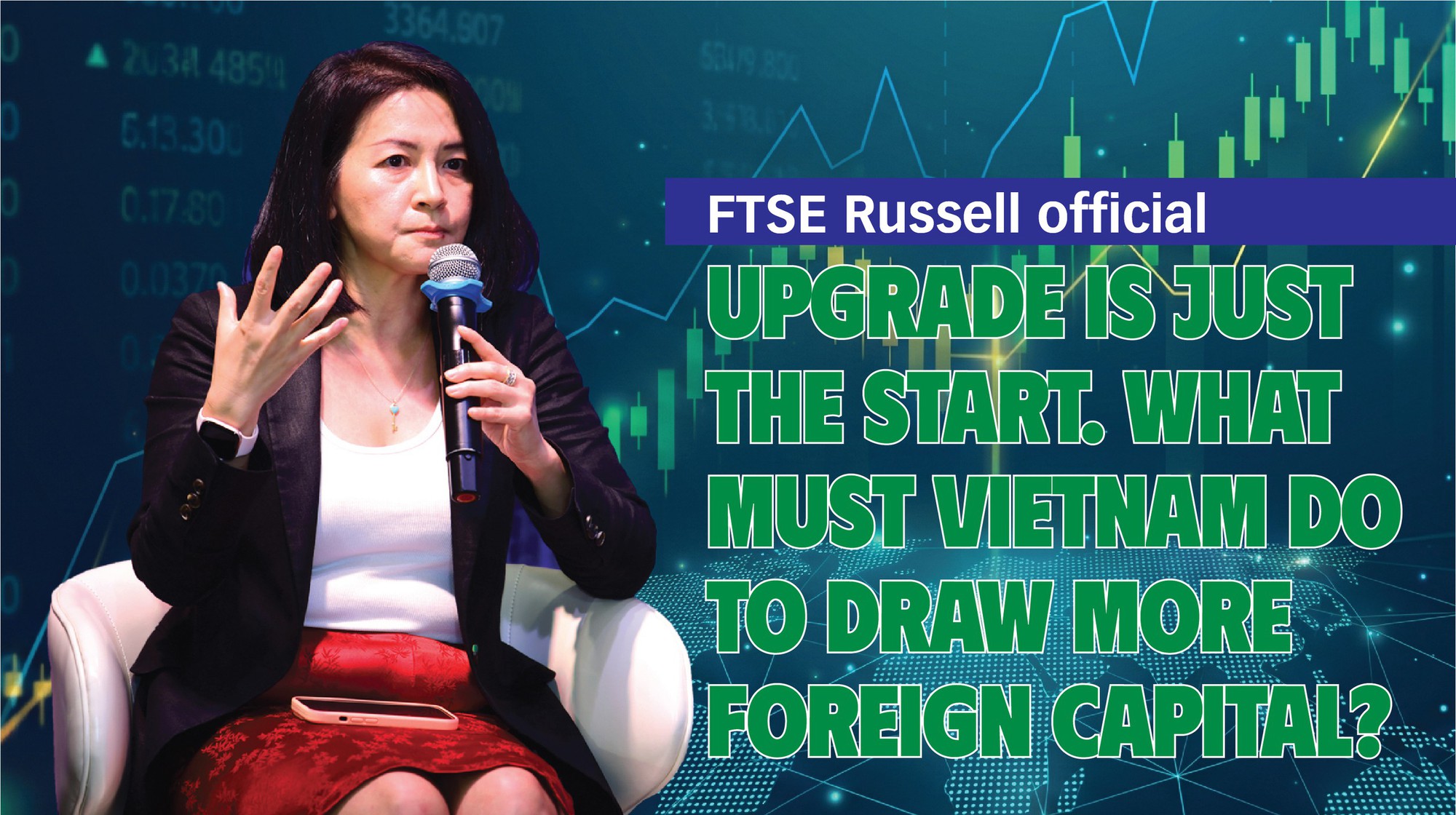
In an interview with Tuoi Tre on the sidelines of the Vietnam Capital Market Forum 2026, jointly organized by Tuoi Tre Newspaper and the State Securities Commission of Vietnam, Wanming Du, director of index policy for Asia-Pacific (APAC) at FTSE Russell, praised the reforms that helped Vietnam's stock market reach the key milestone of an upgrade.
In the next phase, Vietnam needs to shift its focus from meeting market access criteria to strengthening its competitiveness, laying the groundwork for long-term investment.
* Vietnam has been upgraded to secondary emerging market status under FTSE Russell's classification. After this important milestone, how will capital from international investment funds move? What does Vietnam need to do to keep attracting more capital?
Ms. Wanming Du believes Vietnam needs to further develop its domestic institutional investor base - Photo: QUANG DINH
- First of all, I would like to congratulate Vietnam's stock market on its 30th anniversary and on reaching an important step in the upgrade process.
I believe the first phase of including Vietnamese stocks in the FTSE global indices has been very successful. The smooth implementation is a positive signal that lays the groundwork and builds confidence for the next phases.
For passive funds, capital is allocated to a market based on that market's weighting in the index the fund tracks.
Once the allocation phases are complete, passive capital will remain in Vietnam as long as the market maintains its weighting and the number of companies in the emerging market index.
However, to attract more capital, Vietnam should aim to increase its weighting in international indices.
One important factor is increasing the number of Vietnamese companies eligible for index inclusion. This requires more initial public offerings (IPOs), a larger supply of shares and wider investment opportunities across different sectors.
Vietnam has attractive GDP growth, but a fast-growing economy does not automatically mean a stock market with sufficient depth and investment opportunities.
Global investors usually look for markets large enough to deploy significant amounts of capital, while also allowing them to rebalance their portfolios easily when needed.
So, beyond the number of listed companies, factors such as company quality, free float, sector diversity and stable liquidity are all very important.
The goal is not simply to have more listed companies, but to build a deeper, more diverse market that offers more meaningful investment opportunities.
As more companies become eligible for index inclusion, and as access for international investors improves, Vietnam will have more opportunities to increase its weighting in the emerging market portfolio and thereby attract more capital.
* Could you explain in more detail how foreign ownership limits currently affect Vietnam's ability to attract international capital and to raise the weighting of Vietnamese stocks in FTSE Russell indices?
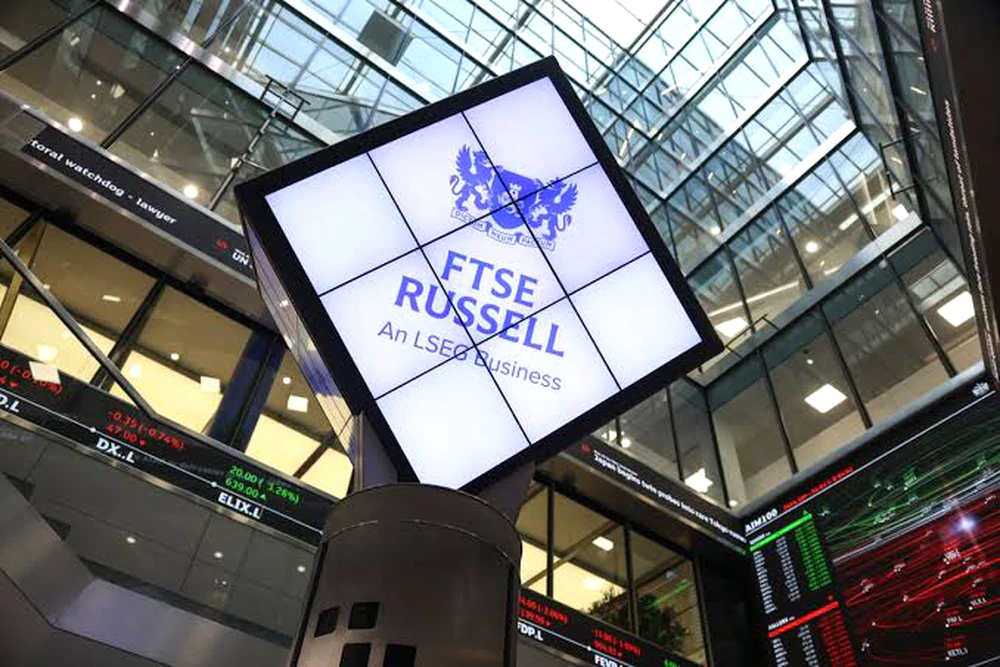
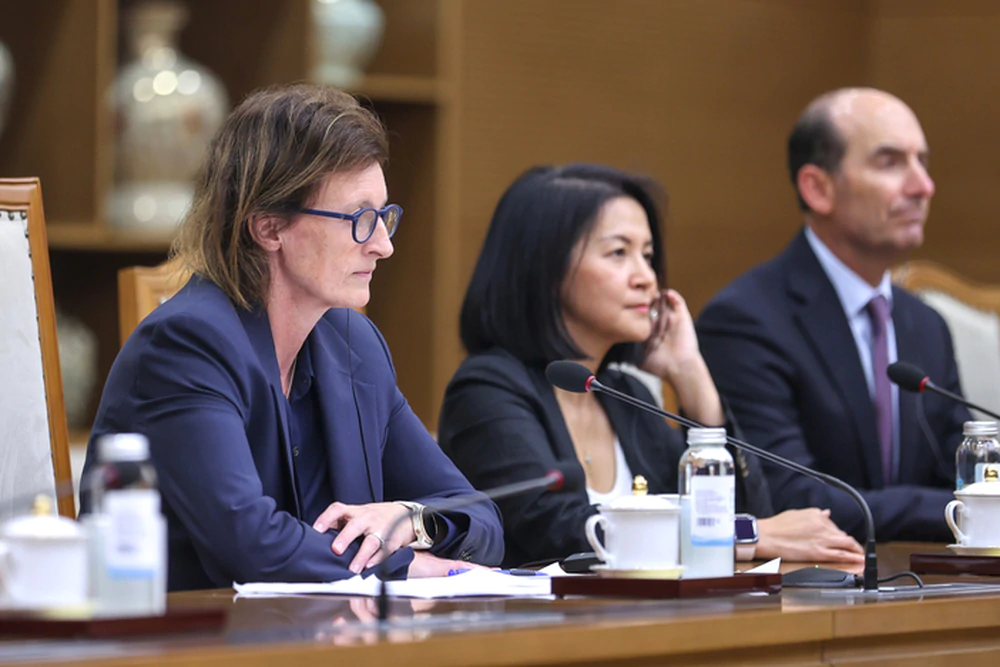
An FTSE representative expressed confidence in the growth potential of Vietnam’s capital market in the coming years - Photos: SSC, Reuter, VGP
- I think Vietnam has made very notable progress in improving market accessibility.
However, foreign ownership limits remain one of the issues that need continued attention.
Further easing of these restrictions could improve the investability of Vietnamese companies and support their representation in FTSE Russell indices.
This matters because foreign investors' access directly affects companies' chances of being included in international indices.
When foreign ownership restrictions are removed, Vietnamese companies will have a better chance of increasing their index weighting, which in turn helps attract international capital.
I believe this is one of the priorities Vietnam should continue to pursue after the upgrade.
* For years, improving market access was the focus of the upgrade process. Now that this milestone has been reached, which reforms do you think Vietnam should keep prioritizing to compete better with other emerging markets?
A view of the Vietnam Capital Market Forum 2026 – Photo: QUANG DINH
- I believe one of the most important strategic priorities in the next phase is to shift the focus from market accessibility to market competitiveness.
FTSE Russell's classification criteria pay particular attention to foreign investors' actual ability to access and trade in a market. This is an important condition for a market to integrate more deeply into the global investment system.
Vietnam has made impressive progress in this area. One of the standout reforms was resolving the requirement for foreign institutional investors to pre-fund 100% of their trades, a bottleneck that had lingered for many years.
However, improving market accessibility is not something that can be done once and for all. It is a continuous process of improvement, especially as more groups of international investors come in with different operational requirements.
In my view, there are three practical issues that need continued attention. The first is simplifying the market entry process.
For a global institutional investor, investing in a new market is not simply a matter of picking good companies.
They also have to go through many procedures, such as opening accounts, choosing a custodian bank, connecting their systems with brokers and meeting compliance and operational requirements.
If these processes are too complicated or time-consuming, they can directly affect capital allocation decisions.
Vietnam therefore needs to keep simplifying procedures, strengthen connections among service providers and expand the participation of securities companies in the global broker model.
These are practical improvements, but they matter a great deal in attracting international investors.
The second is improving the efficiency of trading and settlement. International investors expect trading processes to be standardized, predictable and compatible with the operating models they use globally.
Vietnam's non-prefunding reforms are a positive step.
The next task, however, is to ensure these mechanisms operate stably in practice and meet the needs of different groups of investors and intermediaries.
Optimizing technical infrastructure, expanding connections with international brokers and making settlement more reliable will continue to improve the investor experience.
The third is access to the foreign exchange market. For international investors, investing does not stop at buying or selling securities. It also involves converting currencies, managing cash flows and repatriating capital and profits.
Transparency, liquidity and convenience in foreign exchange transactions are therefore inseparable from market accessibility.
This is not a challenge unique to Vietnam, but one shared by many emerging markets.
What matters is not necessarily fully adopting the models of developed markets, but building an investment environment that is sufficiently efficient, clear and reliable.
I want to stress that a market with attractive economic growth prospects may not attract a commensurate amount of capital if investors face too many difficulties in accessing it.
The more convenient and easier it is to operate a market, the more willing investors are to allocate capital. As global competition intensifies, operational efficiency will become an important competitive advantage.
* Besides attracting foreign capital, you believe Vietnam needs to build a stronger base of domestic institutional investors while improving transparency and corporate governance. How do these factors matter for attracting and retaining long-term capital?
Panelists engage in a lively discussion on ways to attract foreign investment following FTSE Russell’s upgrade of Vietnam’s stock market – Photo: QUANG DINH
- We often talk a lot about foreign investment, and rightly so, because it is a very important resource.
However, looking at the medium and long term, I believe the development of domestic institutional investors is just as important.
The experience of successful markets around the world shows the need for balance between foreign and domestic institutional investors.
A strong capital market cannot rely solely on foreign capital.
Domestic institutional investors can serve as an anchor that helps the market stay stable and become more resilient to external shocks.
Hence, in the long run, Vietnam needs to further develop pension funds, insurers, fund management companies and investment products linked to savings and long-term accumulation.
Each group of investors has a different risk appetite, objective and investment horizon. When a market has a diverse investor base, capital flows become more balanced, which helps sustain liquidity, limit volatility and build a foundation for companies to raise long-term capital.
At the same time, I believe trust and transparency are the foundation of every successful capital market.
International investors value transparency and predictability of the investment environment.
They need access to accurate and timely information, and a clear understanding of corporate governance structures, shareholder protection mechanisms and key disclosure standards.
Good corporate governance is therefore not just a matter of legal compliance. It also strengthens investor confidence and makes capital allocation more efficient.
This is especially important for Vietnamese companies that aim to attract international strategic shareholders and long-term investment.
Because ultimately, beyond the growth outlook of the economy as a whole, investors still must make decisions about each individual company.
Confidence in that company itself will be decisive.
At the market level, an environment with stable and effective regulations, transparent disclosure and consistent operations will strengthen the confidence of both domestic and international investors.
I believe one of the key measures of how mature Vietnam's capital market becomes in the coming years will be the growth of its domestic institutional investor ecosystem, alongside ever deeper participation by international capital.
* Looking beyond the current upgrade milestone, what position do you expect Vietnam's capital market to hold by 2035?
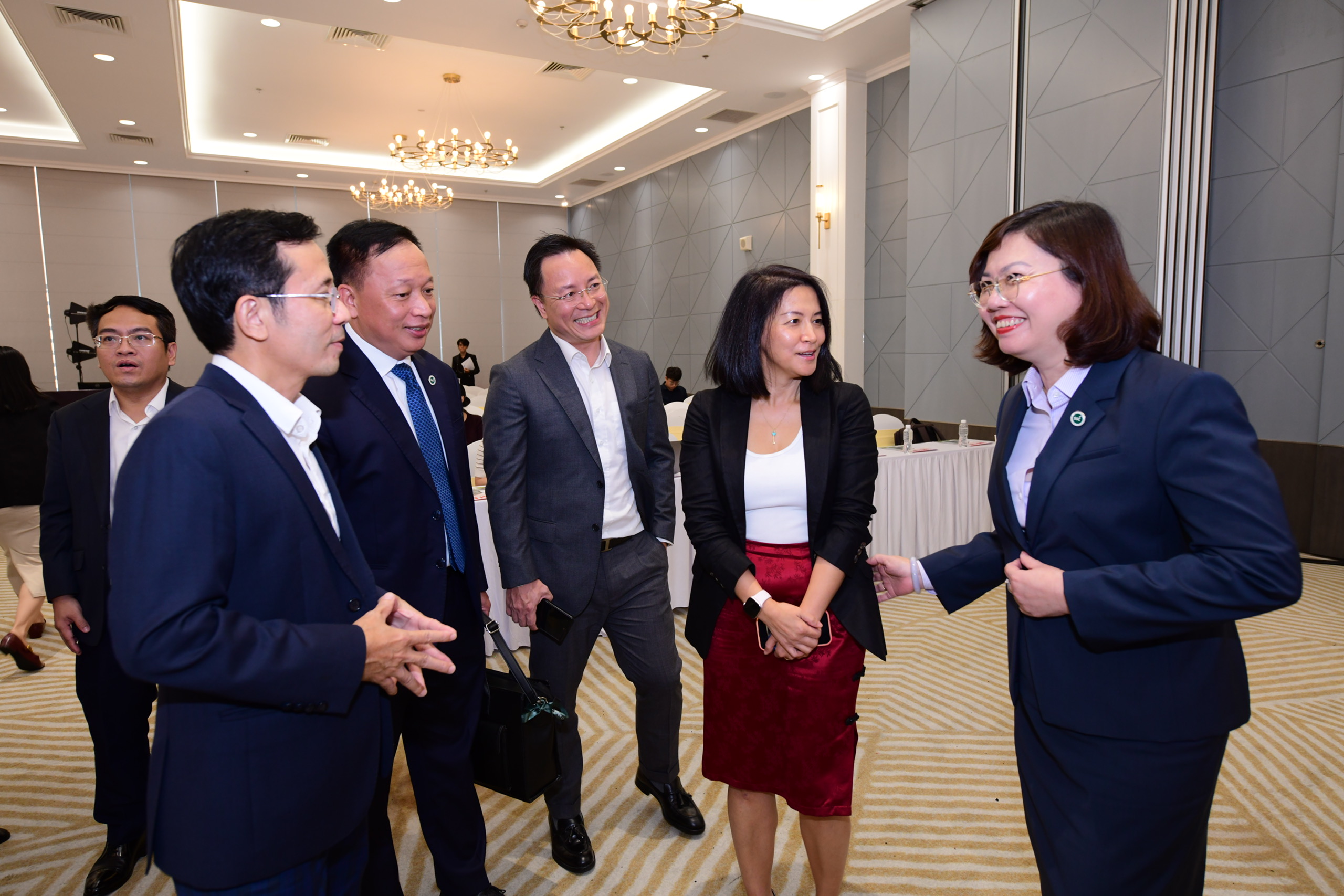
Ms. Vu Thi Chan Phuong (right), Chairwoman of the State Securities Commission of Vietnam, chats with Ms. Wanming Du ahead of the 2026 Vietnam Capital Forum, themed “New Capital Flows – A New Position for Vietnam’s Stock Market,” organized by Tuoi Tre online newspaper in collaboration with the State Securities Commission of Vietnam, in Ho Chi Minh City on October 30, 2026 – Photo: QUANG DINH
- I have confidence in the growth potential of Vietnam's capital market in the years ahead.
By 2035, we can expect a market that has grown significantly in both size and depth.
It will be a market with many high-quality companies operating in promising sectors such as high-tech manufacturing, information technology, consumer services and energy transition.
At the same time, the market needs to be supported by a sufficiently strong ecosystem of domestic institutional investors, while international investors can access investment opportunities conveniently, transparently and safely.
But more importantly, I expect the capital market to play an increasingly large role in Vietnam's economic development.
This vision is not limited to attracting foreign portfolio investment. It also aims to build a comprehensive capital market ecosystem that can support innovation, foster entrepreneurship and help Vietnamese companies expand into international markets.
The capital market also needs to help mobilize long-term resources for key sectors such as infrastructure and technology, and strengthen Vietnam's connections with global financial centers.
I believe the plan to develop Ho Chi Minh City into an international financial center also opens up many opportunities for cooperation and sharing experience.
However, building an international financial center is not simply about developing buildings or new financial instruments. What matters most is creating a trustworthy environment where investors have confidence in the legal system, infrastructure and institutions that support investment.
This is a journey that requires time, policy consistency and close cooperation between the public and private sectors.
For our part, FTSE Russell will continue to uphold transparent and objective standards that reflect the real needs of the international investment community, and promote constructive dialogue.
Of course, the strategic decisions that shape the future of the capital market remain Vietnam's to make. But I believe the experience and support of the international community will be an effective resource to help Vietnam achieve its long-term development goals.
* Thank you.
BINH KHANH - NGOC DUC - NGHI VU
TUAN ANH
Comment (0)
(Tuoitre News gives priority to approving comments from registered members.)







Max: 1500 characters
There are no comments yet. Be the first to comment.