


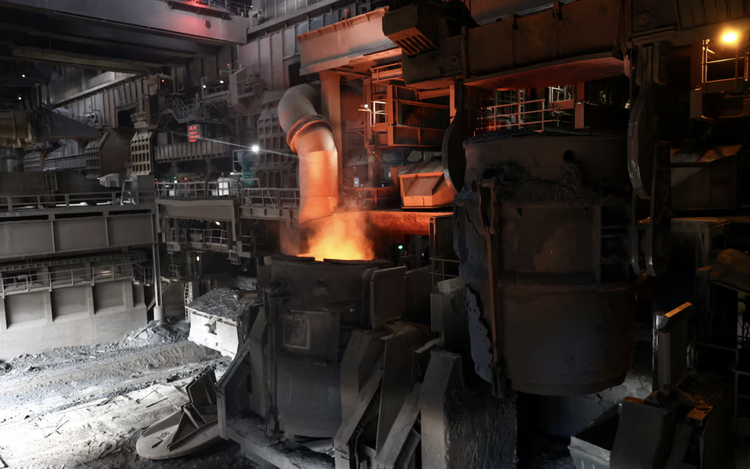
A ThyssenKrupp steel factory in Duisburg, Germany, November 5, 2025. Photo: Reuters
January orders declined by 11.1% compared with the previous month on a seasonally and calendar adjusted basis, putting an end to four consecutive increases, the office said on Monday.
A Reuters poll of analysts had pointed to a fall of 4.5%.
However, when large-scale orders were excluded, the fall was only 0.4% in January, said the office, after German industrial orders posted their biggest increase in two years in December.
Not For Faint Of Heart
Despite the volatility, analysts stuck with their positive expectations for the year, barring a sustained escalation in the war in Iran and resulting high oil prices.
"These figures are not for the faint of heart," said LBBW economist Jens-Oliver Niklasch.
"Overall, however, we continue to maintain our expectation that the economic figures for the current year will be better than last year," he added.
Union Investment's Michael Herzum attributed the robust order situation to the German government's investment in defence and infrastructure.
"Industry should transform from a drag on growth to an engine of growth by 2026, assuming the conflict with Iran does not escalate permanently," he said.
Germany's economy ministry on Monday warned that the risk of industry facing a setback increased significantly with the conflict, which was not yet reflected in the indicators.

Production Spark Missing
Industrial production also fell, unexpectedly dropping by 0.5% in January compared with the previous month.
Analysts had forecast a slight rise of 1.0%.
"The spark from fuller order books hasn't yet ignited production," said Hauck Aufhaeuser Lampe chief economist Alexander Krueger.
The dip is mainly due to the lower production of metal products, which fell by 12.4%, according to the office.
Decreases in the pharmaceutical as well as computer, electronic and optical products industries also contributed, it said.
In contrast, energy production increased significantly, by 10.3%, due to the exceptionally cold January weather this year, it said.








Max: 1500 characters
There are no comments yet. Be the first to comment.