


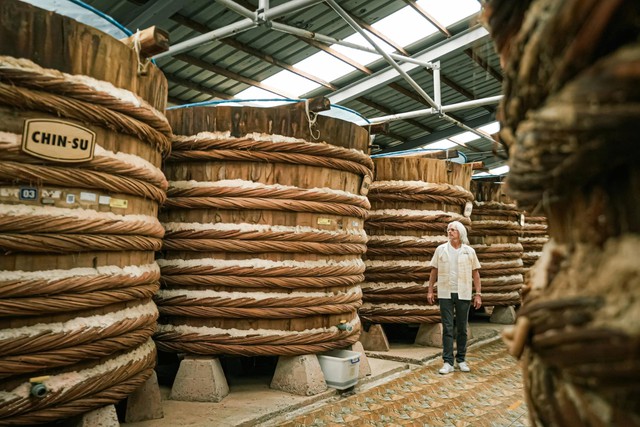
Masan Phu Quoc’s fish sauce factory covers about 22,000m² and has nearly 500 fermentation barrels. Photo: T.L.
Inside Phu Quoc's iconic barrels: Where 'Vietnamese flavor' is born
At the start of his journey to discover Vietnamese flavors, Leslie Gilliams repeatedly raised his camera to capture his first impressions of Phu Quoc, an island off Vietnam’s southern coast.
Through the car window, he photographed the road leading toward the sea, boats anchored at the port and the fast-paced work surrounding baskets of freshly landed fish.
Batches of salted anchovies that meet quality standards are then taken to the Chin-su Phu Quoc fish sauce factory, where they undergo a traditional natural fermentation process in large wooden barrels for eight to 12 months to produce the island’s famed fish sauce.
The traditional fermentation method is combined with a modern monitoring system. Each barrel has its own electronic identification code, allowing producers to trace when the fish was loaded, as well as its quantity, quality and source.
According to the producer, the use of technology helps control the production process while maintaining quality standards as the product reaches consumers in Vietnam and overseas.
Still, technology cannot replace the time, experience and dedication of the people who make the sauce.
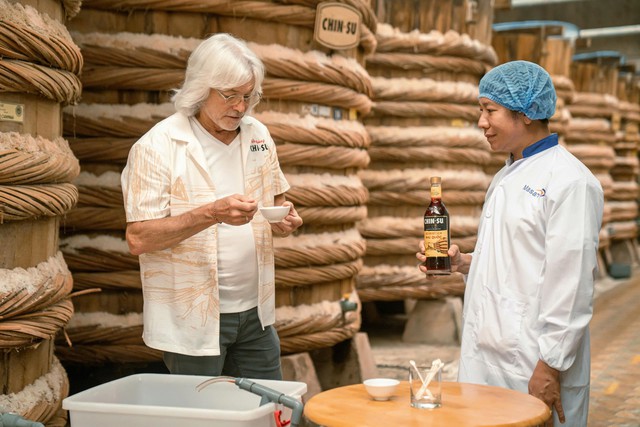
Leslie tastes Chin-su fish sauce fermented on-site at the factory. Photo: T.L.
After touring the fish sauce factory, Leslie Gilliams said: “I could smell the fish sauce even before I saw the fermentation barrels. The barrels are quite large, and the fish sauce has its distinctive amber-brown color and a relatively mild aroma when tasted.”
Leaving the factory, Leslie continued following the journey of fish sauce into small seaside kitchens to see how the condiment is woven into Vietnamese cuisine.
There was no longer any distance between a MasterChef U.S. contestant and Vietnamese restaurant owners, only a shared passion for food.
Leslie watched as ingredients were prepared, dipping sauces were mixed and flavors adjusted through years of experience.
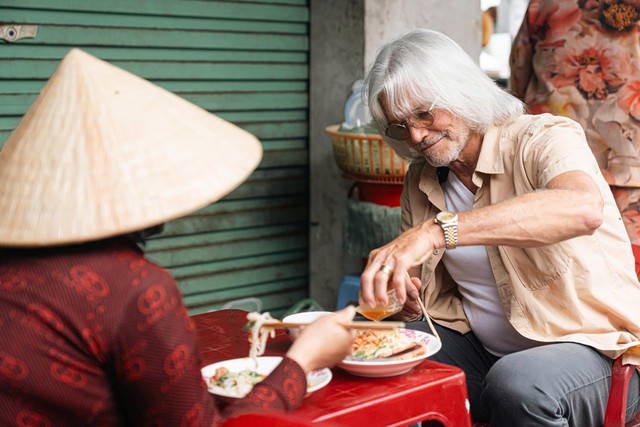
The ingredients retain their natural freshness while becoming richer and more balanced with fish sauce. Photo: T.L.
This is the special role fish sauce plays in Vietnamese kitchens. It can be used to marinate, season, and braise ingredients, mixed into dipping sauces or serve as a base for other sauces.
With each use, fish sauce brings out a different layer of flavor, leading diners to discover more Vietnamese dishes.
From Phu Quoc fish sauce barrels to global tables
From a chef’s perspective, Leslie said fish sauce can be used in a wide range of dishes and paired with different ingredients.
It is also one of the seasonings that can be used to develop dishes that fuse Vietnamese cuisine with international flavors.
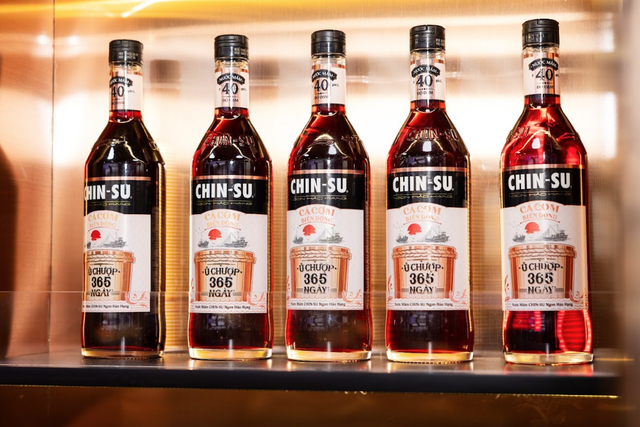
Chin-su fish sauce is now sold in international markets including the United States, Canada, Australia, Europe and Japan. Photo: T.L.
But Chin-su’s journey into international markets goes beyond putting a bottle of Vietnamese fish sauce on store shelves abroad.
Its long-term strategy is to build a portfolio of Vietnamese seasonings and culinary solutions that can become part of meals around the world.
From fish sauce and chili sauce to soy sauce, cooking sauces and ready-to-use seasonings, the products aim to enhance dishes while bringing flavors rooted in Vietnam.
To achieve this, the products do not rely on a single formula for every country.
Tastes, cooking habits, serving sizes, packaging, price points, and shopping channels vary from one market to another.
As a result, localizing the products and the way they are presented and used is considered part of the process of bringing Vietnamese seasonings to meals outside Vietnam.
The products are defined by inspiration from Vietnamese ingredients and culinary culture, their ability to create layers of rich flavor, and the stories behind each seasoning.
In this journey, culinary experts such as Leslie can serve as an important bridge.
They not only evaluate the flavors of the products but can also explain which flavor notes a seasoning brings out, what ingredients it pairs well with, and how it can transform a dish when combined with international cuisines.
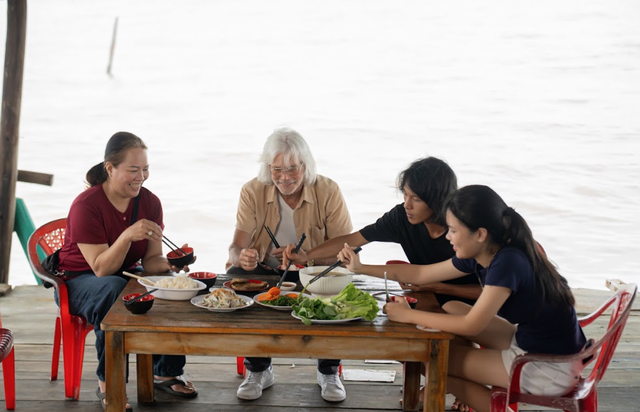
Leslie wrapped up his trip with a seaside meal in Phu Quoc, but the experience opened the door to a broader journey ahead. Photo: T.L.
From the ingredients and fermentation barrels to how it is used in dishes, the journey through Phu Quoc shows that fish sauce is more than a processed food product.
It is also closely tied to how Vietnamese people create and build flavor in their cuisine.
For seasoning companies, this also provides a foundation for bringing distinctly Vietnamese products to more international markets.


Max: 1500 characters
There are no comments yet. Be the first to comment.