


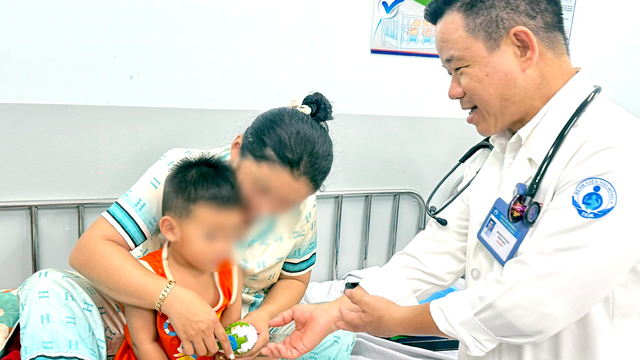
Du Tuan Quy, head of the neuro-infectious disease department at Children’s Hospital 1 in Ho Chi Minh City, examines a child with hand, foot, and mouth disease. Photo: X.Mai / Tuoi Tre
The Ho Chi Minh City Center for Disease Control reported 858 cases between March 16 and 22, a nearly-70-percent increase compared to the previous four-week average.
Since the start of 2026, Ho Chi Minh City has recorded 8,152 infections and 288 clusters, including 162 in schools.
Three deaths have been confirmed, with two of them in the week of March 9-15.
Compared to the same period last year, cases have surged by more than 241 percent.
Surveillance detected EV71 in 25 percent of the samples, a strain known for rapid transmission and severe complications, particularly in children under five.
Hospitals are treating numerous young patients, including a 24-month-old girl diagnosed with stage-4 hand, foot, and mouth disease and life-threatening complications such as respiratory failure and metabolic acidosis. After two weeks of intensive care, her condition improved.
In Hanoi, 187 cases of hand, foot, and mouth disease were reported across 76 wards and communes from March 13 to 20, up 51 cases against the previous week and bringing the total to 1,090 cases this year.
The Vietnamese capital has identified 22 clustes, five of which remain active, according to the Hanoi Center for Disease and Control.
While numbers are lower than in Ho Chi Minh City, officials urged strict monitoring and early intervention to prevent severe outcomes.
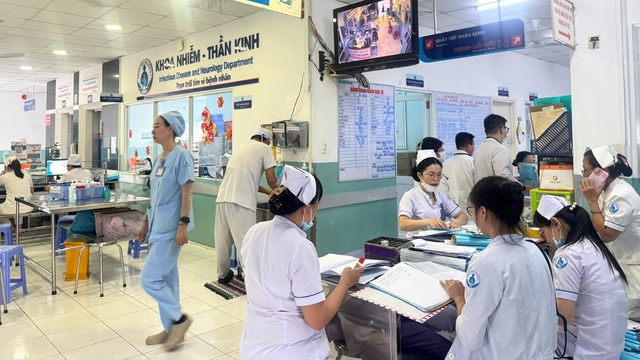
The neuro-infectious disease department at Children’s Hospital 1 in Ho Chi Minh City has admitted many children with hand, foot, and mouth disease. Photo: X.Mai / Tuoi Tre
Doctors explained that hand, foot, and mouth disease is an acute viral infection characterized by blisters in the mouth, palms, feet, buttocks, or knees.
The disease primarily affects children under five, especially in daycare and kindergarten settings where transmission is easier, according to Nguyen Minh Tien, deputy head of City Children’s Hospital in Ho Chi Minh City, and Luong Thanh Tien, deputy director of Gia Lam General Hospital in Hanoi.
Although most cases are mild, EV71 can cause serious complications such as encephalitis, meningitis, and respiratory failure.
The Ministry of Health recently approved Vietnam’s first EV71 vaccine, offering hope of reducing severe cases.
However, experts stressed that the vaccine only protects against EV71, not all strains.
Vaccination must follow medical guidance on age and dosage, experts said.
Doctors recommended five key prevention measures, including frequent handwashing with soap, disinfecting toys and surfaces, monitoring infected children for 7-10 days, keeping sick children home from school, and seeking immediate medical care if warning signs such as startling, limb tremors, persistent high fever, repeated vomiting, rapid breathing, or lethargy appear.









Max: 1500 characters
There are no comments yet. Be the first to comment.