


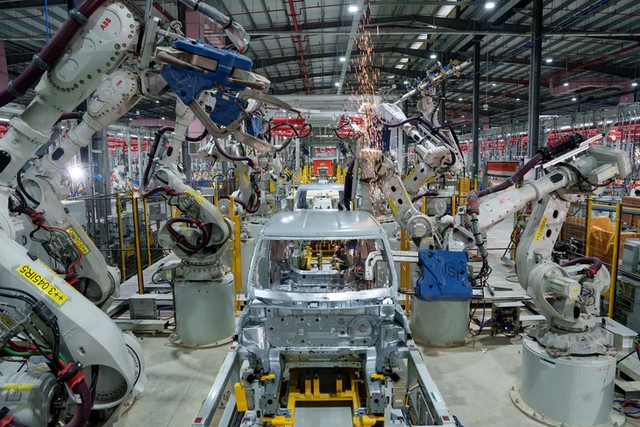
The Ministry of Industry and Trade has proposed a range of measures to promote the development of Vietnam’s supporting industries. Photo: Thy Nhung / Tuoi Tre
Domestic small and medium-sized enterprises (SMEs) in the sector are currently paying annual interest rates of 8-10 percent, while foreign-invested firms can borrow at just 1-3 percent from parent companies or overseas banks, according to the Ministry of Industry and Trade.
The ministry said the wide financing gap is undermining the competitiveness of local firms and constraining investment needed to upgrade production capacity and participate in global supply chains.
Against this backdrop, the ministry is seeking feedback on a draft decree revising Decree No. 111/2015 on supporting-industry development.
Credit support remains ineffective
Although some incentives and support measures are stipulated in Decree No. 111/2015, as amended by Decree No. 205/2025, they are also subject to specialized laws such as the Land Law, the Law on Credit Institutions, and the Law on Bidding.
This has complicated the implementation of policies such as credit guarantees for SMEs, investment credit incentives, tax breaks, and land-rental support.
Resources for implementing supporting-industry policies have also yet to be clearly allocated, the ministry said.
Most Vietnamese supporting-industry firms are small or medium-sized, but their operations require substantial capital for machinery, equipment, factories, technology, materials, and highly skilled workers.
These firms typically produce components, parts, and semi-finished products for manufacturers of final goods, making them heavily dependent on major customers.
That dependence also makes it harder for them to develop clear market strategies compared with conventional manufacturers.
Many domestic firms lack sufficient collateral, while high initial investment costs can make their financial profiles less attractive to lenders and their loan applications more difficult to approve.
As a result, access to credit remains a major challenge.
The ministry said current tax, land, and credit incentives are not yet strong enough either to attract large-scale foreign-invested projects or to help domestic firms upgrade technology and strengthen their competitiveness toward Vietnam’s double-digit growth target for 2026-30.
Lengthy procedures deter smaller firms
Businesses also say complicated loan procedures are discouraging them from seeking financing.
Kieu Ngoc Phuong, deputy general director of Tan Thanh Mechanical Trading JSC, said the company had taken several initial steps toward a green transition but had not applied for loans because the approval process required complex paperwork and proof of eligible activities.
“The company has taken the first steps toward a green transition, such as measuring emissions and using solar power, but we are still a long way from achieving net zero,” Phuong said.
She said large companies seeking loans worth tens of thousands of U.S. dollars for major projects may be more willing to prepare extensive applications and undergo strict appraisal procedures, while smaller businesses often rely on their own resources.
When Tan Thanh previously invested in a solar power project, the company financed the entire project itself because bank loan procedures and appraisal requirements were too lengthy and time-consuming, she said.
Some small garment businesses also said they are currently benefiting from a reduction in value-added tax on machinery and equipment from 10 percent to 8 percent, but have no immediate plans for further expansion.
Businesses have called for simpler procedures and shorter processing times once the government’s new supporting-industry development program is approved.
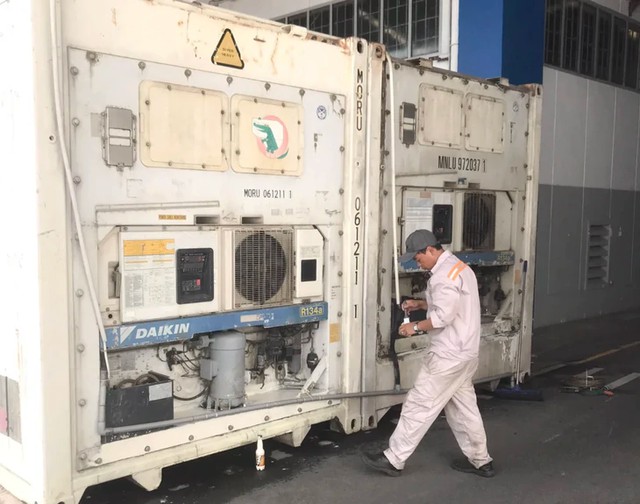
Some businesses are reluctant to seek loans because of lengthy procedures and processing times. Photo: Tan Thanh / Tuoi Tre
Draft proposes broader support
Under the draft decree, the Ministry of Industry and Trade proposes programs to support research and technology transfer, workforce training, information provision, mergers and acquisitions, online information platforms, and the development of supporting-industry databases.
Depending on the nature of each activity, financial support could cover 50-100 percent of eligible costs.
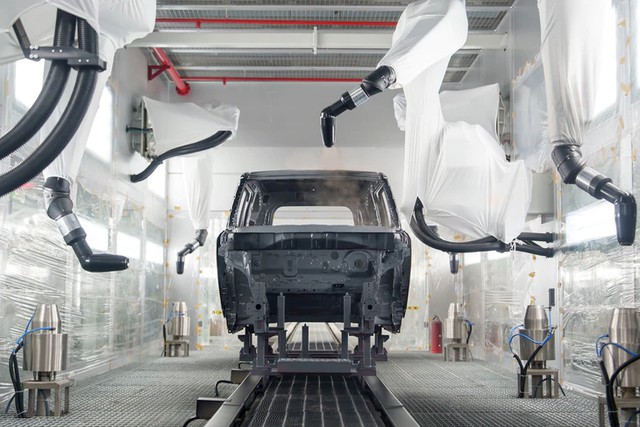
Businesses pursuing green transition may also receive support covering 50-100 percent of eligible costs, depending on the nature of each activity. Photo: Thy Nhung / Tuoi Tre
The draft also proposes changes to align supporting-industry policies with regulations on bidding, investment, and lending procedures.
It would expand the list of eligible sectors to include textiles and garments, leather and footwear, electronics, automobile manufacturing and assembly, mechanical engineering, and supporting products for high-tech industries.
According to the ministry, the program is intended to help domestic firms, particularly SMEs, gradually improve their capabilities, meet the requirements of leading manufacturers, and participate more effectively and sustainably in supply chains.
The proposed framework would also replace a current requirement that projects have contracts with at least one SME supplying key raw materials or components, which the ministry said is largely formalistic.








Max: 1500 characters
There are no comments yet. Be the first to comment.