


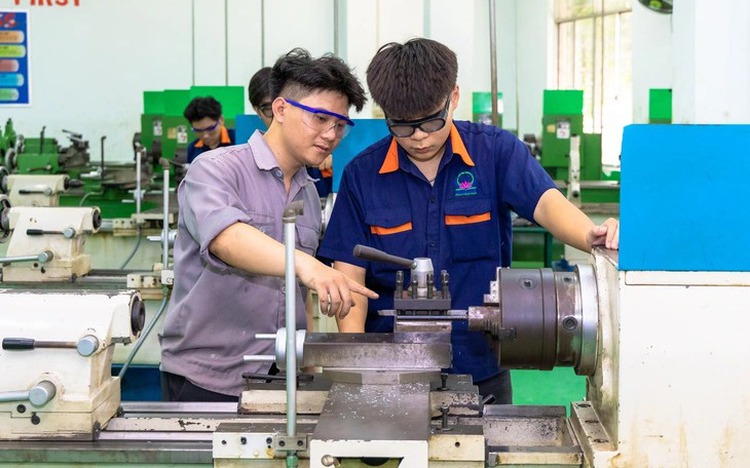
An AI-driven online learning platform is set to be developed for vocational education institutions in Ho Chi Minh City. Photo: Supplied
The plan is meant to build an AI-based online learning platform to personalize learning pathways, while upgrading digital infrastructure, learning materials, and AI implementation capacity across the city’s vocational education system.
AI-powered online learning platform
Under the plan, Ho Chi Minh City will develop an online learning platform using AI and big data, allowing learners to study flexibly based on their needs, abilities, and career goals.
The city aims for the platform to be domestically developed and targets adoption by more than 80 percent of learners by 2030.
Authorities also plan to build a shared digital learning repository and digital library to support training programs in priority vocational fields.
By 2030, the city aims for all vocational education institutions to have information technology infrastructure that meets teaching requirements, including high-speed Internet connectivity and adequate computing equipment.
For colleges, the plan sets a target of at least one smart interactive classroom per institution.
At a more advanced level, Ho Chi Minh City plans to establish AI laboratories at a minimum of 10 percent of eligible vocational education institutions, enabling learners to practice and access emerging AI applications.
The plan also calls for all vocational education institutions to implement personalized teaching approaches, applying AI to the creation and design of diverse learning materials.
In addition, the city aims to integrate AI competencies into training curricula, with 60 percent of programs incorporating AI-related knowledge and skills at an appropriate level.
Roadmap to 2030
The Ho Chi Minh City People’s Committee has assigned the Department of Education and Training as the lead agency, working in coordination with relevant departments, sectors, and local authorities.
The department is responsible for developing implementation plans, communication activities, consolidating budget estimates and organizing the roll-out of initiatives related to the learning platform, digital learning materials, training programs, and the application of AI to teaching and learning.
The Department of Home Affairs will coordinate on capacity development, including digital and AI skills training for staff, aligned with labor market training needs.
The Department of Science and Technology will support implementation through AI development programs and orientations, promote linkages with the research and technology business ecosystem, and propose appropriate solutions and models.
In the initial phase starting 2026, the city will focus on developing an overall plan, assessing demand, forecasting workforce and training needs, and rolling out platform development, digital learning materials, and infrastructure.
From 2026 to 2028, the city plans to develop AI-powered teaching software and applications.
The 2026-30 period will also include investment in facilities, infrastructure upgrades, expansion of implementation and integration with accreditation, and quality improvement efforts.
Authorities have identified several core task groups, including preparation of digital infrastructure and information security, development of shared platforms and digital learning repositories, and training to strengthen AI application capacity among staff.
These efforts are targeted at gradually establishing a smart learning environment, featuring interactive classrooms and expanded AI practice spaces at eligible vocational education institutions.
Ho Chi Minh City currently has about 6.85 million workers, with roughly 84.7 percent having received training, while around 35 percent hold formal degrees or certificates.
The city is home to 481 vocational education institutions, including 77 colleges, 77 intermediate schools, 74 vocational education centers, 29 vocational and continuing education centers, and 224 enterprises registered to provide vocational training.
The total scale of training covers approximately 1,102 occupations and trades.








Max: 1500 characters
There are no comments yet. Be the first to comment.