


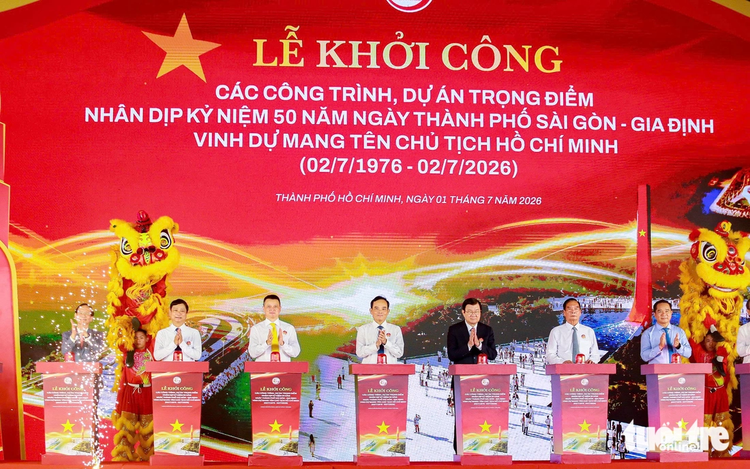
Delegates perform the groundbreaking ceremony for the eight major projects marking the 50th anniversary of Ho Chi Minh City bearing President Ho Chi Minh's name. Photo: Chau Tuan / Tuoi Tre
The groundbreaking ceremony was held at the Nha Rong–Khanh Hoi Wharf area to celebrate the 50th anniversary of Saigon–Gia Dinh City being renamed Ho Chi Minh City on July 2, 1976.
The eight projects are funded through public investment, public-private partnerships (PPP), and private capital.
From around 5:40 am, the Nha Rong–Khanh Hoi Wharf area became busy as officials, guests, and support staff gathered ahead of the ceremony, which began at 6:30 am.
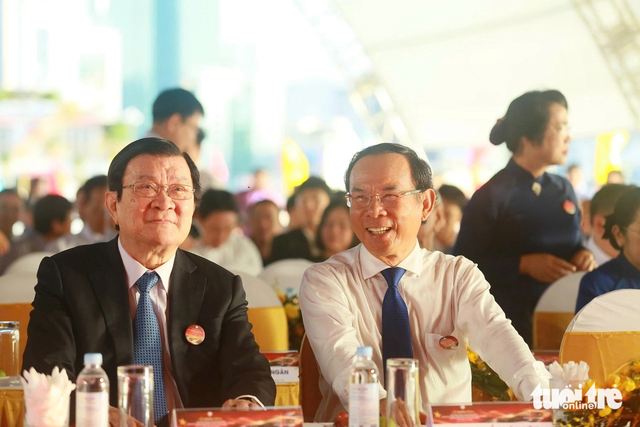
Former State President Truong Tan Sang (L) and former secretary of the Ho Chi Minh City Party Committee Nguyen Van Nen attend the groundbreaking ceremony. Photo: Chau Tuan / Tuoi Tre
Security personnel and traffic officers were deployed along Nguyen Tat Thanh, Hoang Dieu, Ham Nghi, and Nam Ky Khoi Nghia Streets to ensure safety and smooth traffic flow.
Many former and incumbent state and municipal officials attended the ceremony.
The eight projects launched on Wednesday include the Nha Rong–Khanh Hoi cultural park and Bach Dang riverside green space; the Ho Tram–Long Thanh International Airport urban expressway; the Can Gio–Vung Tau sea-crossing route; the Cai Mep Ha general and container Port (phase 1); the Binh Tien bridge and road project; the Ho Chi Minh City–Moc Bai expressway (phase 1); the interchange of the Ben Luc–Long Thanh Expressway and Rung Sac Road; and the intersection of the Ben Luc–Long Thanh Expressway and National Highway 50.
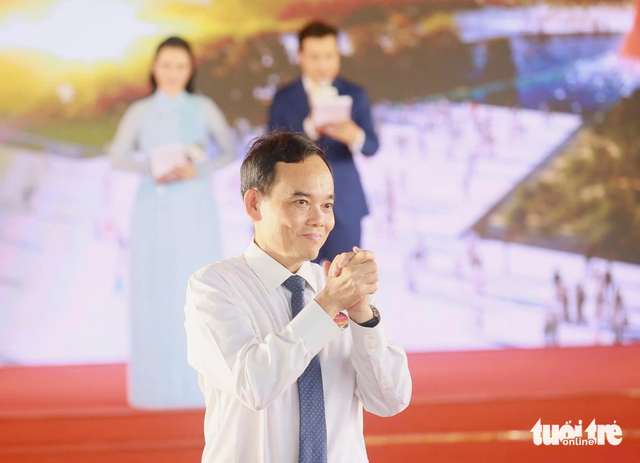
Secretary of the Ho Chi Minh City Party Committee Tran Luu Quang attends the event. Photo: Chau Tuan / Tuoi Tre
Nha Rong–Khanh Hoi cultural park and Bach Dang riverside green space
The project holds special significance because it is located at the historic site where President Ho Chi Minh departed in search of a path to national liberation.
The 73.3-hectare project has an investment of VND29.317 trillion ($1.1 billion) under the PPP model.
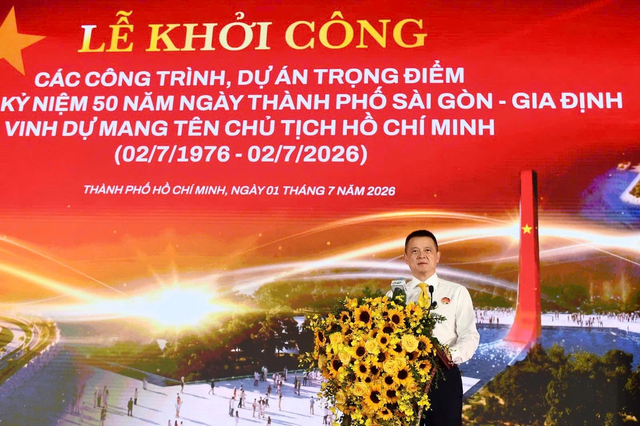
Dang Minh Truong, chairman of Sun Group, speaks at the ceremony. Photo: Chau Tuan / Tuoi Tre
It comprises five components, including the Nha Rong cultural park, preservation-oriented redevelopment of the Khanh Hoi port area, upgrading Nguyen Tat Thanh Street, development of parks and green spaces at Bach Dang Wharf, and expansion of roads, underpasses, pedestrian bridges, underground parking, underground commercial areas, and riverside public spaces along the Saigon River.
Speaking at the ceremony, Dang Minh Truong, chairman of Sun Group, the developer of the Nha Rong–Khanh Hoi cultural park and Bach Dang riverside green space project, described the development as both a major responsibility and a historic opportunity.
"The greatest value of the Nha Rong–Khanh Hoi Wharf area does not lie in its existing structures but in the historical memories and national spirit nurtured on this land," Truong said.
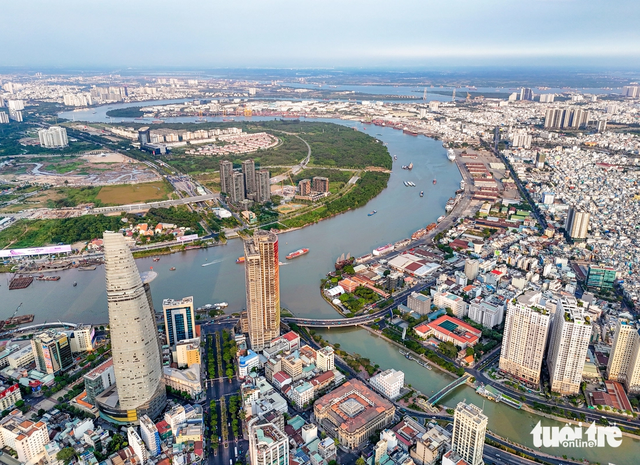
The Bach Dang riverside green space and Nha Rong–Khanh Hoi Wharf area are planned to form a continuous riverside open space along the Saigon River, extending from the city center toward Nguyen Tat Thanh Street and Tan Thuan Bridge, adding more green areas. Photo: Chau Tuan / Tuoi Tre
He stressed that Sun Group's goal is not to replace the area's heritage with a new landmark but to preserve and continue its historical legacy.
Once completed, the project will form a modern green public space where residents can appreciate the area's historical significance, national pride, and the city's aspirations for future development.
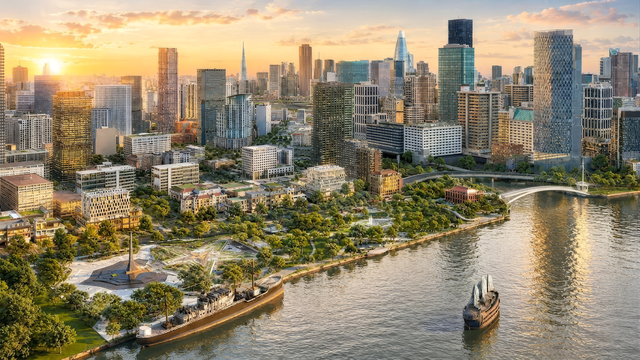
An artist’s impression of the Nha Rong–Khanh Hoi cultural park
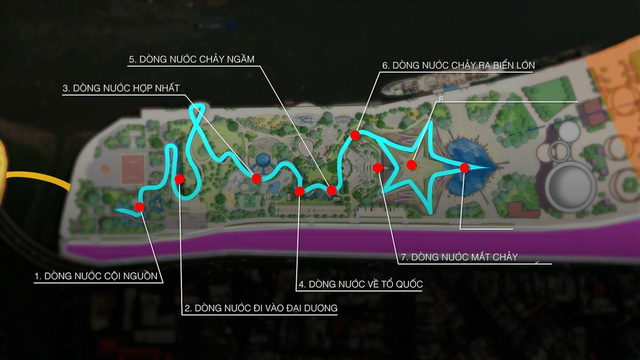
The park is designed around the concept of 'Nine Chapters – Nine Waterways,' recreating key milestones in President Ho Chi Minh's life and career through historical and cultural experiences.
Can Gio–Vung Tau sea-crossing route
The Can Gio–Vung Tau sea-crossing route will span approximately 14 kilometers, including more than eight kilometers of bridges and 3.85 kilometers of tunnels and approach roads.
Designed with six lanes, the project carries an estimated investment of VND93.159 trillion ($3.5 billion).
It will become the first direct connection between Can Gio and Vung Tau, expanding the city's maritime development space.
Tran Van Anh, deputy general director of Vingroup, which is developing the Can Gio–Vung Tau sea-crossing route, said the project is a special-grade transport work of strategic importance to Ho Chi Minh City and the southeastern region.

Tran Van Anh, deputy general director of Vingroup, speaks at the ceremony. Photo: Chau Tuan / Tuoi Tre
Once completed, the route will reduce travel time between Can Gio and Vung Tau to around 10 minutes, significantly improving trade, tourism, passenger transport, freight movement, and local livelihoods.
She said Vingroup is committed to mobilizing its best financial resources, technology, personnel, and project management experience while coordinating closely with authorities, consultants, designers, and contractors to ensure quality, progress, safety, and legal compliance.
The company expects the sea-crossing route to become a new infrastructure symbol of the city.
Cai Mep Ha port
The Cai Mep Ha general and container port (phase 1) has an investment of around VND50.820 trillion ($1.9 billion) and covers more than 351 hectares.
The port will be capable of accommodating container ships of up to 250,000 DWT. Upon full completion, it is expected to handle approximately 10.8 million TEUs annually and become an international container transshipment hub.
Vu Van Tien, founding chairman of Geleximco Group, representing the consortium investing in the Cai Mep Ha port project, said the consortium views Cai Mep Ha as more than a seaport, describing it as a strategic gateway that will help Ho Chi Minh City become a leading logistics hub in the region.
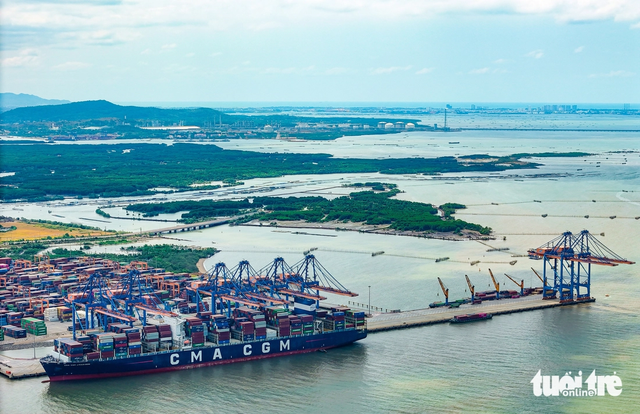
The Cai Mep Ha general and container port (phase 1) is a strategic seaport infrastructure project expected to enhance logistics capacity and strengthen Ho Chi Minh City's role as an international trade gateway. Photo: Duc Phu / Tuoi Tre
Tien said the investors are prepared to mobilize all necessary financial resources to accelerate construction and bring each phase into commercial operation ahead of schedule.
He added that the project aims to become a world-class smart seaport with a green ecosystem, boosting import-export activities, optimizing supply chains, reducing logistics costs, and increasing business profitability.
Other projects
The Ho Tram–Long Thanh International Airport urban expressway will stretch about 42 kilometers with six lanes and parallel roads on both sides. The PPP project will cost VND46.918 trillion ($1.8 billion) and be implemented between 2026 and 2029.
The remaining projects include the Binh Tien bridge and road project, with an investment of about VND6.285 trillion ($239 million); the main section of the Ho Chi Minh City–Moc Bai expressway, valued at around VND22.975 trillion ($874 million); the interchange of the Ben Luc–Long Thanh Expressway and Rung Sac Road, costing nearly VND2.969 trillion ($113 million); and the intersection of the Ben Luc–Long Thanh Expressway and National Highway 50, estimated at VND590 billion ($22.4 million).
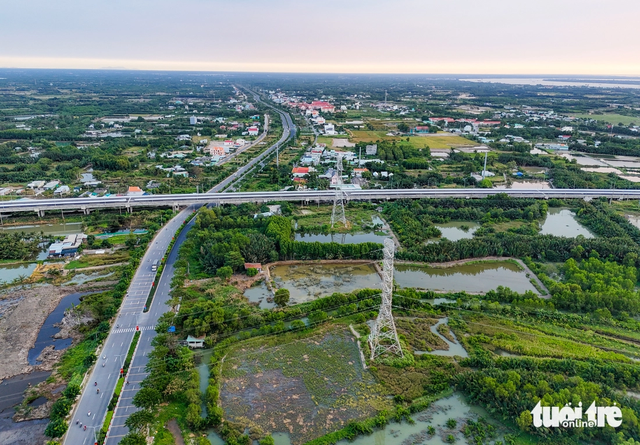
The site of the interchange of the Rung Sac Road and the Ben Luc–Long Thanh Expressway, viewed from Binh Khanh Ferry toward Can Gio. Photo: Chau Tuan / Tuoi Tre
Foundation for exceptional governance framework
The simultaneous launch of the eight projects marks not only the 50th anniversary of Ho Chi Minh City bearing President Ho Chi Minh's name but also a significant step in implementing large-scale infrastructure development plans.
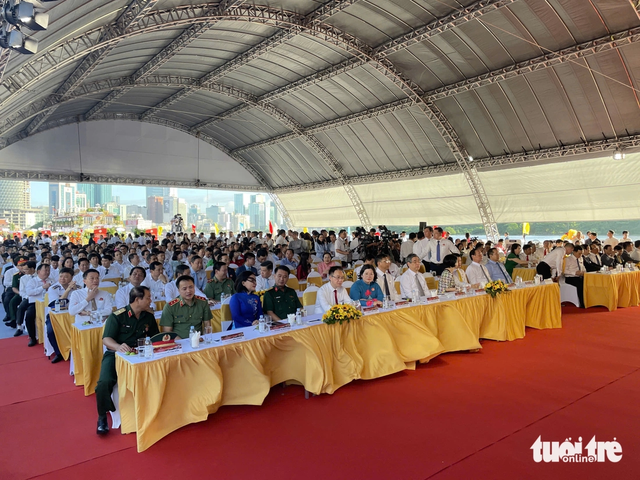
Delegates attend the groundbreaking ceremony. Photo: Chau Tuan / Tuoi Tre
The projects span urban transport, regional connectivity, seaport infrastructure, and cultural-public spaces, creating a foundation for stronger regional integration, marine economic development, logistics expansion, and improved urban infrastructure.
They also represent a major step toward preparing infrastructure for the proposed Special Urban Law, which is expected to be submitted to the National Assembly this year to grant Ho Chi Minh City greater autonomy and institutional flexibility.
At the ceremony, Hoang Nguyen Dinh, vice-chairman of the Ho Chi Minh City People's Committee, reviewed the city's historical milestones, achievements, and challenges.
"Today, we are fulfilling our responsibility as Vietnam's economic locomotive through large-scale projects planned under a long-term and sustainable development strategy, with enormous investment," Dinh said.
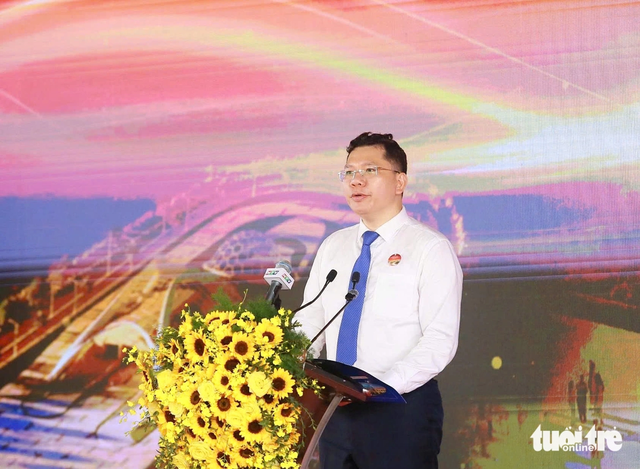
Hoang Nguyen Dinh, vice-chairman of the Ho Chi Minh City People's Committee, addresses the event. Photo: Chau Tuan / Tuoi Tre
"The eight projects launched today are strategic pieces of the city's overall infrastructure plan, serving the goal of breakthrough development."
He urged city departments and local authorities overseeing the projects to take the highest level of responsibility and avoid delays or administrative bottlenecks.
Authorities were instructed to proactively resolve issues related to planning, land clearance, utility relocation, and construction material supplies, while investors and contractors were asked to maximize resources, machinery, modern technology, and scientific construction planning to ensure rapid progress, high quality, and workplace safety.
Dinh also noted that, alongside transport infrastructure, the city launched four social housing projects during the first six months of the year, calling them practical steps toward implementing the directives of Party General Secretary and State President To Lam and the government on social welfare development.








Max: 1500 characters
There are no comments yet. Be the first to comment.