


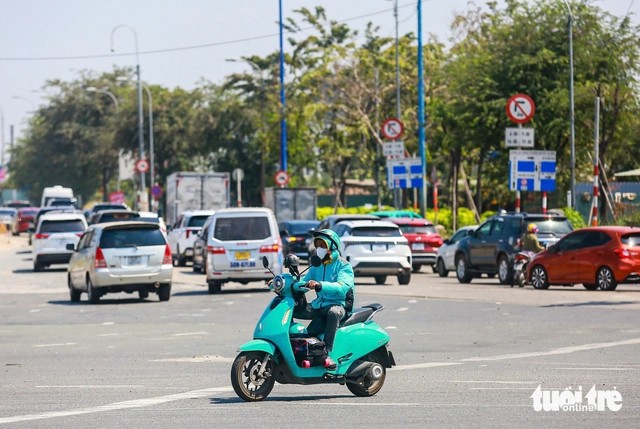
A consulting unit has proposed a roadmap to convert gasoline vehicles to electric and green energy in Ho Chi Minh City by 2040. Photo: Chau Tuan / Tuoi Tre
The proposal was presented last Friday during a meeting hosted by the department to review a green transport transition plan, including the establishment of low-emission zones.
Under the proposed roadmap, different timelines would apply to different areas.
Con Dao Island
In Con Dao Special Zone, all intra-island buses would run on electric or green energy from January 1, 2027.
Motorcycles would be converted by June 1, 2027, except for vehicles used by people with disabilities.
All other vehicles would complete the transition by the end of 2027, except trucks over one metric ton and several specialized vehicles.
All road vehicles are expected to operate on clean energy by 2030.
Can Gio
For communes such as Binh Khanh, An Thoi Dong, Can Gio, and Thanh An, all local buses would switch to clean energy from January 1, 2027.
Cars, motorcycles, and commercial transport vehicles would complete the transition by January 1, 2030, while all remaining vehicles would be converted by January 1, 2035.
Area inside Ring Road No. 2
The proposal identifies the area within Ring Road 2 as the city’s first low-emission zone.
In this zone, all local buses would use clean energy from January 1, 2027.
Taxis would be required to fully transition by 2030, while ride-hailing motorcycles would switch entirely to electric vehicles from 2028.
Privately owned motorcycles and cars would gradually meet stricter emissions standards before fully transitioning by 2035.
Other areas of Ho Chi Minh City
For the rest of Ho Chi Minh City, new vehicles used by state agencies and public institutions would be required to use electric or green energy from January 1, 2027.
Provincial buses would be converted by 2027, while interprovincial buses would fully transition by 2030.
Taxis would complete the transition by 2030, while private motorcycles and passenger cars would fully switch by 2040.
Financial support policies
The plan includes subsidies to encourage the adoption, prioritizing low-income households and workers.
Near-poor households would receive support covering about 70 percent of motorcycle conversion costs, equivalent to VND14 million (US$530) per vehicle.
Poor households would receive full support of approximately VND20 million ($760) per vehicle.
Ride-hailing and delivery riders would be eligible for registration fee and loan-interest support worth about VND5 million ($90) per vehicle.
In Con Dao, residents would receive full support for motorcycles with around VND20 million ($760) per vehicle and 10-percent support for cars under nine seats with VND52.9 million ($2,010) per vehicle. Owners of passenger cars and transport businesses would receive additional subsidies based on vehicle type.
In Can Gio and the proposed low-emission zone, support would mainly focus on registration fees, license plate fees, and incentives for electric or low-emission vehicles.
The Department of Construction will refine the proposal after gathering feedback from agencies, localities, and residents before submitting it for approval.








Max: 1500 characters
There are no comments yet. Be the first to comment.