


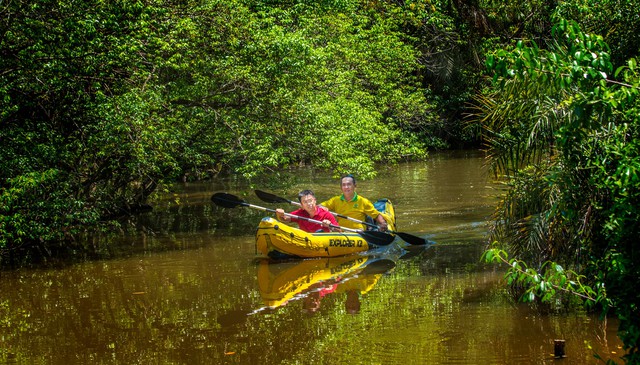
Mangrove forest tourism. Photo: Supplied
Vice-chairman of the Ho Chi Minh City People's Committee Bui Minh Thanh announced the development orientation at the the 13th Annual Meeting of the World Network of Island and Coastal Biosphere Reserves (WNICBR), hosted by the city on Friday.
The event was held under the theme 'Balancing Urban Development and Environmental Sustainability in Island and Coastal Biosphere Reserves.'
Can Gio biosphere reserve an invaluable asset
Vice-chairman Thanh said climate change, rising sea levels, biodiversity loss, and urbanization were creating growing challenges worldwide.
"In this context, we need a new development approach in which nature conservation does not stand in opposition to economic growth but instead becomes the foundation for sustainable prosperity," he said.
World biosphere reserves provide models for integrating human activities with nature conservation through scientific research, governance policies, and community participation.
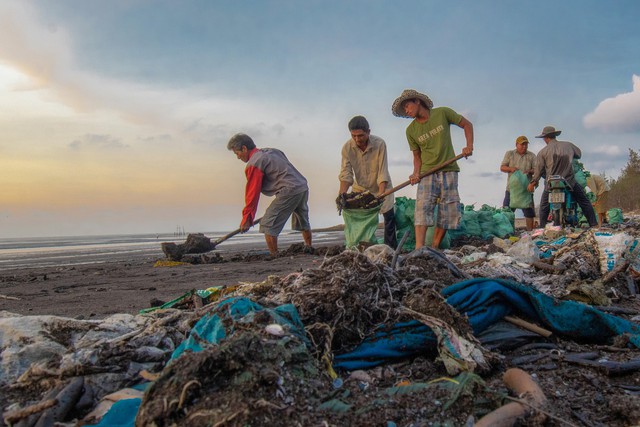
Plastic waste cleanup along the Can Gio coast. Photo: Supplied
Following its expansion last year, Ho Chi Minh City covers more than 6,700 square kilometers and has a population of over 14 million, he said.
The expanded development space creates opportunities for economic, urban and marine economic growth while increasing the city's responsibility for environmental protection and ecosystem conservation.
UNESCO recognized the Can Gio Mangrove Biosphere Reserve in 2000, making it an important natural asset of Ho Chi Minh City.
The city aims to develop Can Gio into a green, smart and environmentally friendly coastal urban area, combining ecosystem conservation with ecotourism development and improvements in residents' quality of life.
"The value of a modern city lies not only in the structures it builds but also in the natural assets it preserves for future generations," he said.
He also reaffirmed the city's commitment to not sacrificing the environment for economic growth, saying nature conservation would serve as the foundation for a green, responsible and sustainable development model.
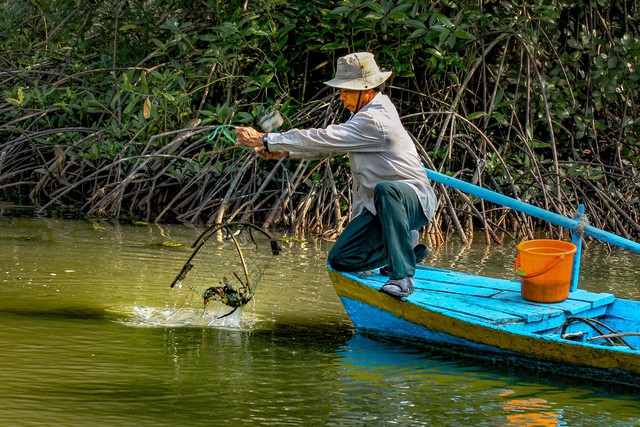
Seafood fishing activities in the Can Gio Mangrove Biosphere Reserve. Photo: Supplied
Coastal areas face mounting development pressure
Jonathan Wallace Baker, UNESCO representative to Vietnam, said Can Gio was a significant location for the event.
He said volunteers began replanting mangrove forests in the area in the late 1970s, after much of the forest had been severely damaged during the war.
Mangrove seeds were brought from Ca Mau Province in southern Vietnam for the replanting efforts, and Can Gio became Vietnam's first UNESCO-recognized biosphere reserve several decades later, ahead of Ca Mau.
Vietnam now has 12 biosphere reserves, the second-highest number in Southeast Asia.
Seven of the 12 reserves are located in coastal or island areas, reflecting their importance to the country.
UNESCO has cooperated with biosphere reserves in Cu Lao Cham and Cat Ba Islands in central and northern Vietnam, respectively, and Can Gio in Ho Chi Minh City on projects addressing marine litter and ocean education, Baker said.
He said UNESCO was ready to continue supporting the network.
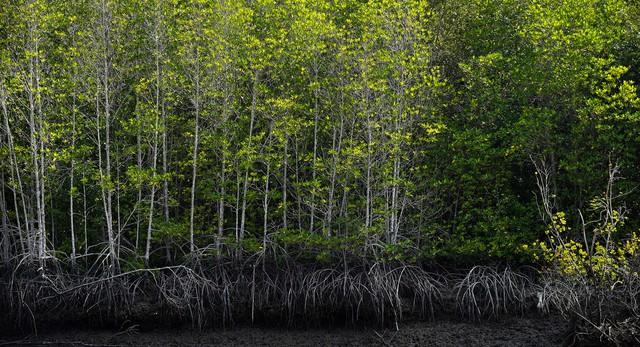
Typical mangrove forests in Can Gio. Photo: Supplied
Duong Thanh An, deputy director of the Department of Nature Conservation and Biodiversity under the Ministry of Agriculture and Environment, said coastal and island areas were particularly important.
"These areas face enormous development demand and pressure from various industries and sectors," An said.
From an ecosystem and environmental perspective, coastal areas hold diverse and highly important values, linking land and sea. As a result, they are among the areas experiencing the most intense development pressure and facing the greatest management requirements and challenges, he added.
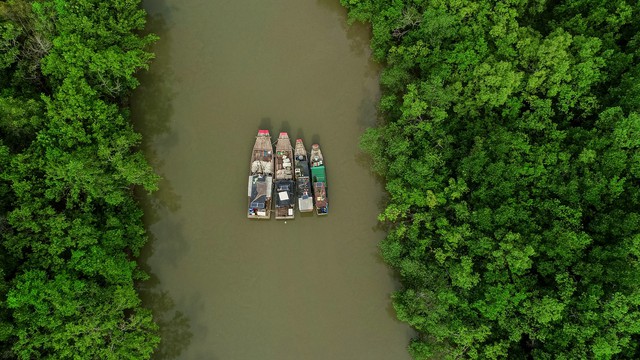
The Can Gio Mangrove Biosphere Reserve, recognized by UNESCO in 2000. Photo: Supplied
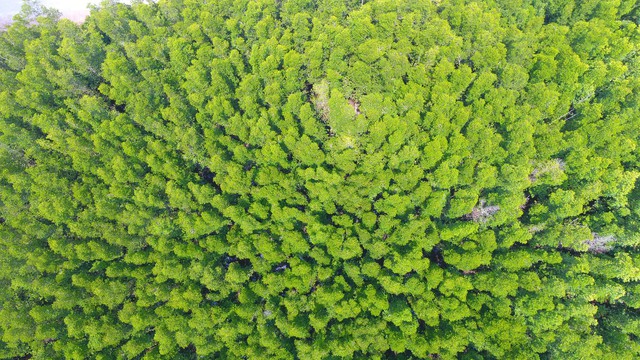
Lush green mangrove forests in Can Gio. Photo: Supplied
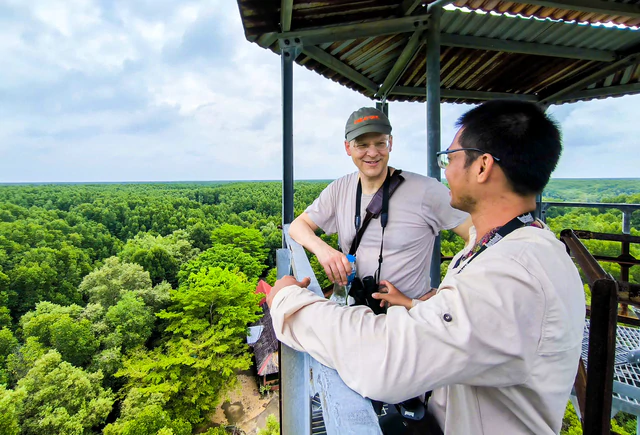
Foreign tourists visit Can Gio. Photo: Le Phan / Tuoi Tre
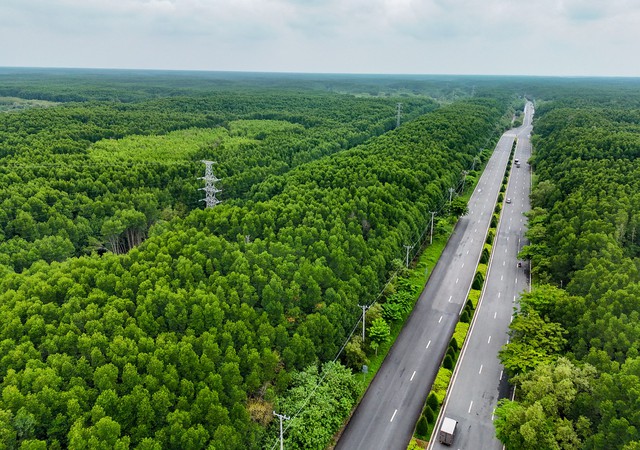
Rung Sac Road runs through the Can Gio mangrove forest. Photo: Le Phan / Tuoi Tre
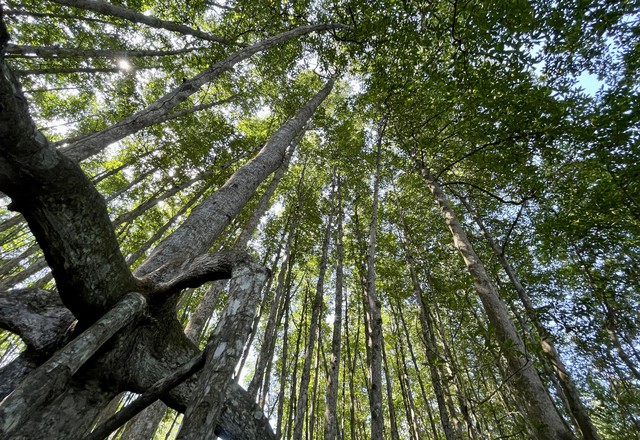
Mangrove forests have recovered extensively since the war. Photo: Le Phan / Tuoi Tre
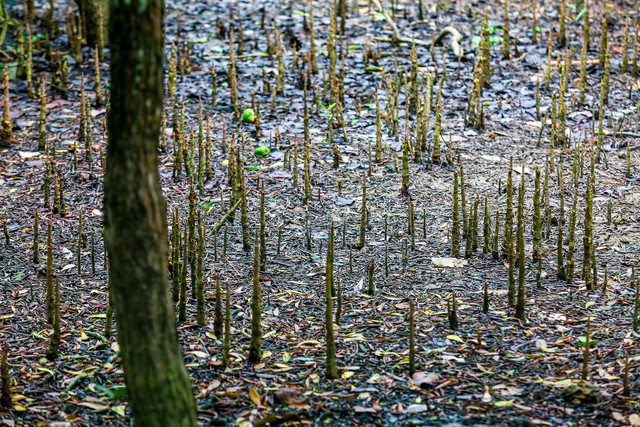
Mangrove seeds were brought from Ca Mau to replant forests destroyed during the war. Photo: Le Phan / Tuoi Tre
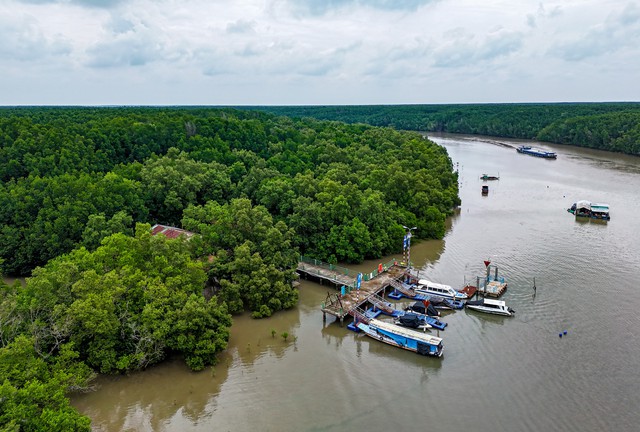
A winding river runs through the mangrove forest. Photo: Le Phan / Tuoi Tre
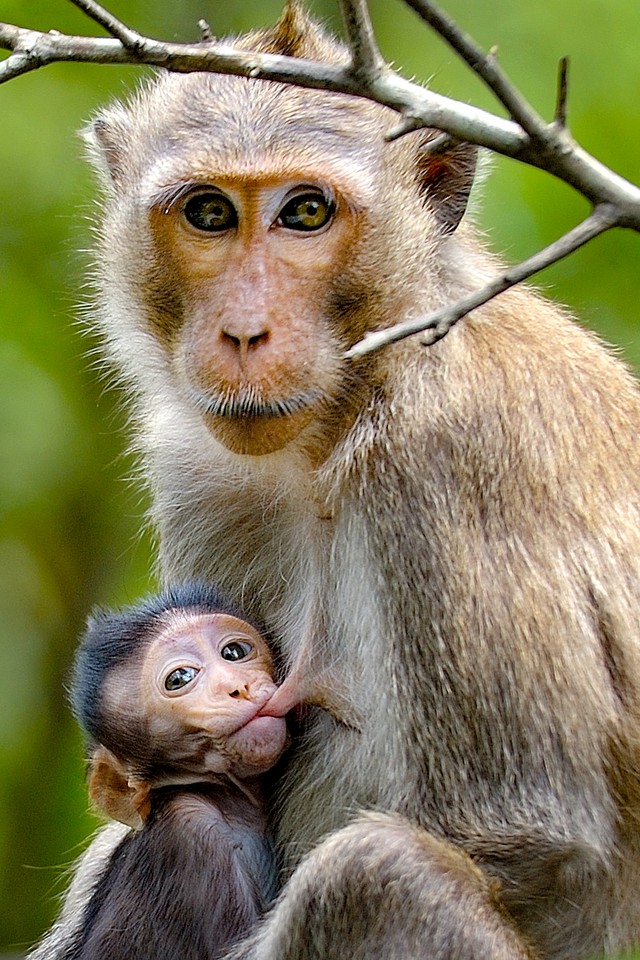
Ho Chi Minh City recognizes its greater responsibility for environmental protection and natural ecosystem conservation. Photo: Supplied
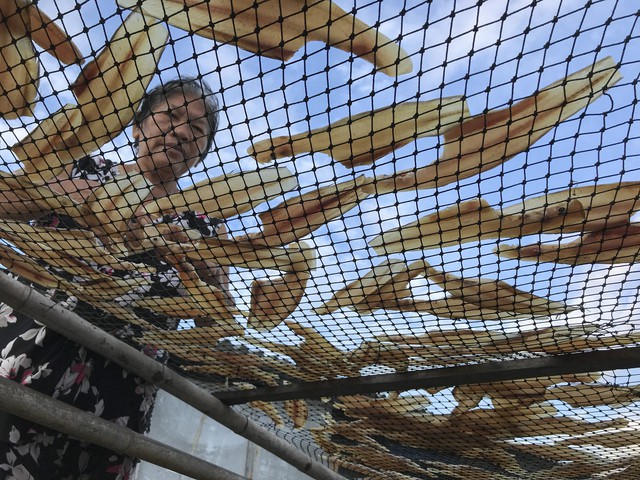
Local residents dry seafood. Photo: Supplied


Max: 1500 characters
There are no comments yet. Be the first to comment.