


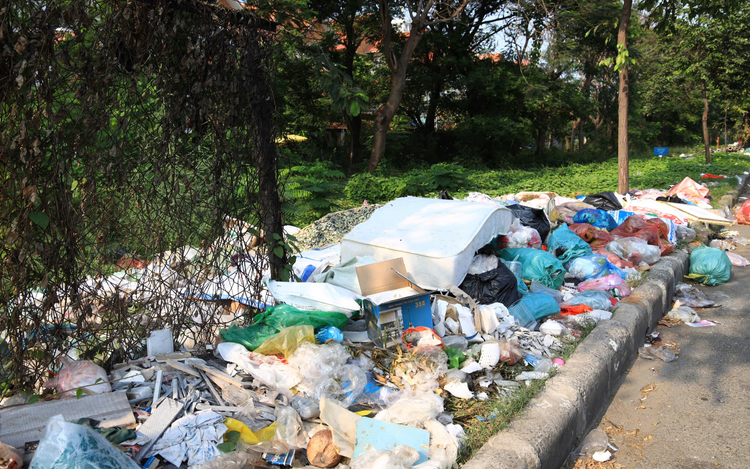
Garbage piles up along a road in Ho Chi Minh City. Photo: Tuoi Tre
Among them are 86 locations that had been cleaned up but subsequently became polluted again and 21 sites where waste has yet to be collected and treated.
Waste is mainly found on vacant land far from residential areas, along canals and waterways, and at construction project sites, according to the municipal Department of Agriculture and Environment.
Much of it consists of construction debris illegally dumped by people taking advantage of secluded locations.
Several communes and wards have installed security cameras to identify and penalize offenders.
In Binh Chanh Commune, authorities fined two people VND1.5 million (US$58) each for illegal dumping in April.
The commune also used camera footage to identify and penalize five additional violations, imposing a total of VND7.5 million ($290) in fines.
In Tan My Ward, surveillance cameras helped authorities identify a truck driver who illegally dumped waste.
The driver was fined VND1.5 million and ordered to collect all the waste deposited at the site.
The department said it would strengthen surveillance camera coverage, increase patrols and inspections, and review areas at risk of becoming new illegal dumping sites.
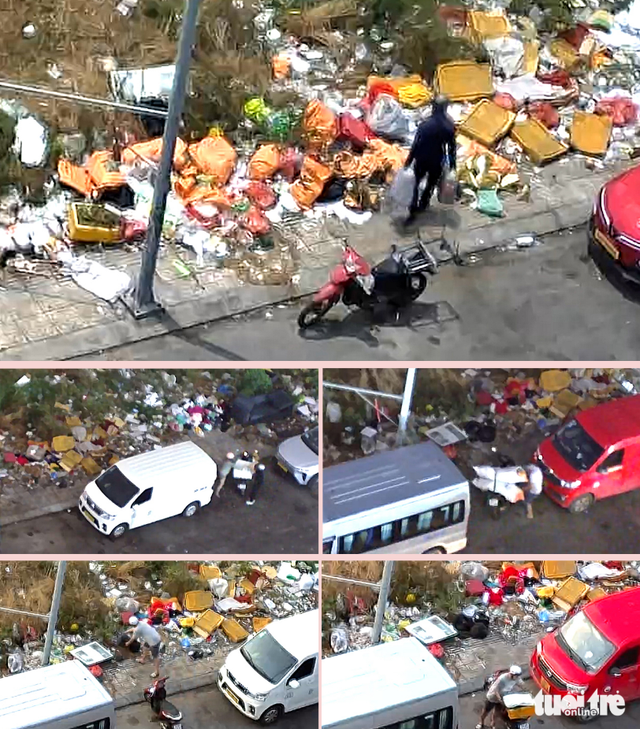
An image taken from a clip shows people illegally dumping along a street in Ho Chi Minh City.
Ho Chi Minh City faces mounting waste management pressure
Following its merger with Binh Duong and Ba Ria-Vung Tau Provinces under the national strategy in July last year, the new Ho Chi Minh City generates some 14,000 metric tons of domestic waste every day.
The former Ho Chi Minh City area accounts for 10,500 metric tons, while the erstwhile Binh Duong Province contributes 2,400 metric tons and the former Ba Ria-Vung Tau 1,100 metric tons, local media reported.
With its population approaching 14 million, the expanded city is under growing pressure to manage this enormous volume of waste, which accounts for nearly 20 percent of Vietnam’s total daily waste generation.
The city has set a target of treating more than 90 percent of domestic waste using advanced technologies by 2030, including waste-to-energy incineration, rather than relying on landfills.
Eight waste-to-energy projects currently being developed are central to the city’s plan to modernize waste treatment.
Under the proposed timeline, three projects are expected to begin operations in 2026, with the overall processing capacity targeted to exceed 13,000 metric tons per day.
The transition from landfilling to waste-to-energy technology is intended not only to reduce environmental pollution but also to promote a circular economy by converting waste into a useful energy resource.
The initiative could also contribute to national energy security while helping reduce the amount of waste sent to landfills.








Max: 1500 characters
There are no comments yet. Be the first to comment.