



The services sector made the largest contribution to Ho Chi Minh City’s economic growth, expanding 9.95 percent in January-September 2026. Photo: Cong Trieu / Tuoi Tre
The city’s GRDP grew 9.86 percent in the third quarter, marking its highest quarterly growth in a decade.
The services sector made the largest contribution to the expansion, growing 9.95 percent and accounting for 51.9 percent of overall growth. Industry and construction expanded 10.17 percent, while agriculture, forestry and fisheries grew 3.4 percent.
Economist Tran Hoang Ngan, a National Assembly deputy and a lecturer at Saigon University, told Tuoi Tre (Youth) online newspaper on Thursday morning that the result represented a significant breakthrough amid global economic difficulties, uncertainty and an energy crisis.
The fact that half of localities nationwide recorded growth of more than 10 percent in the third quarter showed that the target of double-digit growth was achievable, Ngan said.
He added that the result would provide important momentum and confidence for Ho Chi Minh City to pursue average annual growth of more than 10 percent in the 2026-30 period.
Ngan identified two key factors behind the city’s improved performance over the past nine months.
First, he attributed the result to persistent proposals for solutions and timely institutional reforms by the National Assembly, while Ho Chi Minh City has resolved obstacles facing 669 of 1,338 stalled projects, or 50 percent.
This has helped unlock huge investment that was previously tied up and return thousands of hectares of land to economic use, while addressing bad debts, reducing environmental pollution and strengthening investor and foreign direct investment confidence, he said.
Second, the city recorded public investment disbursement of more than 70 percent of its annual target in the nine-month period for the first time.
The public investment has helped trigger a number of infrastructure projects and urban railway projects under build-transfer and public-private partnership models, as well as the use of surplus public assets for healthcare and education, Ngan said.
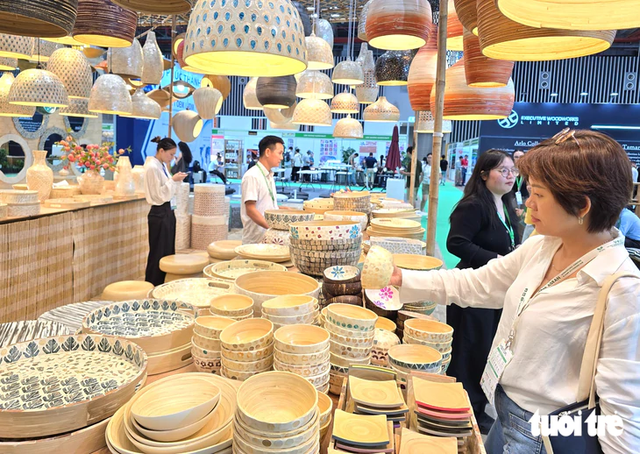
Consumer stimulus is among the measures to boost Ho Chi Minh City’s economic growth. Photo: Cong Trieu / Tuoi Tre
To achieve its fourth-quarter growth target — with the city aiming for growth of 11 percent or more than 13 percent to meet its full-year plan — Ngan proposed the city should improve productivity through science and technology, innovation, digital transformation and green transformation.
The city should make full use of the Law on Urban Development, which has taken effect and includes more than 37 special provisions for Ho Chi Minh City as a special urban area.
Ngan said the law not only provides greater decentralization and delegation of authority to the municipal People’s Council, People’s Committee and chairman of the People’s Committee, but also allows Ho Chi Minh City to pilot new mechanisms and policies that differ from National Assembly laws and resolutions or address issues not yet covered by legislation.
The city is also allowed to increase its staffing by 20 percent, he said, adding that it should ensure qualified personnel are assigned to key positions in urban management, economy, healthcare, education and environment.
He also urged the city to activate new growth drivers by making full use of its enhanced institutional mechanisms to accelerate key projects, including the International Financial Center, a free trade zone, marine economic development, logistics centers, a non-tariff area, and cultural, entertainment and service industry centers.
Ngan proposed establishing mobile task forces to support businesses and address capital-related problems.
Municipal leaders should form teams that go directly to businesses and project sites to listen to their concerns and resolve obstacles instead of waiting for reports, he said.
The city should also soon organize thematic meetings connecting businesses and banks to address capital shortages and relatively high interest rates, Ngan added.
Economic growth should be linked to people’s quality of life, according to Ngan.
“Economic growth only truly matters when people’s lives improve,” Ngan said, emphasizing the need to tackle pressing infrastructure problems affecting residents, including flooding, traffic congestion, environmental pollution and a shortage of healthcare facilities.

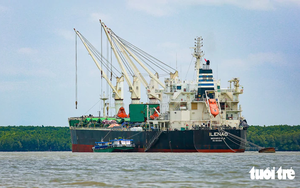
Ho Chi Minh City attracted $17.2 billion in FDI in January-September 2026. Photo: Cong Trieu / Tuoi Tre
Boosting public investment, FDI disbursement, consumption
Nguyen Duy Quang, an economist specializing in public policy at the Ho Chi Minh City University of Economics and Finance, told Tuoi Tre that the city should focus on three major areas to achieve its 2026 double-digit growth target.
First, Ho Chi Minh City should accelerate public investment disbursement and remove obstacles facing projects, with the goal of disbursing 100 percent of its VND147.599 trillion ($5.6 billion) public investment allocation.
Inter-agency coordination is needed to quickly resolve bottlenecks affecting projects, with priority given to transport infrastructure, social housing, digital transformation and urban development projects under the new Law on Urban Development, Quang said.
Second, the city should speed up the deployment of FDI and private capital into actual production and business activities.
It should shift its focus from attracting FDI to promoting substantive disbursement, working directly with strategic investors to deploy VND171.727 trillion ($6.5 billion) in FDI for ongoing projects, he said.
The city should also streamline procedures for private businesses, particularly in manufacturing, services, logistics and exports.
Third, Ho Chi Minh City should stimulate consumption and promote tourism, trade, exports and production credit.
Consumer stimulus programs and festivals, international tourism development, growth in retail sales and services, and credit support for export-oriented manufacturers should be implemented in a coordinated manner, Quang said.
At the same time, the city needs to control prices, ensure social welfare and maintain a stable investment environment.
Coordinating public investment, private investment, FDI and domestic consumption will be key to helping Ho Chi Minh City accelerate toward its targets for economic growth, state budget revenue and capital disbursement in the final quarter of the year, he said.








Max: 1500 characters
There are no comments yet. Be the first to comment.