


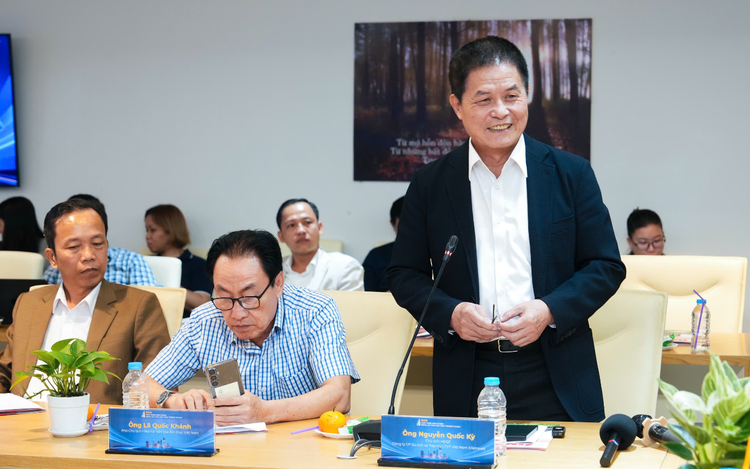
Nguyen Quoc Ky, president of the Vietnam Culinary Culture Association and chairman of Vietravel, speaks at a thematic seminar titled 'Nighttime Economy: Driving Growth in Ho Chi Minh City,’ March 25, 2026. Photo: Huu Hanh / Tuoi Tre
Nguyen Quoc Ky, president of the Vietnam Culinary Culture Association and chairman of Vietravel, likened the current approach in many localities to ‘blind men feeling an elephant’ – a metaphor for piecemeal development lacking an overarching philosophy.
“The issue is not whether we act quickly or slowly, but whether we act correctly and with depth,” Ky said.
He noted that while the concept of a nighttime economy, typically defined as activities between 6:00 pm and 6:00 am, has been discussed for over a decade, implementation has lagged.
According to Ky, the foundation of any successful nighttime economy lies not in the number of services offered, but in cultural identity.
“If Ho Chi Minh City cannot clearly define its cultural ‘identity card,’ it risks doing a bit of everything without leaving a lasting impression,” he said.
The city needs a clear cultural identity, especially after it was expanded by merging the old city with Binh Duong and Ba Ria-Vung Tau Provinces in July last year.
Ky proposed three guiding pillars for development, including interaction, movement, and openness that are expected to reflect the city’s multicultural dynamism, adaptability, and creative spirit.
Crucially, he stressed a shift from selling services to delivering meaningful experiences.
“If the experience is not compelling, why would visitors spend money?” he asked.
High-quality products, storytelling, and emotional engagement must underpin any nighttime offering.
Digital transformation also plays a vital role.
Integrating data on food, destinations, events, and travel routes into accessible digital platforms would enable residents and tourists to navigate offerings more easily and tailor experiences to their preferences.
Looking ahead, Ky suggested a ‘multi-core night city’ model, where activities are distributed across several interconnected hubs instead of being concentrated in the central area.
Such an approach could extend visitor stays, increase spending, and distribute economic benefits more evenly.
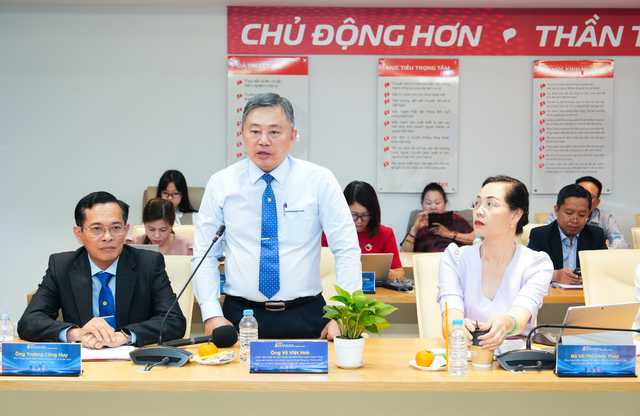
Vo Viet Hoa from Saigontourist speaks at a thematic seminar titled 'Nighttime Economy: Driving Growth in Ho Chi Minh City,’ March 25, 2026. Photo: Huu Hanh / Tuoi Tre
Vo Viet Hoa, director of the outbound tourism division of Saigontourist, echoed these concerns, describing the nighttime economy as the ‘missing link’ in the city’s tourism product ecosystem.
However, he warned that simply replicating models from cities like Bangkok would not suffice.
Ho Chi Minh City’s urban culture, its fast-paced lifestyle, openness, and diversity are valuable raw materials, Hoa said.
However, these elements remain scattered and lack intentional linkage into cohesive experience chains, he noted.
Expansion and increased connectivity with the old Binh Duong and Ba Ria-Vung Tau Provinces present both an opportunity and a challenge.
While the expansion could enable more diverse, large-scale tourism products, infrastructure bottlenecks, and travel time constraints continue to hinder seamless tour design.
“In tourism, timing is critical," Hoa noted.
“A single weak link in transport can disrupt an entire itinerary."
He explained why many tour operators still develop products in isolated zones rather than interconnected routes.
One underutilized asset is the city’s extensive river system and waterfront spaces, which could support unique nighttime experiences combining dining, cultural performances, shopping, and sightseeing.
Such developments could also ease pressure on the urban core, provided they are backed by proper planning and inter-agency coordination.
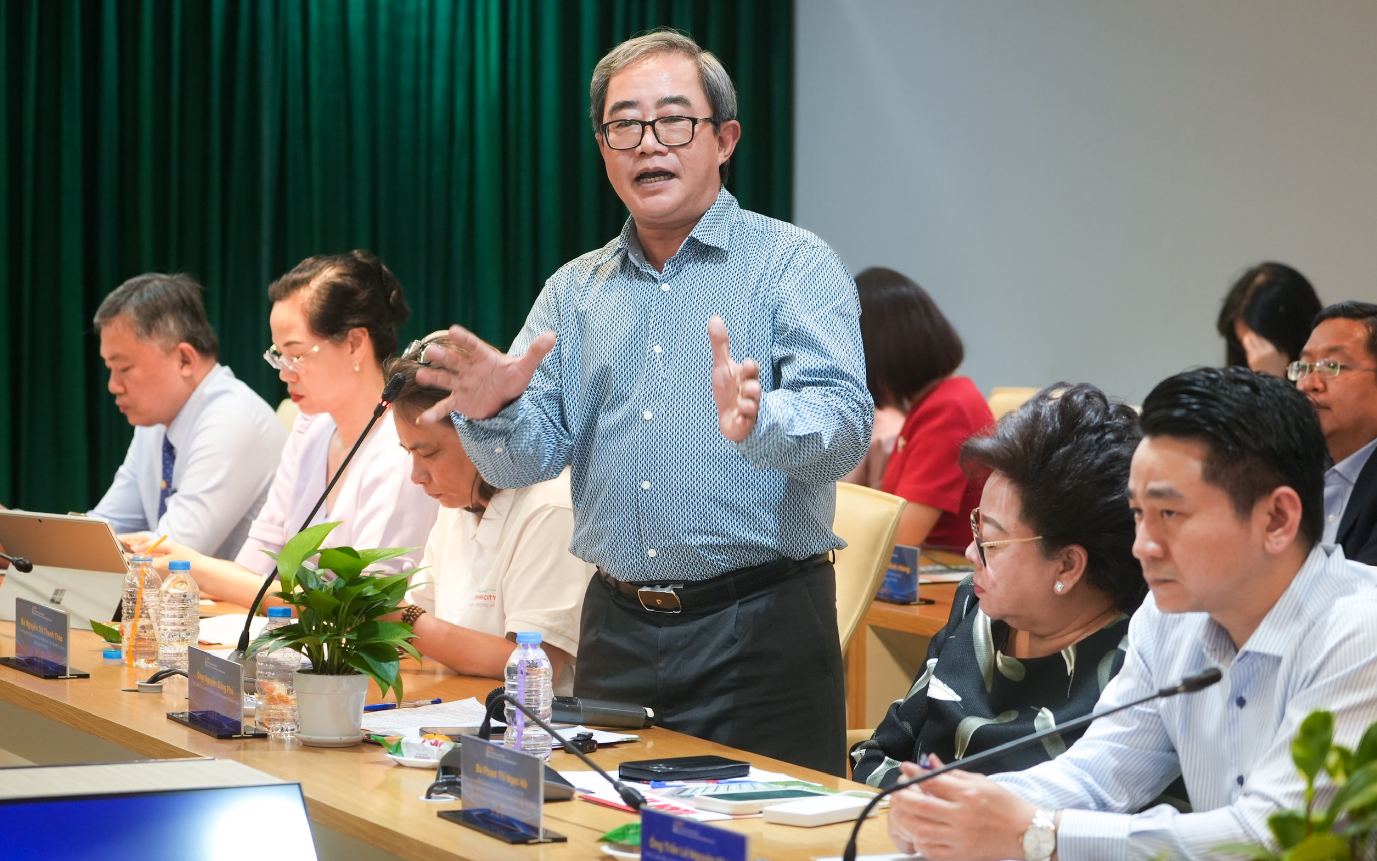
From a market perspective, the Saigontourist representatives recommended a dual-track strategy covering high-end offerings targeting business travelers and MICE segments, and mass-market experiences rooted in everyday local culture such as street food, sidewalk dining, and night strolling.
However, the latter presents significant management challenges, particularly in ensuring public order, safety, and regulatory compliance.
These concerns partly explain why most night tours currently conclude around 10:00 or 11:00 pm, rather than extending into full overnight experiences.
Ultimately, industry leaders agreed that Ho Chi Minh City should build a comprehensive master plan that prioritizes connectivity, clusters attractions into coherent zones, and delivers distinctive, high-quality experiences.
Only then can the city transform its nighttime economy into a true growth engine – one capable of leaving visitors with a memorable impression that cannot be replicated elsewhere.
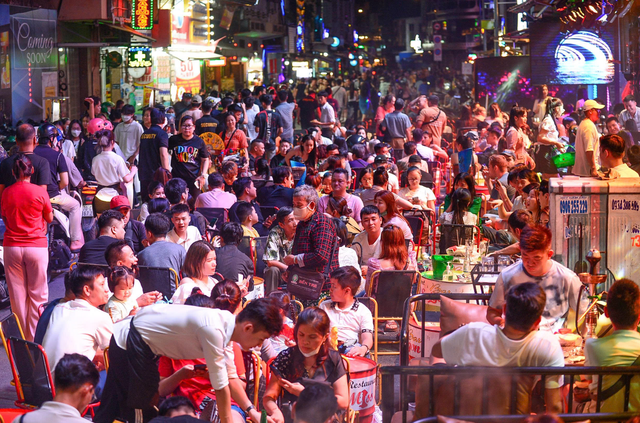
Ho Chi Minh City lacks a master plan for nighttime economy growth, according to several firms. Photo: Quang Dinh / Tuoi Tre
Nighttime Economy: Driving growth in Ho Chi Minh City
To identify bottlenecks and unlock resources for the nighttime economy, Tuoi Tre (Youth) newspaper and the Ho Chi Minh City Food Association co-hosted a thematic seminar titled 'Nighttime Economy: Driving Growth in Ho Chi Minh City' on Wednesday in Ho Chi Minh City.
The event was held as the city is drafting a special urban law and a resolution on specific policy mechanisms, creating opportunities for the city to proactively plan, attract investment, and develop its evening economy.
The seminar brought together government officials, policymakers, leading economists, the Ho Chi Minh City Food Association, and representatives of major companies such as Saigontourist Group, Vietravel, Satra, and Viettel.
Discussions focused on spatial planning, diversifying culturally distinctive arts and entertainment products, and gathering direct feedback from businesses on policies for developing the nighttime economy.
The event was expected to showcase successful international models and propose effective pilot roadmaps, helping position the nighttime economy as a new growth engine for the city.









Max: 1500 characters
There are no comments yet. Be the first to comment.