



Robusta coffee can exhibit aromatic notes and sweetness alongside its characteristic bitterness. Photo: Anh Phi
When mentioning high-quality coffee, many immediately think of Arabica.
Robusta, by contrast, is often associated with a different image: large-scale production, pronounced bitterness, high caffeine content, and use primarily in instant coffee or blends to add body and crema to espresso.
That perception is not wrong, but it is incomplete.
In reality, several lots of Robusta coffee have remarkable aroma, sweetness, cleanliness, and sensory structure.
In recent years, the coffee industry has developed dedicated approaches to identify and evaluate high-quality Robusta lots.
One of the most important concepts is Fine Robusta.

Robusta is a coffee species, while Fine Robusta is a quality classification. Photo: Anh Phi
Simply, Fine Robusta is Robusta coffee produced and assessed at a high level of quality.
That quality is not determined merely by attractive or large beans.
It must be evident throughout the chain, from the green bean and processing to the final cup.
It is important to distinguish between Robusta as a type of coffee and Fine Robusta as a quality classification.
A classification requires a defined set of criteria and must be established, assessed, and recognized by qualified professionals.
The concept of Fine Robusta is shaped in particular by the Q Robusta system developed by the Coffee Quality Institute in collaboration with the Uganda Coffee Development Authority.
The system was designed specifically to evaluate high-quality Robusta coffee, covering green beans, physical defects, roasted beans, and drinking quality.
Samples must undergo rigorous assessment and meet specific requirements, including a sensory threshold of 80 points.
This is a professional coffee-industry assessment system, not a legally binding standard.
Today, professional evaluation is increasingly moving toward a newer approach – Coffee Value Assessment, developed by the Specialty Coffee Association – rather than relying solely on a single composite score.
However, regardless of the systems used, Fine Robusta cannot be created in a cupping room.
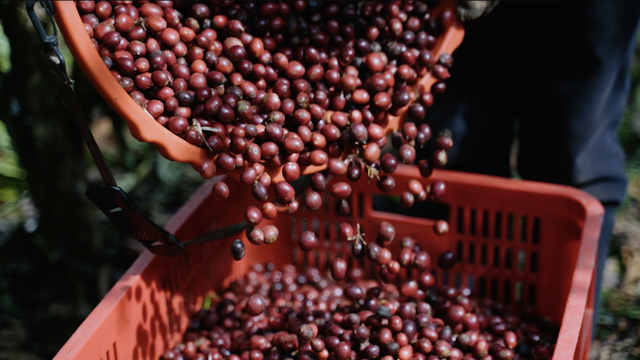
Harvesting ripe cherries and carefully sorting them is the first step toward improving Fine Robusta quality. Photo: Binh Dong Farm
From farm to cup
The process of creating Fine Robusta can be understood through four factors: Farm, Improvement, Natural Integrity, and Expression.
This is a way of illustrating the entire chain through which the quality of a Robusta lot is created.
It begins on the farm.
No post-harvest process can turn poor raw material into exceptional coffee, so the first requirement is potential.
Plant varieties, genetic material, soil, altitude, temperature, rainfall, sunlight, and farm management can all affect fruit development and the chemical composition of the beans.
Vietnam has a significant advantage, particularly in the Central Highlands, where ecological conditions are well suited to Robusta coffee and where large production areas have been established through decades of cultivation experience.
In other words, Vietnam does not lack the raw material or the conditions needed to develop Fine Robusta.
The challenge is to turn the advantage of scale into an advantage in quality.
It means not simply producing more metric tons of coffee, but ensuring that an increasing share of those metric tons achieves high, consistent quality and generates greater value.
If the farm creates potential, improvement is aimed at turning that potential into quality.
For Vietnamese Robusta coffee, one of the biggest bottlenecks lies in harvesting.
Many farmers still harvest green, ripe and overripe cherries together.
This approach is suited to the goal of ‘harvesting volume,’ whereas Fine Robusta requires a different mindset that is ‘harvesting quality.’
Increasing the proportion of ripe cherries, reducing the amount of green fruit and sorting carefully from the outset can make a significant difference to the final quality.
After harvesting comes processing.
In Vietnam, the natural method – drying whole cherries – remains the most common, alongside the honey process, a hybrid technique that combines elements of both dry and wet processing methods, and several other methods.
With the natural process, effective drying management is critical.
Coffee cherries should not be piled too deeply or spread too thickly, where heat and moisture can become trapped.
Instead, they should be spread in a thin layer on a clean concrete patio, clean tarpaulin, or, preferably, drying beds, while being turned regularly and monitored throughout the moisture-loss process.
Once these fundamentals are properly managed, producers can begin considering more advanced processing techniques.
Fine Robusta, therefore, does not begin with complex technology.
It begins with continuous improvement of familiar processes.
After processing, coffee remains vulnerable to moisture, temperature, light, odors and its surrounding environment.
Therefore, storage is not a secondary step.
Coffee must be dried to an appropriate moisture level and stored in a stable environment, protected from humidity, high temperatures, light and foreign odors.
Packaging, warehouse conditions, stacking methods, storage duration and transportation can all affect quality.
This is the essence of ‘Natural Integrity:’ once good raw material has been produced, that quality must be preserved.
If the farm creates potential and improvement creates quality, this stage ensures that quality is not lost along the way.
The final element is Expression – the way the raw material expresses itself in the cup.
Expression is also about how the inherent characteristics of the bean are revealed and experienced.
Roast level, grind size, brewing method and serving style can each either highlight or obscure the qualities of a Fine Robusta lot.
As such, the final stage is not simply about making a good cup of coffee.
It is about delivering the full story of the raw material to the person drinking it.
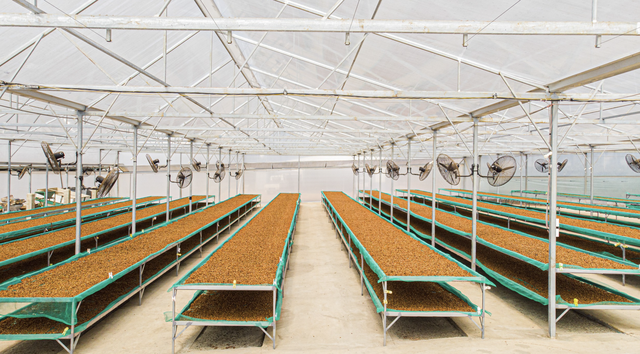
Drying beds help control the drying process and preserve coffee quality after processing. Photo: Binh Dong Farm
Why does Vietnam need Fine Robusta?
Vietnam has built a large-scale Robusta coffee industry, yet high production does not necessarily mean high value.
A product has two ways to increase revenue, including selling more tonnes and creating more value from each tonne.
In this context, Fine Robusta opens the door to the second approach.
Alongside the question, ‘How can we produce more coffee?,’ another question can be asked, ‘How can we create a higher-value product from the same area and the same volume of coffee?’
This is particularly important for farmers.
When coffee is traded simply as a commodity, the price difference between better and poorer lots is often not fully reflected in their value.
But when quality is clearly defined, controlled and traceable, producers have a basis for creating differentiated product segments.
Therefore, Fine Robusta is not merely a story for roasters or coffee drinkers.
It can become a common language connecting farmers, processors, exporters, roasters and consumers.
Vietnam already has the varieties, land, growing regions, farming experience and a large-scale Robusta industry.
The next step does not necessarily have to be a race for greater volume, but it can instead be about raising the quality of every tonne of coffee.
Fine Robusta is one way for the industry to measure, control and tell that story more clearly through the cup itself.









Max: 1500 characters
There are no comments yet. Be the first to comment.