


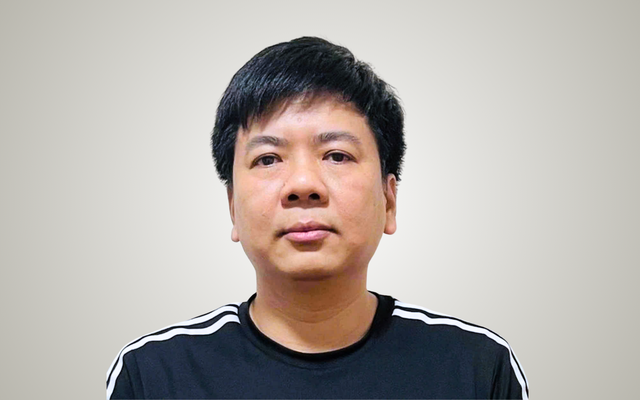
Shark Thuy at the investigation agency. Photo: Supplied
The Ministry of Public Security’s Investigation Police Agency has recently completed a supplementary investigation and recommended prosecution of Nguyen Ngoc Thuy, and 28 other defendants in a case involving Egroup, Egame, Nhat Tran Co., and related entities.
Nguyen Ngoc Thuy, founder and chairman of education group Egroup and the Apax Leaders English center chain, rose to prominence as an investor on 'Shark Tank Vietnam,' a Vietnamese reality investment show. He became widely known by his nickname 'Shark Thuy.'
According to the investigation conclusion, Thuy was identified as the mastermind and leader behind the alleged property appropriation fraud.
After recalculating the number of victims and the losses, investigators determined that more than 10,000 investors were victims and that more than VND8.459 trillion (US$325 million) was allegedly appropriated.
The figure is significantly higher than the more than VND7.677 trillion ($296 million) determined in the previous investigation conclusion.
Behind the more than $325 million allegedly taken from investors was a years-long capital-raising scheme by Shark Thuy, involving inflated charter capital, fabricated revenue, promotion of a large-scale education business ecosystem and promises to buy back shares to persuade people to invest.
Shark Thuy inflated Egroup's capital from $1.2 million to $38.5 million
According to the supplementary investigation conclusion, from 2014, amid a need for money to repay debts, cover personal expenses and maintain operations across the Egroup ecosystem, Thuy and the other defendants devised a plan to raise funds by selling fictitious shares to investors.
Thuy allegedly instructed Nguyen Manh Phu, Egroup’s chief financial officer and Egame’s chief accountant, and Pham Thi Thanh Tho, Egroup’s chief accountant, to inflate Egroup’s charter capital and share value from VND32 billion ($1.2 million) to VND962.5 billion ($38.5 million).
The group also allegedly fabricated revenue, accounting for about 70 percent of Egroup’s annual revenue, to portray the company as a profitable, diversified business and attract investors.
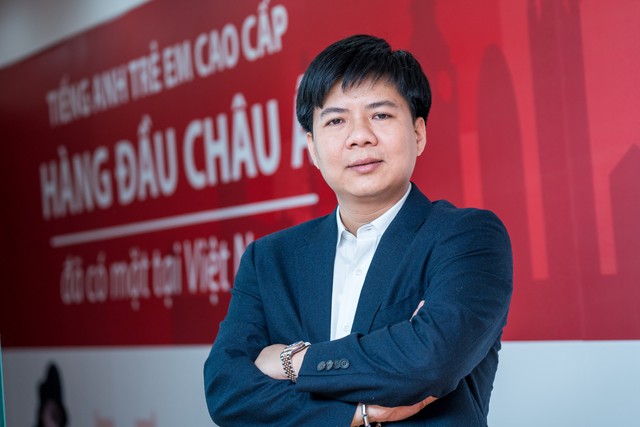
Shark Thuy used 130 English language centers and schools to attract investors.
Despite having no assets or financial capacity, Thuy allegedly instructed Apax English JSC and Igarten Education Development JSC to continuously lease premises and open 130 English language centers and Steame preschools nationwide.
The companies hired local and foreign teachers to provide instruction, generating public attention and attracting potential investors.
Sales staff were then trained to approach prospective investors and bring them to Egroup and Egame for site visits, where they could learn about the business model and were invited to sign share-purchase agreements.
According to the investigation conclusion, investors were told that investing in the education sector could generate stable annual returns of 15 to 20 percent.
After persuading customers to invest, Thuy signed share transfer agreements, liquidation records, and strategic cooperation agreements using standardized templates.
The documents stated that Thuy would transfer Egroup shares at VND38,000 ($1.46) per share and commit to buying them back one year later at VND42,000 ($1.62) per share.
To boost fundraising, Egame sales staff were offered commissions equal to 5 percent of the investment amount for bringing in investors, consisting of 2 percent in Egroup shares and 3 percent in cash.
Employees were encouraged to convert the cash portion into Egroup shares.
In the early stages, when the number of customers and investment amounts were still relatively small, and investment terms were short, Egame continued to repay principal and interest in full.
Investors were also given cash and gold as gifts on holidays and during the Lunar New Year break.
However, as time went on, repayment pressure increased while Egroup’s investment projects had yet to generate revenue, gradually pushing the company into financial difficulties.
70 percent of new funds paid to earlier investors
The supplementary investigation conclusion also found that from 2021 to 2023, the English language centers and preschools gradually closed, while the number of new customers declined and incoming funds were no longer sufficient to cover maturing contracts.
Against this backdrop, Thuy allegedly instructed 23 managers and team leaders overseeing 341 sales staff to continue raising funds.
When sales staff found new investors, 70 percent of the money raised was used to repay existing customers with outstanding balances under the same staff members’ management, while the remaining 30 percent was transferred to the company, according to the investigation conclusion.
Investigators determined that sales staff were instructed to provide false information about investment methods and business plans, promising high returns to persuade people to buy shares.
The money raised was not invested in education operations or used for its stated purpose.
Thuy allegedly instructed that 70 percent of the funds be used to repay principal and interest on earlier contracts to avoid detection.
The remainder was used to pay personal debts, including bank loans, other borrowings and rent, or transferred to companies controlled by Thuy or held in other people’s names to increase his ownership stake.
By the time the case was uncovered, investigators determined that Egroup and Egame had become financially imbalanced and were no longer able to repay investors.
Why did the amount rise to $325 million?
One notable development in the supplementary investigation was the recalculation of the number of victims and the total amount allegedly appropriated.
Previously, investigators determined that Thuy and his accomplices had allegedly appropriated more than VND7.677 trillion ($296 million).
However, the supplementary investigation identified 60 additional investors who had purchased 3.2 million shares but had not been formally recorded in the shareholder registry. They were subsequently identified as victims in the case.
After the recalculation, investigators determined that there were a total of 10,123 victims.
Of these, 8,938 still had outstanding principal balances totaling more than VND8.459 trillion ($326 million).
The remaining 1,185 investors also had outstanding principal balances according to their contracts, but the total principal and returns they had received exceeded the amount they had invested.
The difference was determined to be more than VND697 billion ($26.8 million).
Therefore, investigators did not consider Thuy liable for civil compensation in these 1,185 cases.
Based on these findings, the Ministry of Public Security’s Investigation Police Agency determined that Shark Thuy had allegedly appropriated more than VND8.459 trillion ($326 million) from more than 10,000 investors.




Max: 1500 characters
There are no comments yet. Be the first to comment.