


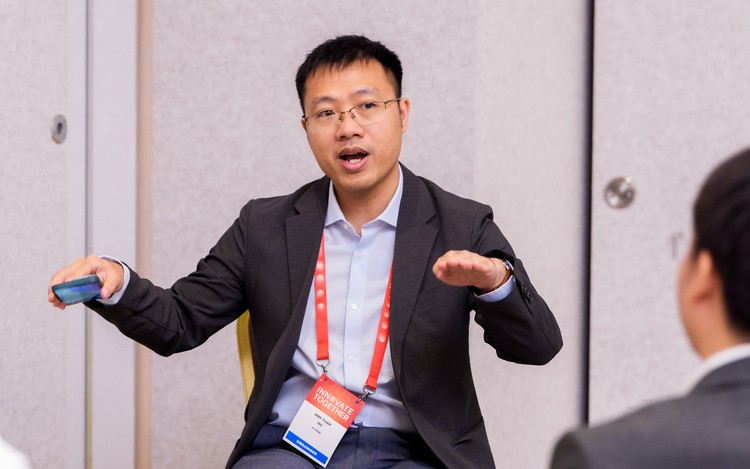
Dr. Do Anh Tuan, lead scientist at Singapore’s Agency for Science, Technology and Research (A*STAR), speaks in an interview with Tuoi Tre reporters in Singapore. Photo: A*STAR
With its semiconductor sector accounting for six percent of its GDP, Singapore offers valuable insights for regional peers.
Speaking to Tuoi Tre (Youth) online newspaper on the sidelines of Innovate Together 2026, Dr. Tuan of Singapore's Agency for Science, Technology and Research (A*STAR) shared these lessons to help Vietnam sustainably develop its own semiconductor industry.
Long-term policy commitment
Vietnam needs a 10- to 30-year strategy to develop semiconductor talent rather than focusing only on the next three to five years, Tuan said.
Technology trends such as artificial intelligence and memory chips may give countries only two to five years to build capabilities and join the global supply chain, but developing highly specialized talent takes much longer.
Vietnam has an advantage in this regard, with a young workforce, many of whom have strong science backgrounds and an interest in innovation, Tuan said.
Vietnam should therefore prepare for successive waves of technology by investing in human resources and selected areas of the semiconductor supply chain.
The supply chain is extremely deep and complex and heavily affected by geopolitical factors, Tuan said. Vietnam should avoid spreading its resources too thinly and instead focus on areas where it can develop strong capabilities.
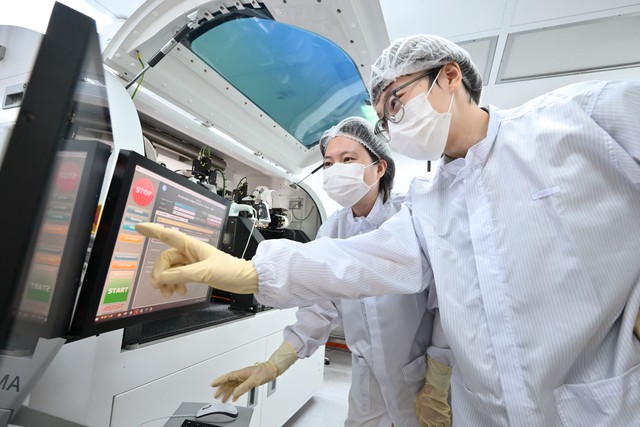
Semiconductor scientists conduct research using equipment worth millions of U.S. dollars in Singapore. Photo: A*STAR
Singapore's semiconductor industry also shows the importance of long-term government commitment.
Consistent investment and policies give semiconductor companies confidence to invest and expand, while close coordination among the government, universities and research institutions helps build a strong ecosystem, Tuan said.
The country’s experience also shows that developing semiconductor capabilities takes decades rather than just a few years.
"The key to success is long-term commitment, from policies to people," Tuan said.
Build an ecosystem, not just mega-factories
Singapore's semiconductor industry contributes about six percent of its GDP despite the absence of major chipmakers such as Samsung or Intel, according to Tuan.
After nearly six decades of development, Singapore's experience shows that building a semiconductor industry requires more than attracting large factories.
A*STAR, for example, serves as a bridge between university researchers, students and businesses, making it easier for companies to find research partners and develop technologies.
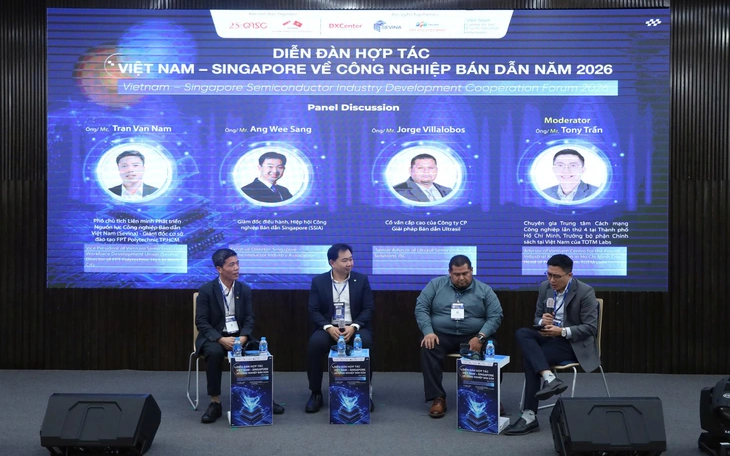
Vietnam should apply a similar approach by aligning government policies, corporate plans and university development strategies, Tuan said.
Major corporations should be encouraged to establish R&D centers and connect their researchers with university professors and students through research projects and internships.
This could help universities develop research strengths that meet both academic and industrial needs.
The Singapore Semiconductor Industry Association has been working with Vietnamese universities to share industry trends and employment needs and provide talented students with opportunities to study and work at leading semiconductor facilities and companies in Singapore, the association's executive director Ang Wee Seng told Tuoi Tre.
Vietnam also has experienced semiconductor-design personnel who have gained practical experience through foreign-invested companies, according to Ang.
IP protection and talent attraction
A transparent legal framework and strong intellectual property protection are important lessons from Singapore.
Its IP protection system meets strict U.S. and European standards, giving companies confidence to bring core technologies into research and development activities, Tuan said.
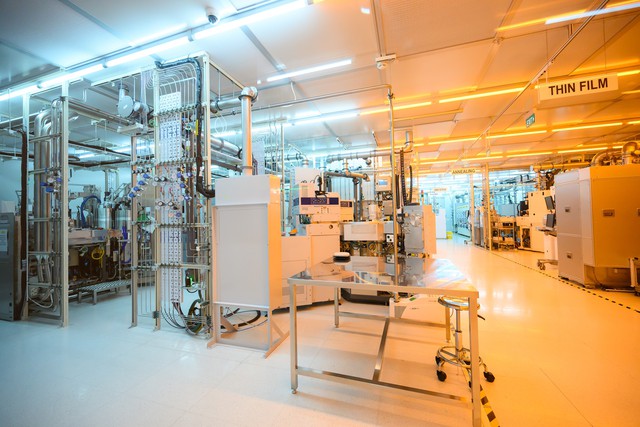
Inside a modern laboratory for semiconductor chip research in Singapore. Photo: A*STAR
For Vietnam, a strong and predictable framework for intellectual property and investment would be important in attracting companies with advanced technologies and encouraging higher-value R&D activities locally.
Singapore has also invested in attracting international talent to study, conduct research and develop semiconductor technologies, strengthening its research capabilities.
Vietnam should similarly create an environment that can retain domestic talent and attract leading researchers from abroad.
Open working environments, advanced facilities and clear career paths are important, while graduate students and PhD candidates need sufficient income and scholarships to focus on research, Tuan said.
Vietnam should also seek to attract international professors and scientists from the U.S., Europe, Japan and South Korea, rather than relying only on Vietnamese scientists living overseas.
Shared, strategic lab infrastructure
Modern laboratory infrastructure is another area where Vietnam can learn from Singapore.
Semiconductor equipment can cost tens of millions of U.S. dollars, while research budgets at Vietnamese universities remain limited, according to Tuan.
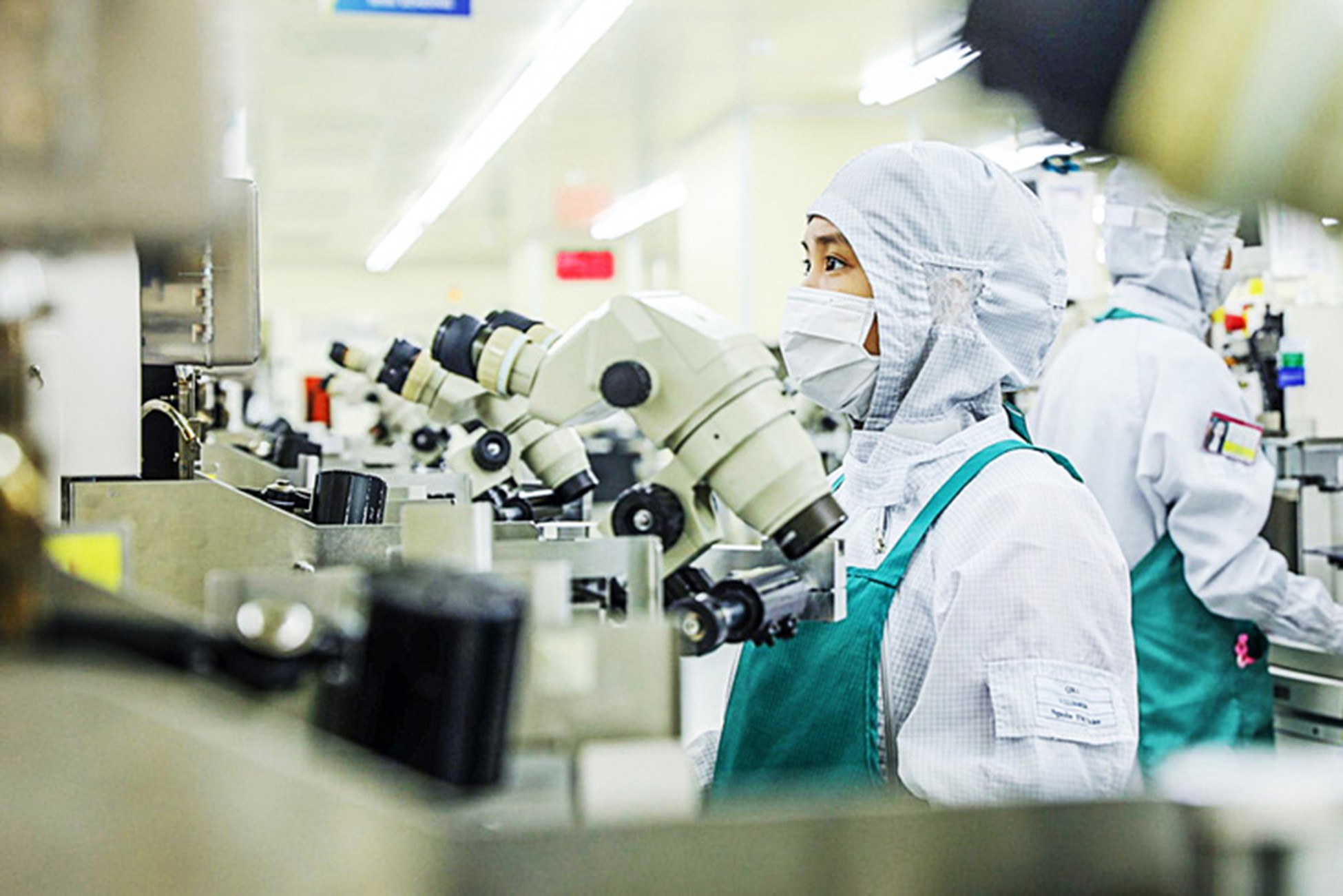
Singapore has addressed this challenge by developing facilities in stages, with each laboratory focusing on a specific strength and sharing its capabilities with other institutions.
Vietnamese universities could similarly work with businesses to jointly purchase equipment and install it in university laboratories for shared use, Tuan said.
Equipment should be selected based on technologies actually used by businesses, allowing students to gain practical experience before entering the workforce.
But buying equipment alone is not enough.
Vietnam also needs people capable of operating and maintaining advanced machines and using them for research and innovation, Tuan noted.
He added that Vietnamese engineers are not inferior to their counterparts in Singapore or other countries, with the biggest gap lying in infrastructure and laboratory systems.
Singapore, whose semiconductor industry employs around 35,000 highly skilled workers, currently accounts for about one-tenth of global chip output and one-fifth of worldwide semiconductor manufacturing equipment, Tuan said.
- REFERENCE MORE
- REFERENCE MORE
- REFERENCE MORE









Max: 1500 characters
There are no comments yet. Be the first to comment.