


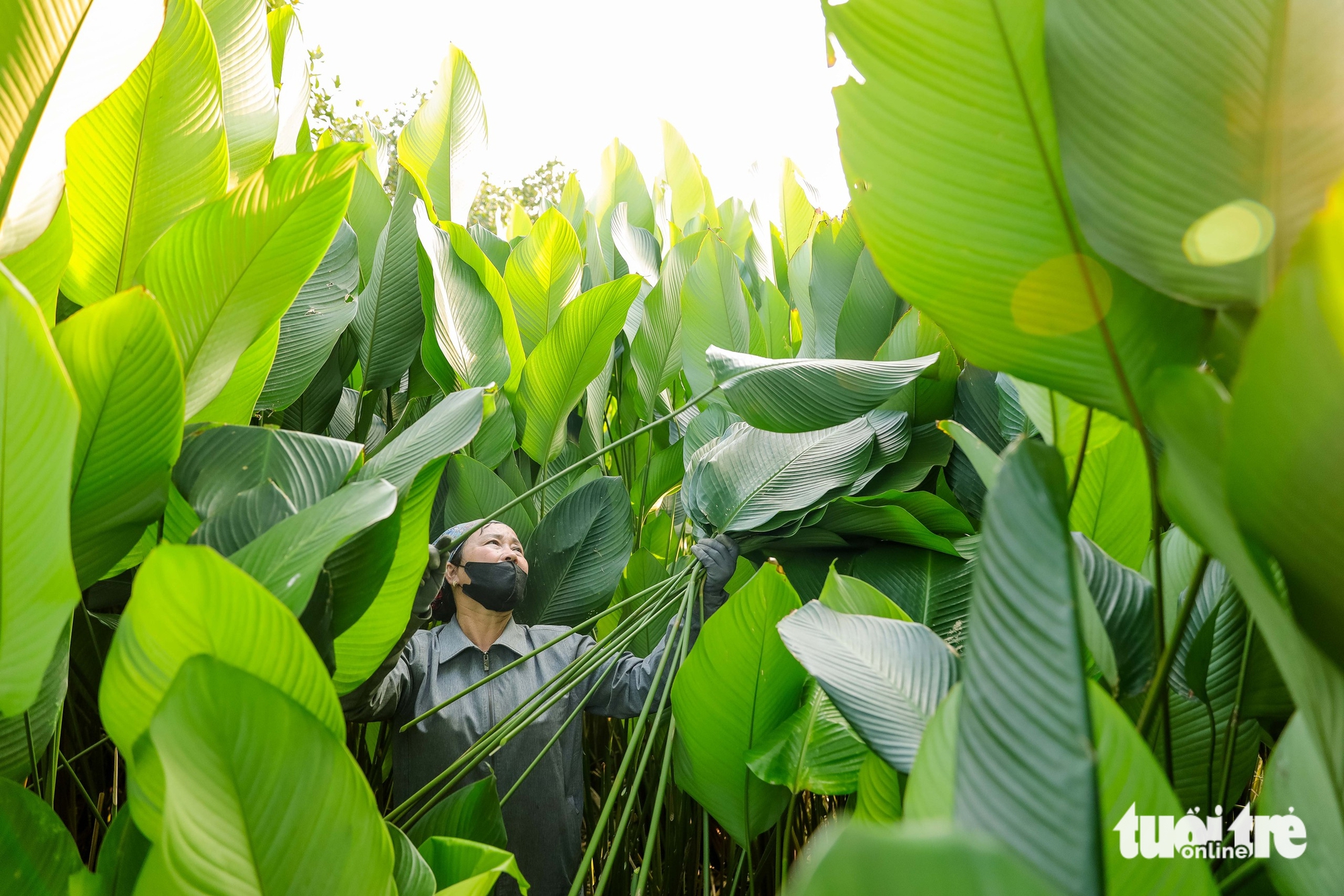
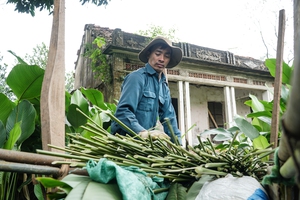
A farmer harvests ‘dong’ leaves in Trang Cat Village, Thanh Oai Commune, Hanoi ahead of the 2026 Lunar New Year. Photo: Danh Khang / Tuoi Tre
About 30 kilometers from central Hanoi, the small village in Thanh Oai Commune is known for its ‘dong’ leaves, broad, supple leaves that have wrapped Vietnam’s traditional ‘banh chung’ (square glutinous rice cakes) for generations and are an essential part of the Lunar New Year holiday, or Tet.
After the full moon of the 12th lunar month each year, farmers in Trang Cat begin harvesting the leaves, which carpet riverside fields like a living green mat.
The work intensifies in the final days before Tet, when traders arrive in convoys to collect bundles bound for markets across the country.
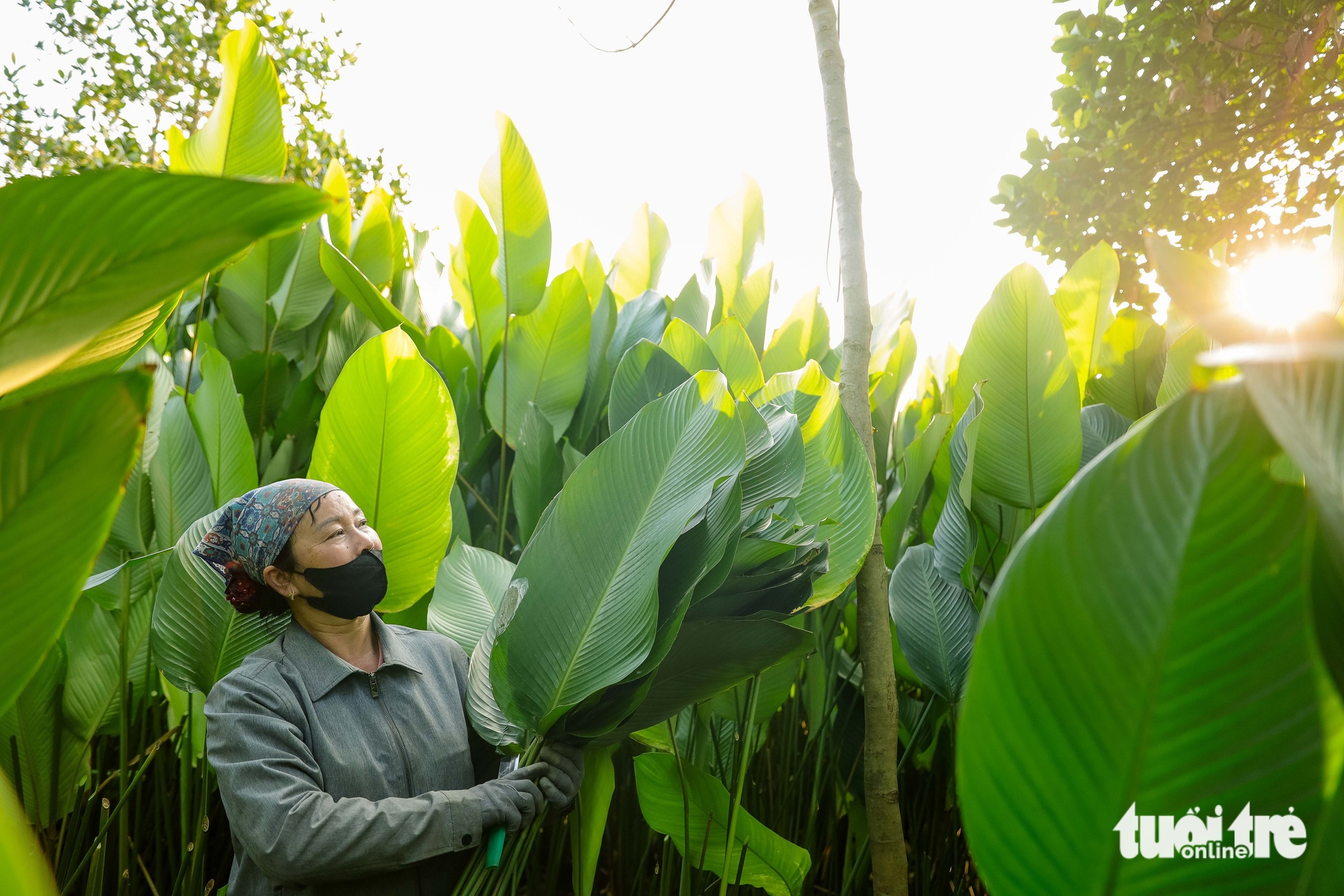
A farmer harvests ‘dong’ leaves in Trang Cat Village, Thanh Oai Commune, Hanoi ahead of the 2026 Lunar New Year. Photo: Danh Khang / Tuoi Tre
Nguyen Van Cuong, 60, who cultivates about 1,300 square meters of ‘dong’ leaves, said the harvest typically peaks between the 19th and 25th days of the 12th lunar month.
His family hires extra hands to keep up with orders.
“After cutting, the leaves are rinsed, sorted, and bundled, then stored until delivery,” Cuong said.
“Once the season is in full swing, trucks come non-stop to take the leaves nationwide.”
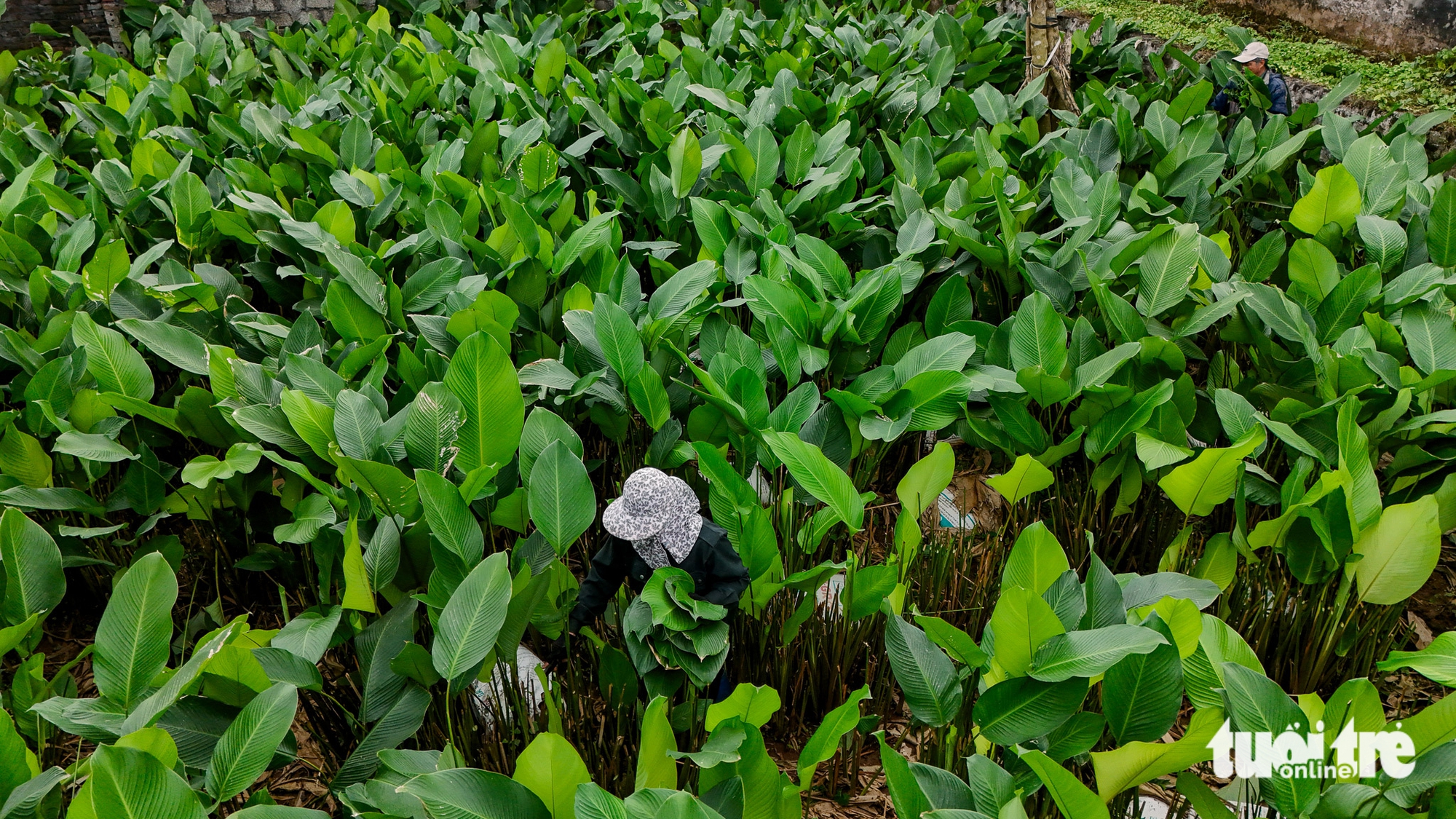
A farmer harvests ‘dong’ leaves in Trang Cat Village, Thanh Oai Commune, Hanoi ahead of the 2026 Lunar New Year. Photo: Danh Khang / Tuoi Tre
Trang Cat’s ‘dong’ leaves have been cultivated for more than 600 years on the fertile alluvial soil along the Day River.
Hand-harvested with careful cuts that allow new leaves to grow after Tet, the crop sustains both the plants and a tradition rooted in the rhythm of the river.
The leaves are prized for their pale green color, soft surface, and flexibility, qualities that allow their color and aroma to seep into sticky rice during cooking, giving ‘banh chung’ its distinctive green hue and fragrance.
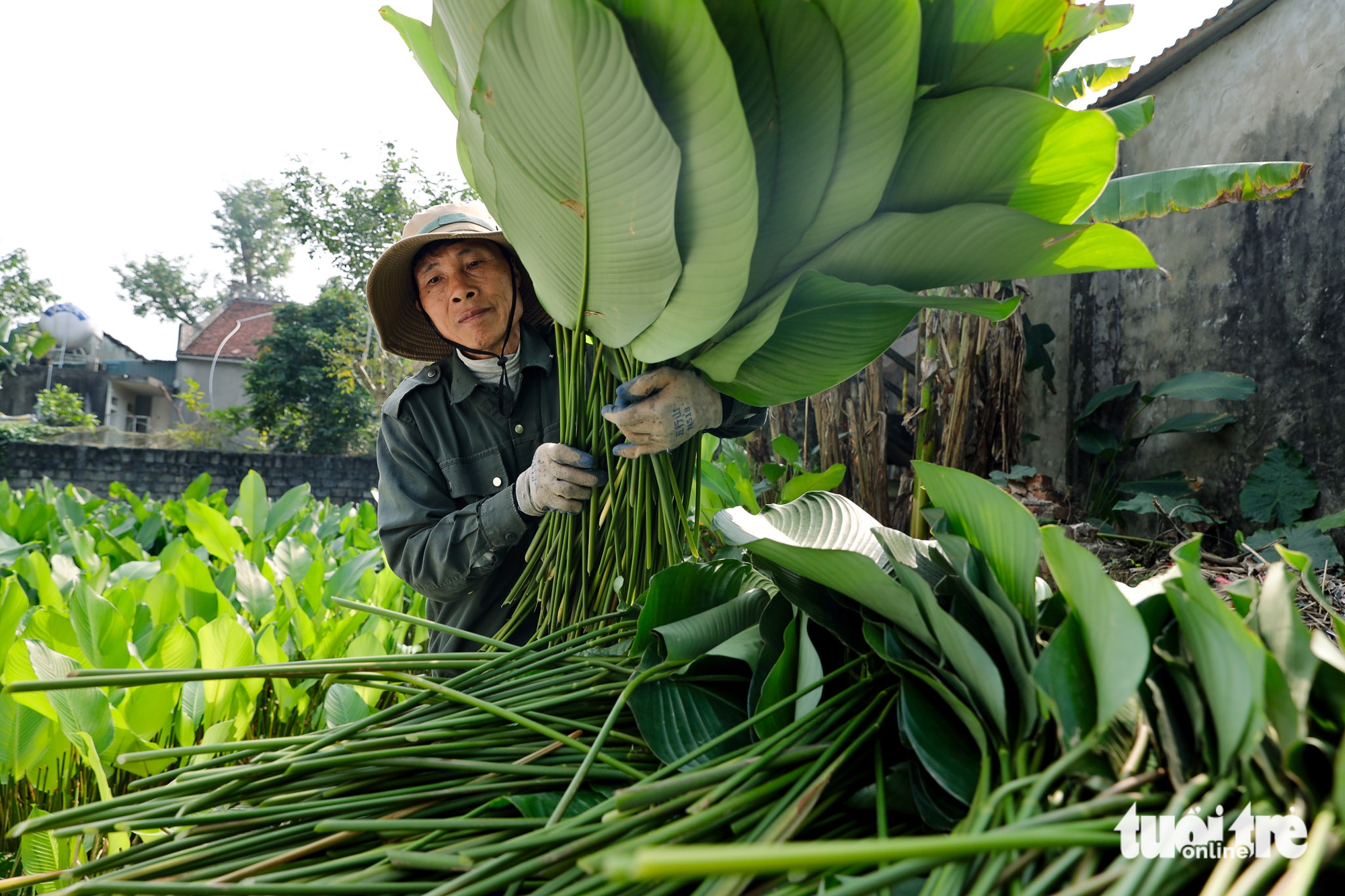
A farmer bundles freshly harvested ‘dong’ leaves in Trang Cat Village, Thanh Oai Commune, Hanoi ahead of the 2026 Lunar New Year. Photo: Danh Khang / Tuoi Tre
Demand begins early. From the start of the 12th lunar month, traders and individual buyers place advance orders, some paying upfront for tens of thousands of leaves.
Others buy entire harvests each year.
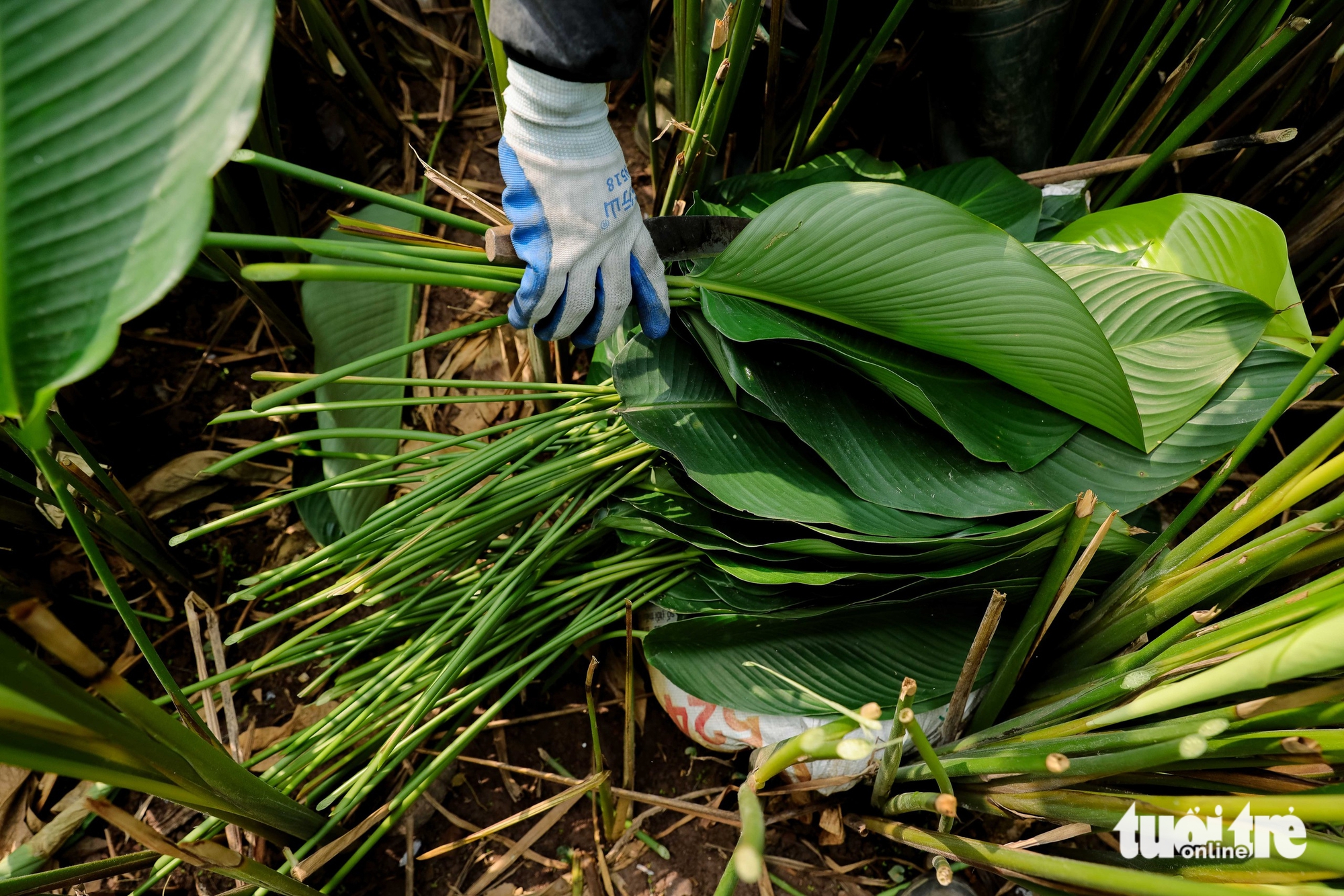
A farmer harvests ‘dong’ leaves in Trang Cat Village, Thanh Oai Commune, Hanoi ahead of the 2026 Lunar New Year. Photo: Danh Khang / Tuoi Tre
Prices depend on size and quality.
Premium leaves measuring 27–30 centimeters wide sell for up to VND300,000 (US$12) per 100 leaves, while slightly smaller grades fetch VND100,000–220,000 ($4–8.5).
Smaller leaves used for other traditional cakes sell for as little as VND20,000 ($0.8) per 100.
Prices fluctuate with supply, Cuong said, rising sharply in years when leaves are scarce.
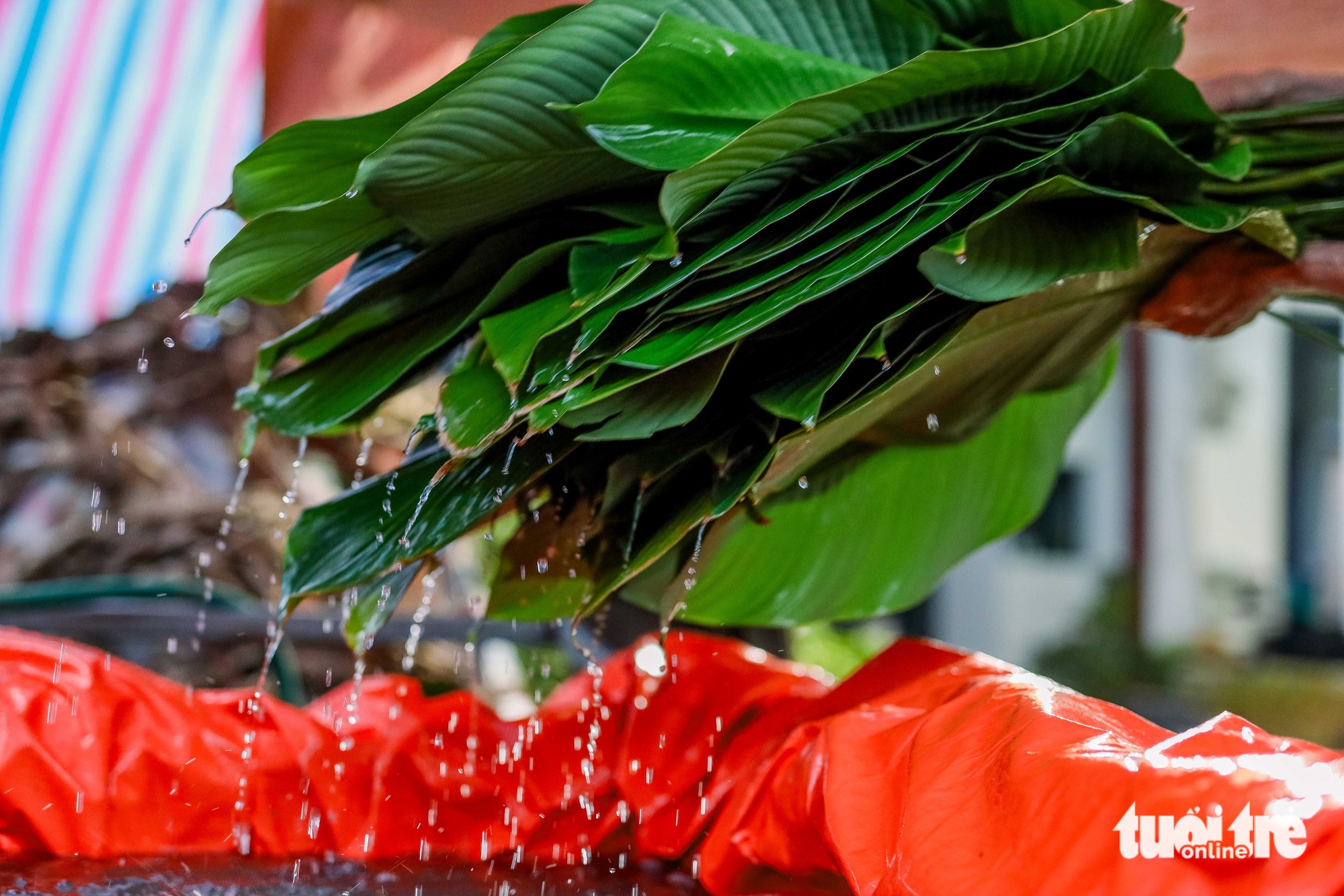
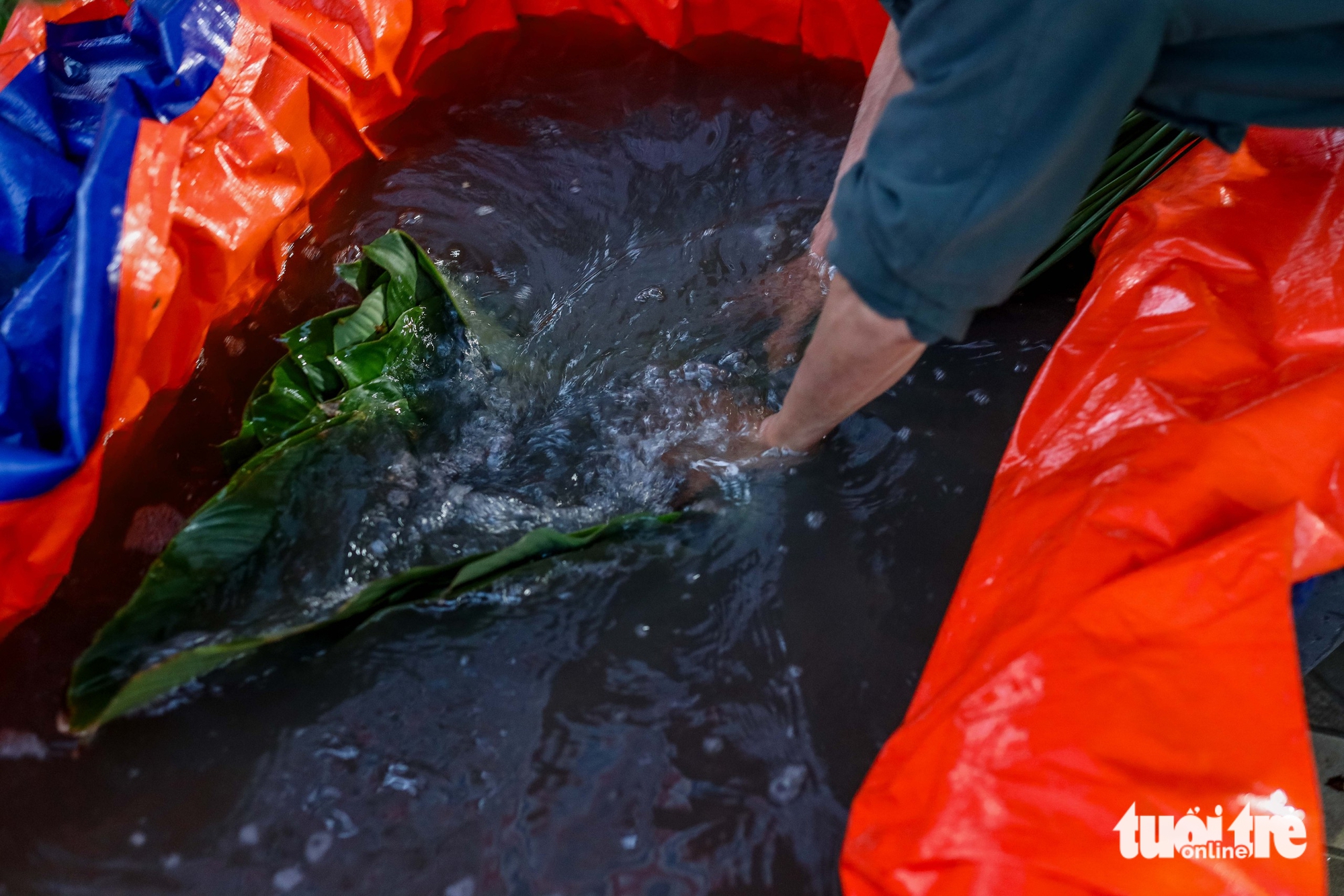
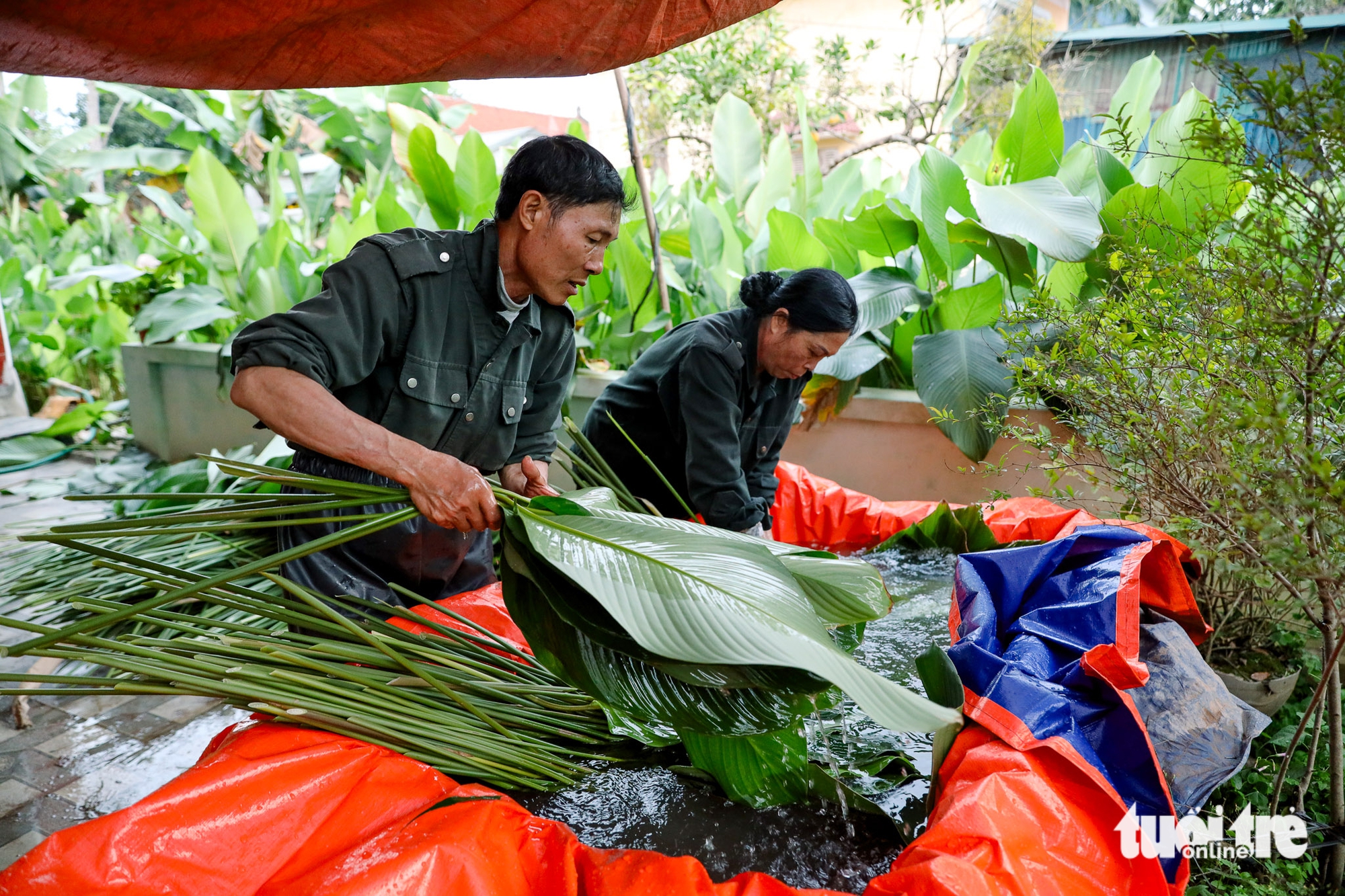
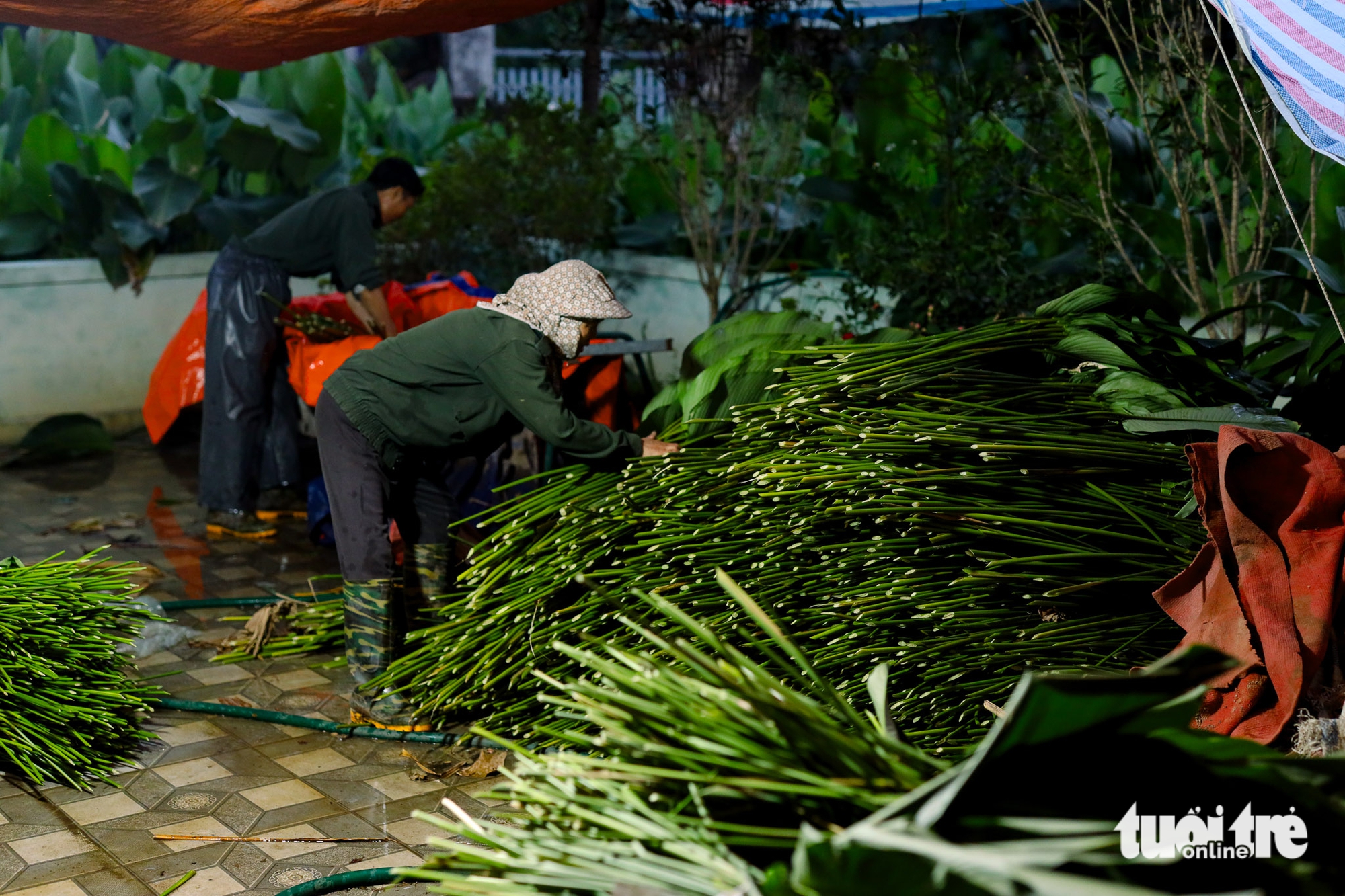
Farmers soak ‘dong’ leaves in water to retain moisture and freshness before sorting and sending them to market in Trang Cat Village, Thanh Oai Commune, Hanoi ahead of the 2026 Lunar New Year. Photo: Danh Khang / Tuoi Tre
Inside the family’s yard, his wife, Nguyen Thi Van, carefully counts and stacks each bundle. She said accuracy is critical.
“No one talks while counting,” Van said.
“If the buyer finds even one leaf missing, it damages your reputation. Extra is fine, missing is not.”
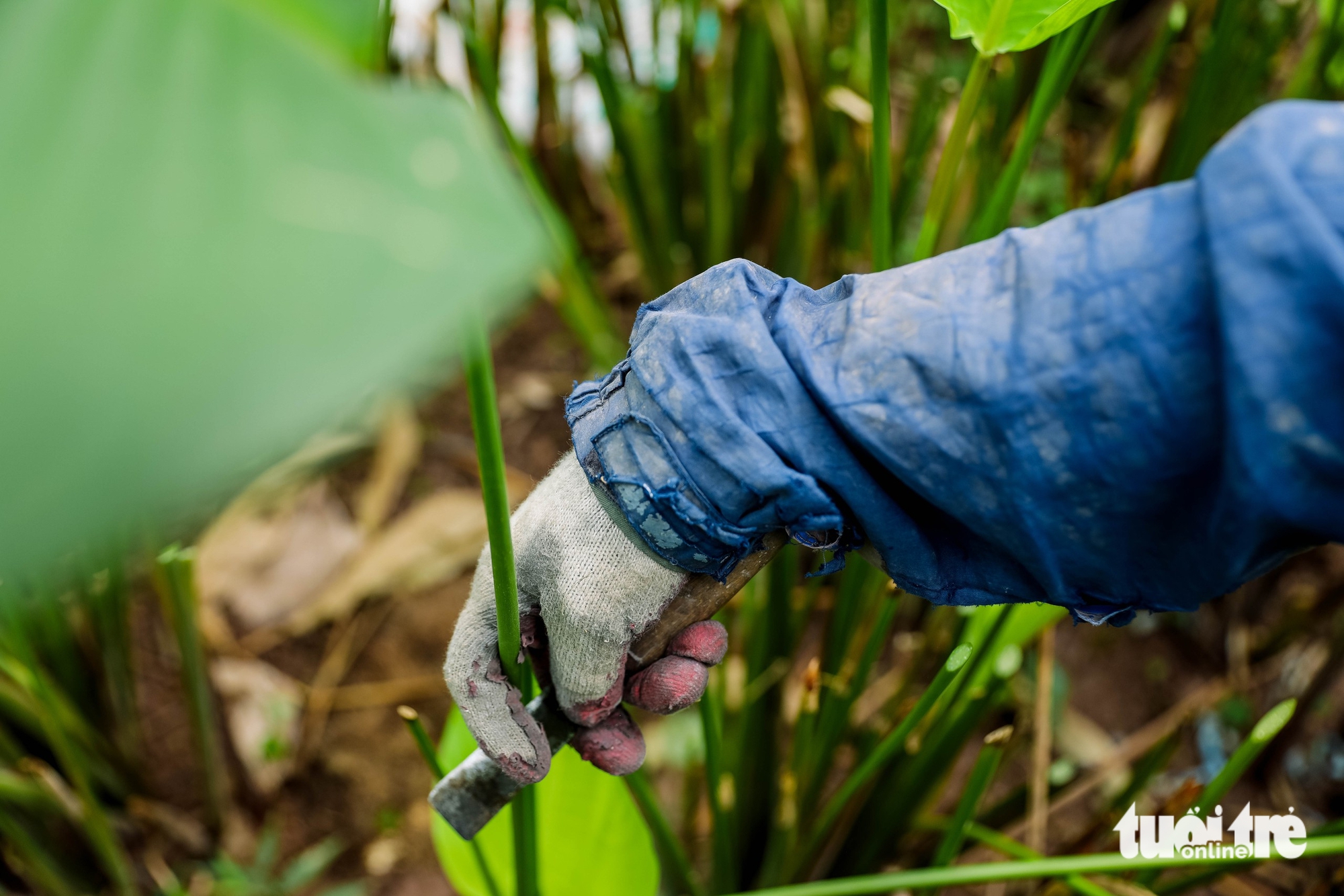
A farmer harvests ‘dong’ leaves in Trang Cat Village, Thanh Oai Commune, Hanoi ahead of the 2026 Lunar New Year. Photo: Danh Khang / Tuoi Tre
While Tet brings the year’s main income, it also raises concerns about the future.
As urban development expands, villagers worry that farmland could shrink.
“If one day these leaves disappear, it would be a great loss, not just of income, but of our village’s tradition," Van said.
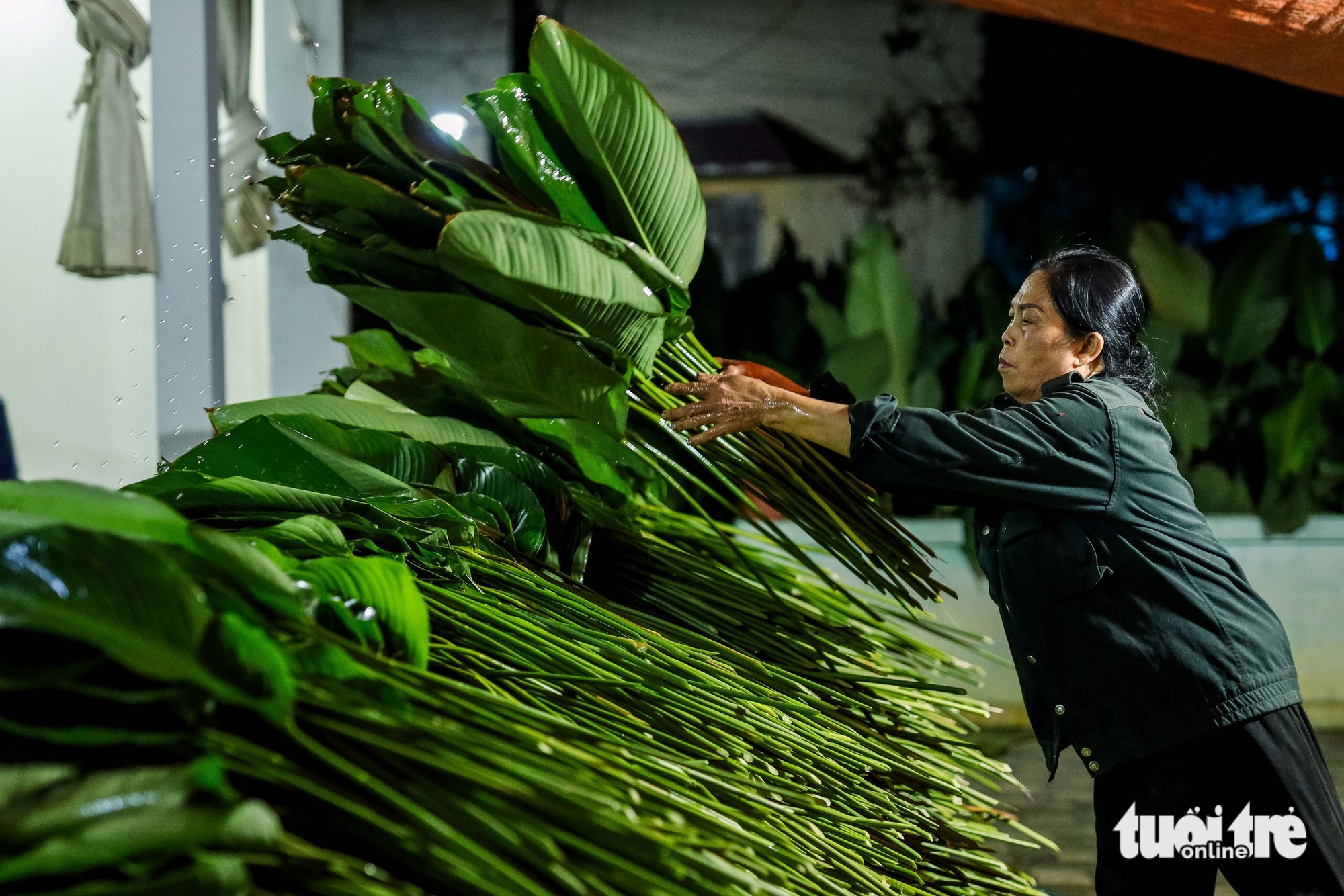
Farmers soak ‘dong’ leaves in water to retain moisture and freshness before sorting and sending them to market in Trang Cat Village, Thanh Oai Commune, Hanoi ahead of the 2026 Lunar New Year. Photo: Danh Khang / Tuoi Tre
According to Nguyen Thi Chinh, chairwoman of the Thanh Oai Farmers’ Association, about 400 households in the commune grow ‘dong’ leaves on roughly 30 hectares, earning an average of VND15–20 million ($579–772) per ‘sao’ (360 square meters) during the Tet season.
The crop requires little capital and modest care, making it suitable for women and older residents, she said.
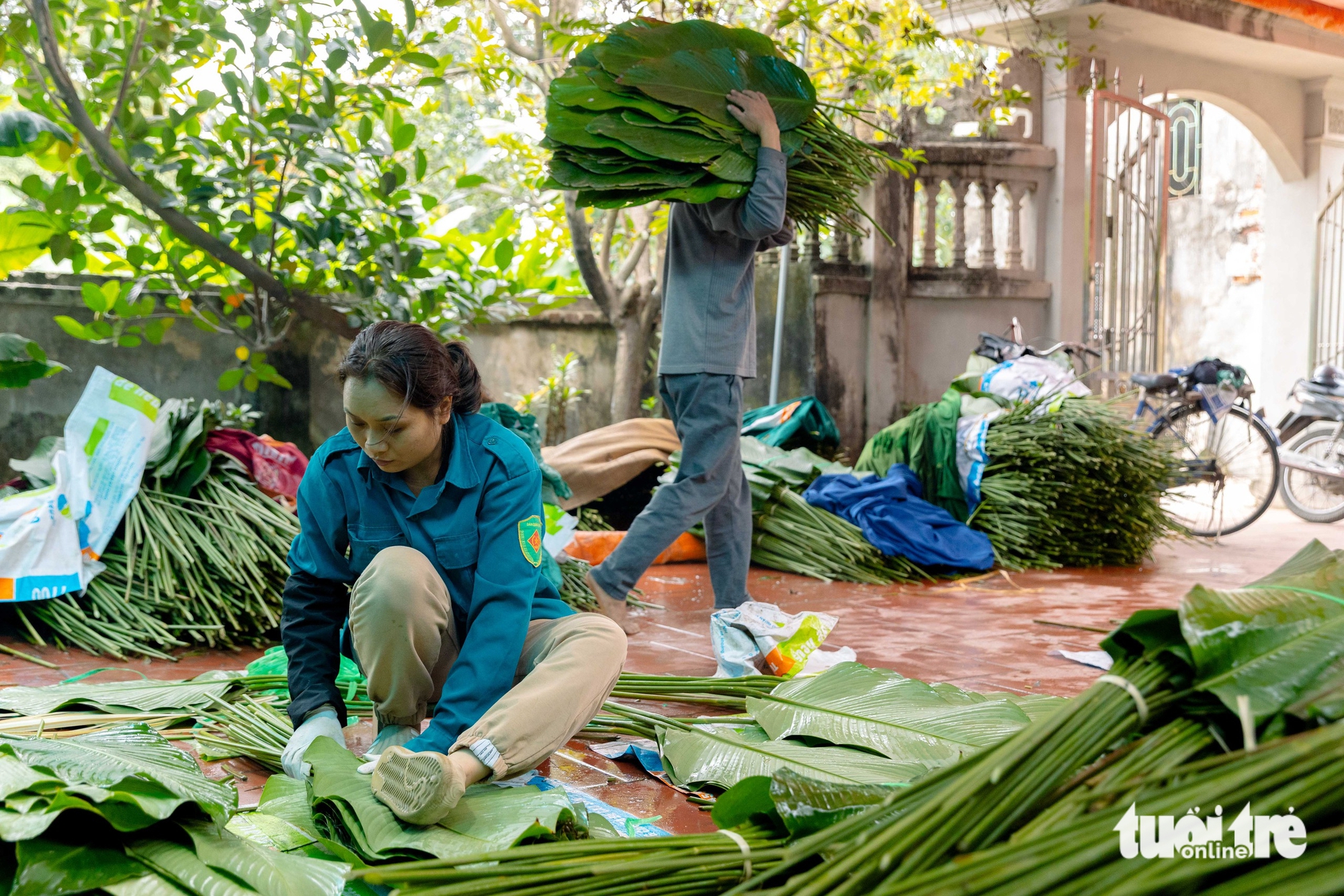
A farmer bundles freshly harvested ‘dong’ leaves in Trang Cat Village, Thanh Oai Commune, Hanoi ahead of the 2026 Lunar New Year. Photo: Danh Khang / Tuoi Tre
While most leaves are sold domestically, some are purchased for export.
Local authorities aim to preserve the traditional craft, though there are currently no plans to develop it under Vietnam’s national ‘One Commune - One Product’ (OCOP) rural branding program.








Max: 1500 characters
There are no comments yet. Be the first to comment.