


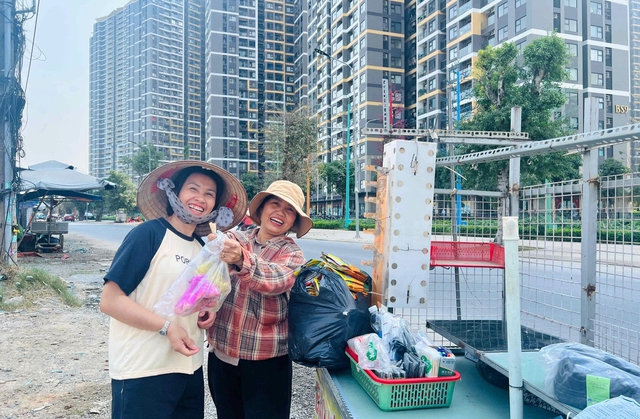
Tran Thi Hue (R) sells protective gear on the edge of a construction site in Long Binh Ward, Ho Chi Minh City. Photo: Yen Trinh / Tuoi Tre
Hue, 50, is among a group of women who follow building projects across the city, selling food and basic supplies to construction workers while moving their lives from site to site.
The women have been in the area since the first blocks were built.
Every morning, Hue sets up along Phuoc Thien Street and sells a little to earn money for daily expenses.
Her customers are mainly laborers, so she keeps prices low and sometimes lets workers pay later.
“There are days I sell on credit, and they pay me back when they get their wages,” she said.
As the project winds down, many workers have left for a new site in Can Gio Commune on the city’s coastal outskirts, taking with them the steady stream of customers that sustained small roadside vendors like Hue.
Business has slowed, and by mid-morning, under the rising heat, Hue begins packing unsold items into plastic bags, alongside an assortment of goods that now includes pens, lighters, and sunglasses.
Despite long hours in dust, sunlight, and rain, she prefers the work to the factory jobs she once held because it allows her to manage her time.
“I sell until around 10:00 am, then go home to cook, and take care of my children,” she said.
“Sometimes I take cleaning jobs in the afternoon.”
Her husband works full days on site, while she balances selling with family duties.
Their two children are now in seventh grade, she said, adding that the years “passed very quickly.”
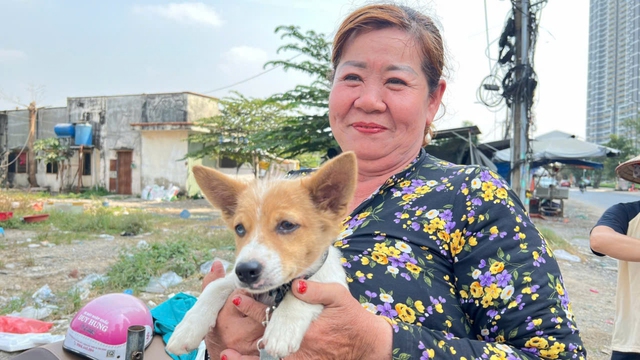
Tran Thi Nga holds her dog, which she keeps for companionship while moving between construction sites, in Long Binh Ward, Ho Chi Minh City. Photo: Yen Trinh / Tuoi Tre
Following the work
Nearby, Tran Thi Nga, 55, wakes at 2:00 am each day to prepare broth for her ‘bun rieu’ (Vietnamese crab noodle soup) stall, which she has run alongside construction sites for years.
When the site was busy, Nga could sell more than 100 bowls a day, keeping her price at VND25,000 (US$0.95) per bowl.
Nga said it was enough for her to live on and save a little.
Before moving to the city, Nga raised pigs in her hometown in Tay Ninh Province, but a disease outbreak wiped out her livestock, pushing her to seek new work.
She said she had followed multiple projects over time, including large developments such as Landmark 81 and villa compounds along Do Xuan Hop Street, before settling at the current site.
Nga shared that her children have stable jobs now and want her to rest.
“But I feel healthier working. If I stay home, I’ll get sick,” she said.
Like others in the group, Nga rents a small room near the site, forming part of a temporary settlement that lasts only as long as construction continues.
When one project ends, the community disperses and reforms elsewhere.
“We already went to Can Gio last week to check rents and locations,” Nga said.
“Before moving, we always scout the place first.”
For Hue, the next move brings uncertainty over her children’s schooling.
She is weighing whether to transfer them or send them back to live with grandparents in their hometown.
“I don’t want them far away, but maybe it’s better to wait until summer and then decide,” she said.
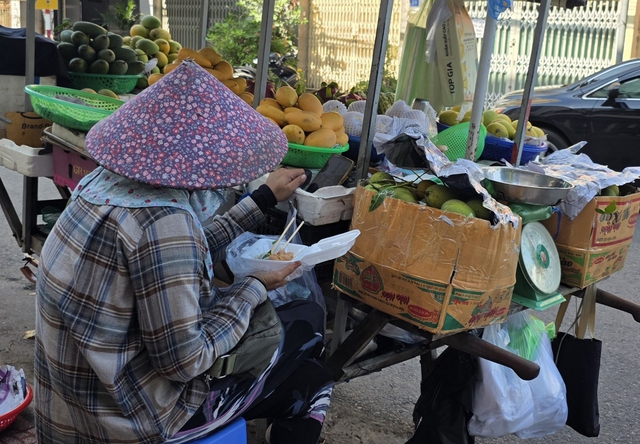
A street vendor sells fruit near a construction site in Ho Chi Minh City. Photo: Thuy Chi
A community on the move
The women rely not only on customers but also on each other.
Thai Thi Doan, 45, who sells ‘banh mi’ (Vietnamese sandwich), often shares food with Hue and Nga.
“I bought extra for you so you don’t have to go to the market,” she told Hue, handing over small bags of chicken and fish.
Doan’s husband died of a stroke seven years ago, leaving her to support two children on her own.
One now works in the beauty industry, while the younger is in 11th grade.
“I send money home so they can study,” she said.
“That’s what matters most.”
The three women met while working near construction sites and became close as they rented rooms nearby and faced similar hardships.
“When one of us is sick or short of money, the others help,” Hue said.
“If business is slow, we encourage each other or help sell each other’s food.”
As the current project nears completion, they are preparing to move again, continuing a cycle that has defined their working lives.
“Where there are workers, there are customers,” Doan said.
“We just go where the work goes.”








Max: 1500 characters
There are no comments yet. Be the first to comment.